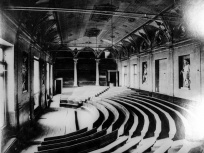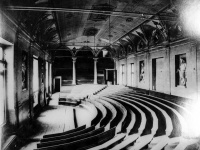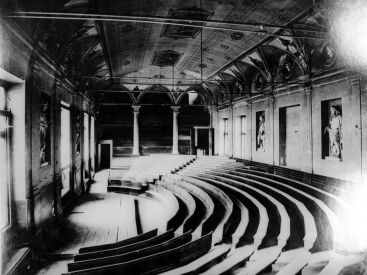
On September 3, 1791, the deputies gathered in Paris complete a task begun more than two years earlier: to give France a Constitution. In the Manège room, set up near the Tuileries Palace, the National Constituent Assembly approves the text, which becomes the first written French Constitution. After centuries during which the monarchy's political order rested on a framework of fundamental laws, customs, and traditions, the rules of power are now set down in a constitutional document.
The journey since 1789 has been extraordinary. On June 17, 1789, the deputies of the Third Estate proclaimed themselves the National Assembly. Three days later, gathered in the Jeu de paume room in Versailles, they swore not to disband until they had given the kingdom a Constitution. Then came the storming of the Bastille, the night of August 4, and the abolition of privileges, and finally the Declaration of the Rights of Man and of the Citizen, adopted on August 26, 1789. The latter is placed at the head of the Constitution of 1791, giving the new political order its bedrock principles: liberty, equality before the law, natural rights, and national sovereignty.
But between the Oath of the Tennis Court and September 3, 1791, the Revolution had shifted profoundly in character. Louis XVI and the royal family left Versailles for Paris in October 1789, following the events of October 5–6, and settled at the Tuileries Palace. The Assembly soon followed to the capital and established itself in the salle du Manège. The center of French political power moved to Paris, where the streets, clubs, the press, and the Parisian sections weighed more and more heavily on the course of events.
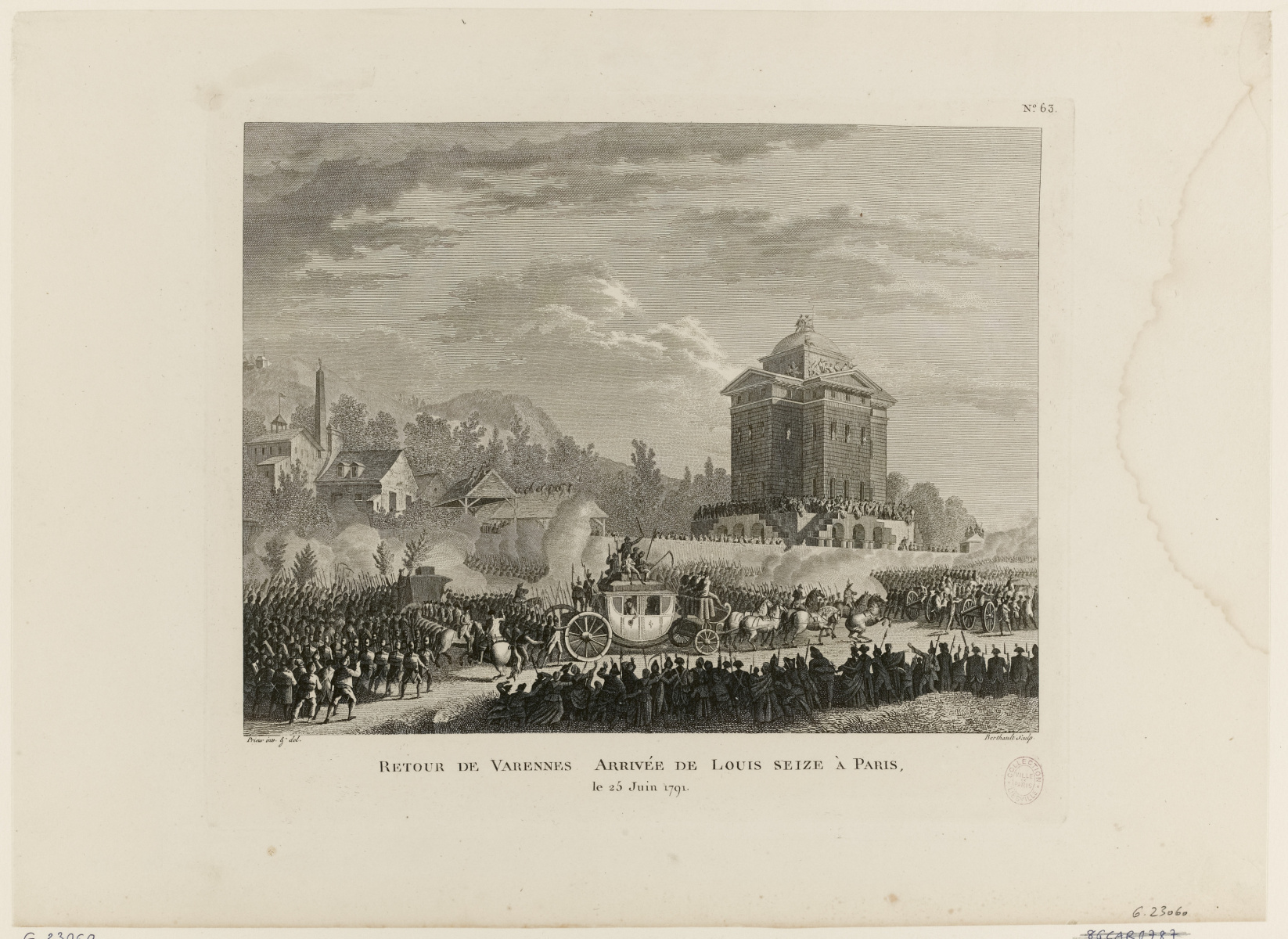
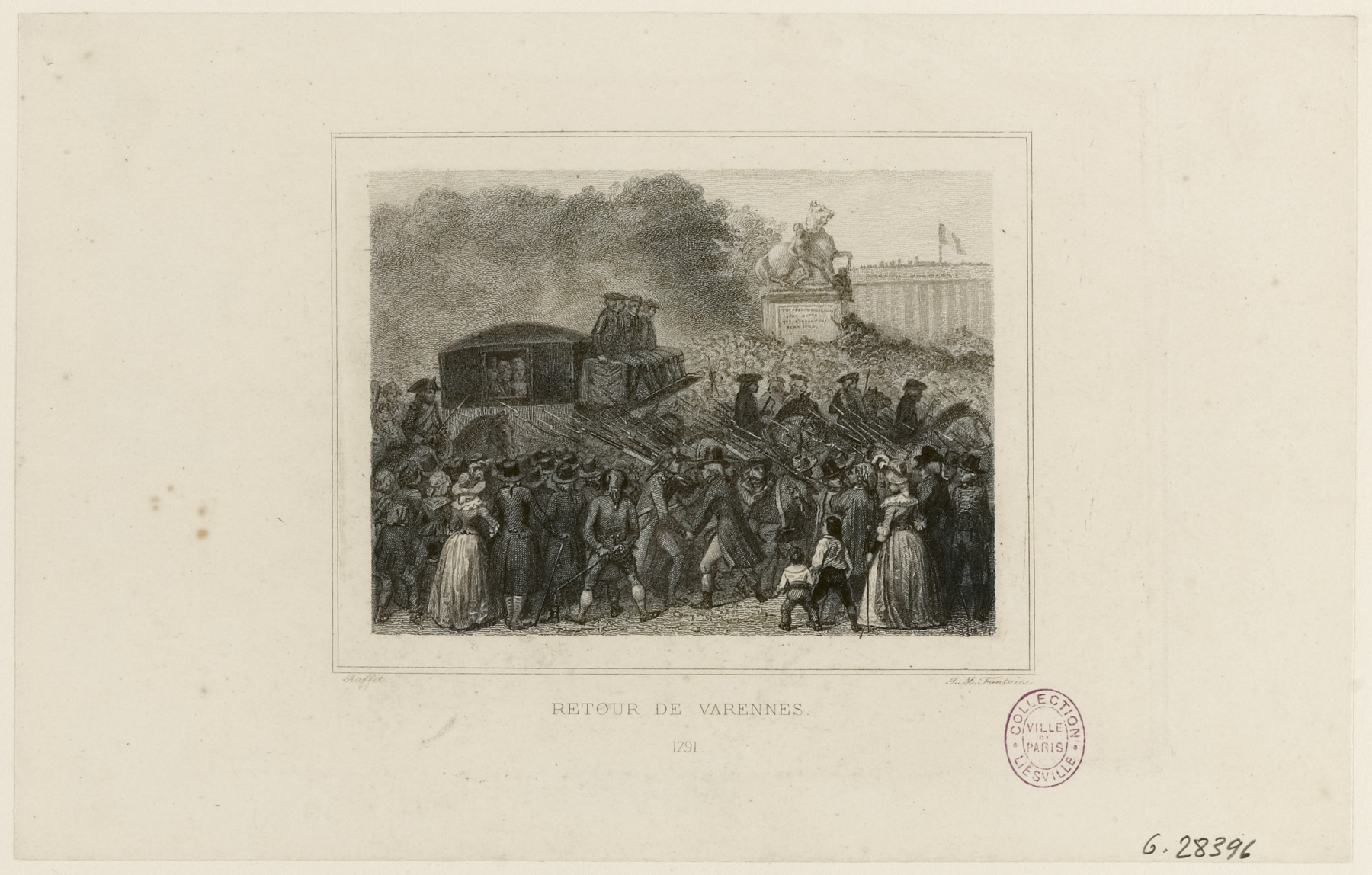
Above all, one episode shook the already fragile trust between the king and the Revolution: the fuite à Varennes, in the night of June 20–21, 1791. Louis XVI and his family attempted to slip out of Paris clandestinely before being recognized, arrested, and brought back to the capital. The event fed suspicions of a definitive rupture between the sovereign and the nation révolutionnaire. How can you build a constitutional monarchy around a king who has just tried to escape? Yet that was the gamble facing the Constituent Deputies.
The Constitution adopted on September 3 does not abolish the monarchy; it reshapes it in a fundamental way. The text proclaims that "sovereignty is one, indivisible, inalienable and imprescriptible" and that "it belongs to the Nation". The king no longer reigns by a sovereignty of his own: he exercises a power defined and limited by the Constitution. France remains a monarchy, but Louis XVI is now the "King of the French", and no longer the traditional king of France.
Legislative power is vested in a single National Legislative Assembly, elected for two-year terms. The king, for his part, retains the executive power: he appoints his ministers, runs the administration, and wields substantial authority in diplomacy and military affairs. But he cannot dissolve the Assembly or enact laws himself.
A mechanism designed to keep a balance between the two powers: the veto suspensif. Louis XVI could temporarily refuse to sanction a decree adopted by the deputies, but his opposition was not final. If subsequent legislatures vote the same text again under the conditions laid down by the Constitution, the king’s will is eventually overcome. The sovereign can slow the law, but he cannot bury it indefinitely.
On paper, the break with the Ancien Régime is immense. The Constitution proclaims that there no longer exists "neither nobility, nor peerage, nor hereditary distinctions, nor distinctions of rank, nor feudal regime". It also abolishes privileges and asserts the equality of citizens before the law. The social order legally founded on birth gives way to a society whose members are, in principle, subject to the same law. But this civil equality does not yet mean political equality.
The Constitution of 1791 indeed established an indirect censitary suffrage and divided citizens by their capacity to participate in political life. To be regarded as an active citizen and take part in the primary electoral assemblies, a man had to be at least 25 years old, have resided for a certain period in the town or canton, and pay a direct contribution equivalent to several days’ work. Those entrusted with choosing the deputies faced even higher wealth requirements.
A large share of the male population thus remains outside the vote, while women are excluded from political citizenship. The Declaration of the Rights of Man proclaims equality of rights; nevertheless, the electoral system established two years later reserves the direct exercise of political power to a fraction of the population. This contradiction quickly becomes one of the points of friction of the Revolution.
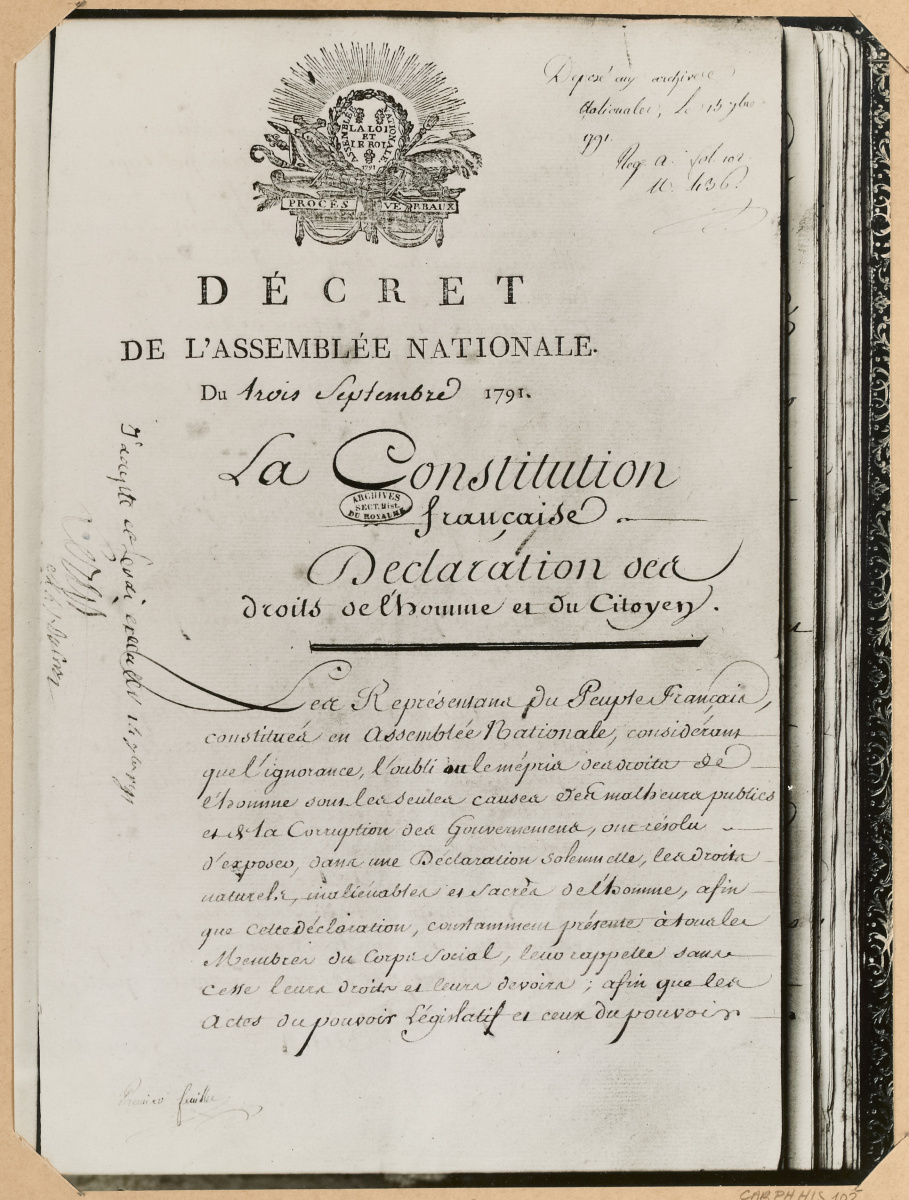
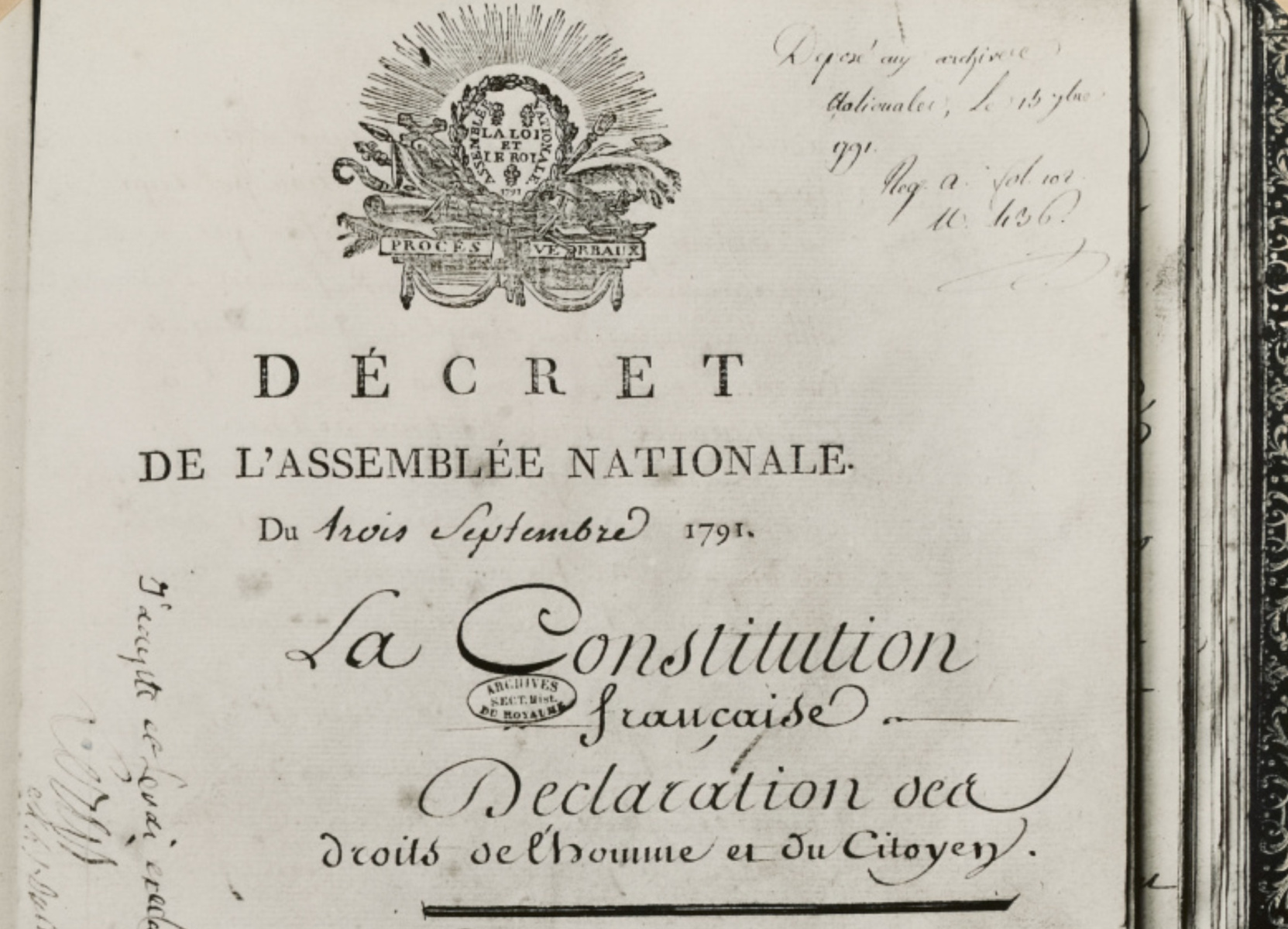
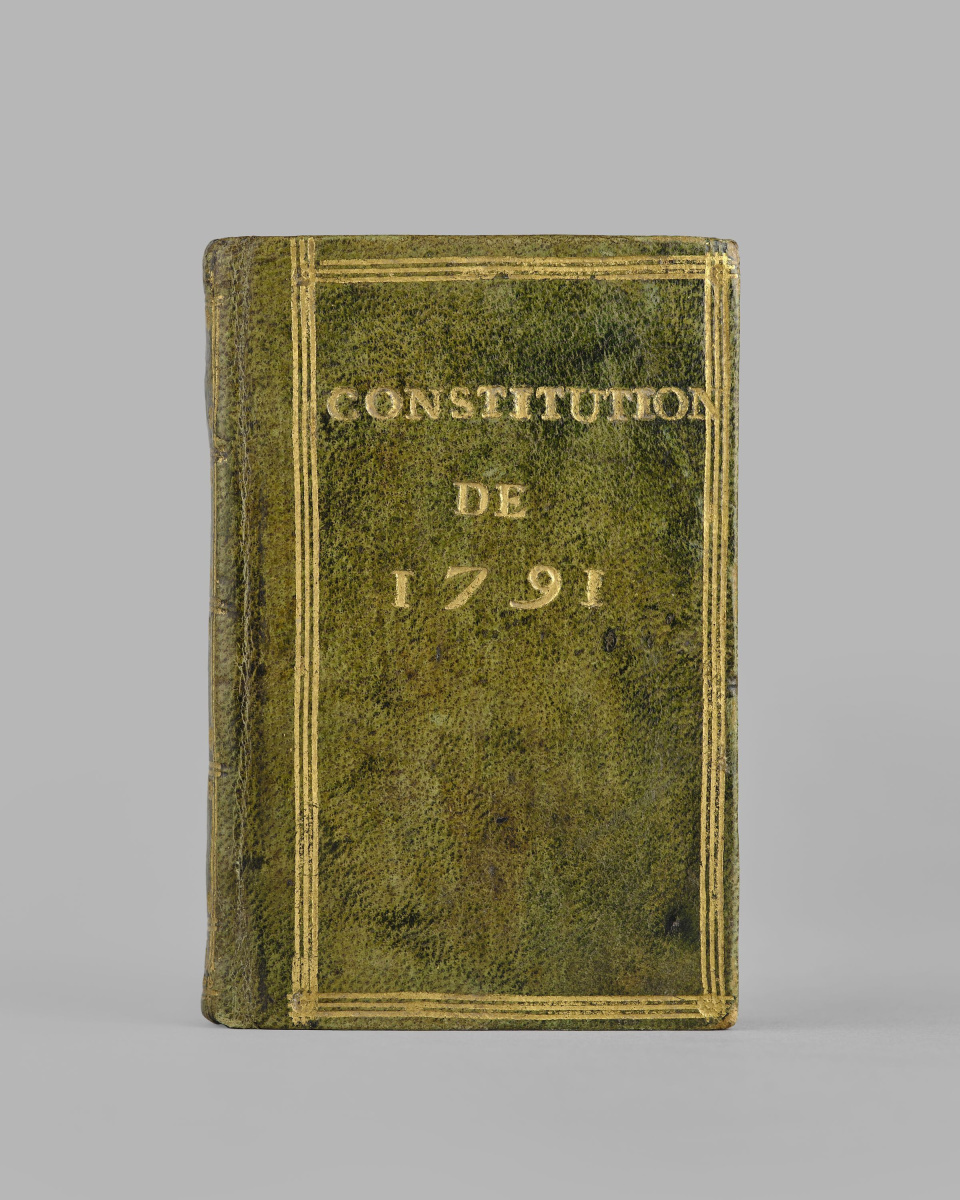
After the Constitution was completed on September 3, 1791, the Assembly appointed a delegation of 60 deputies to present the text to Louis XVI. The original document kept by the National Archives still bears the material mark of this moment in history: it is indeed a "Decree of the National Assembly of September 3, 1791". The king, however, does not accept it that day.
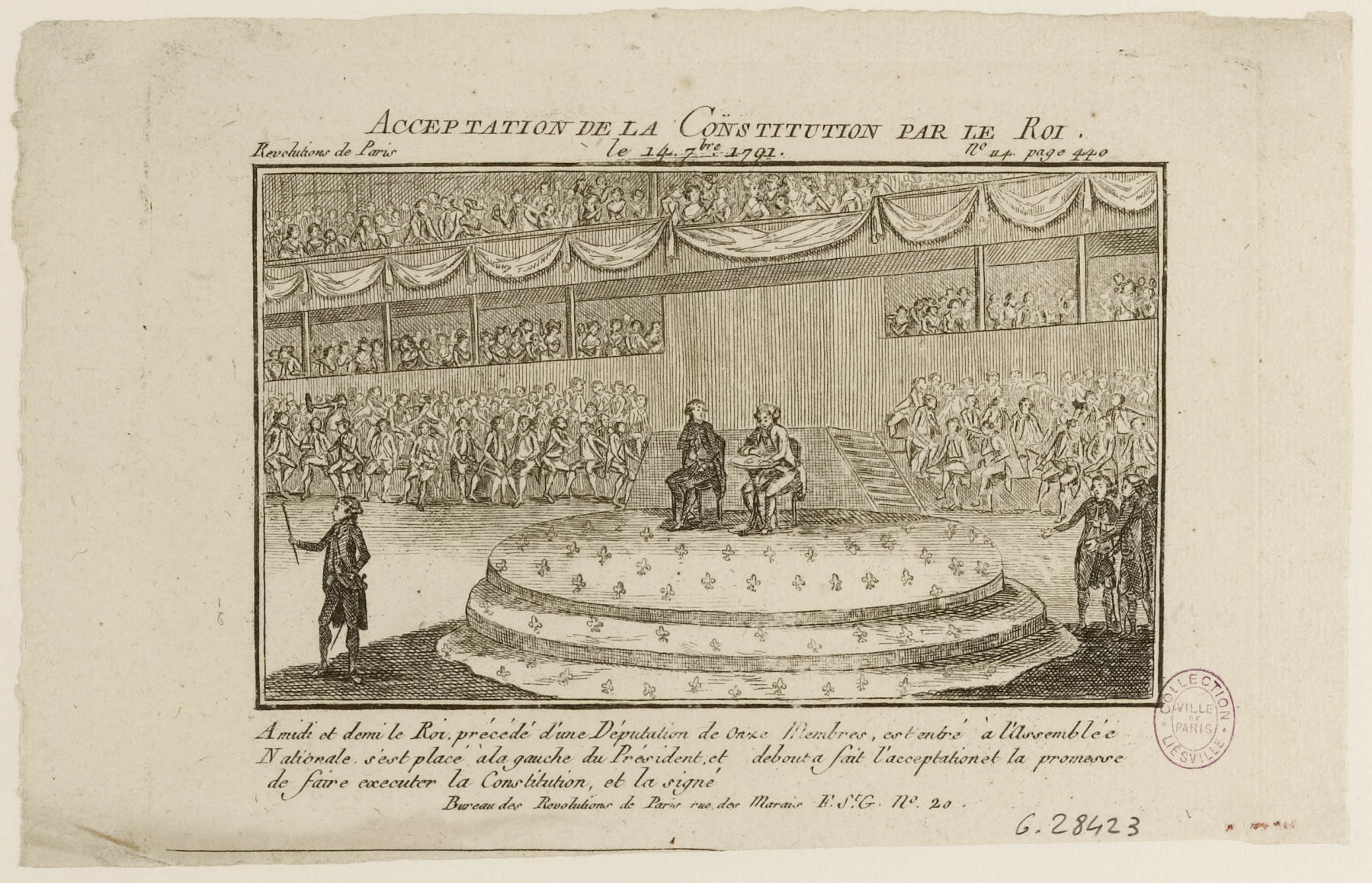
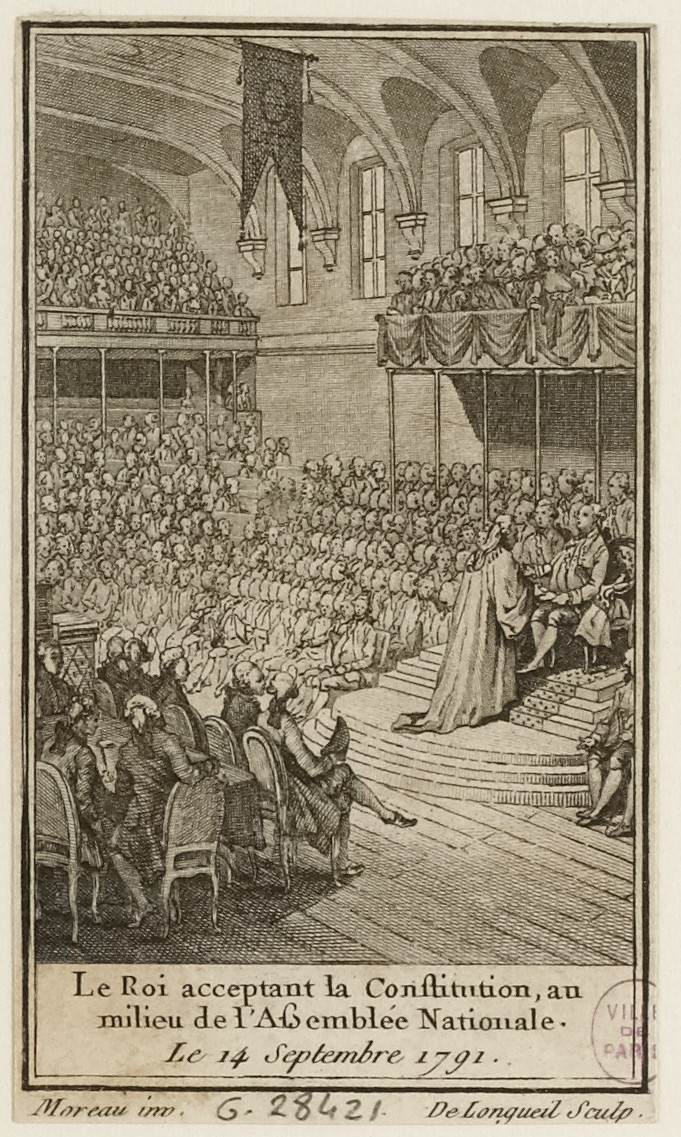
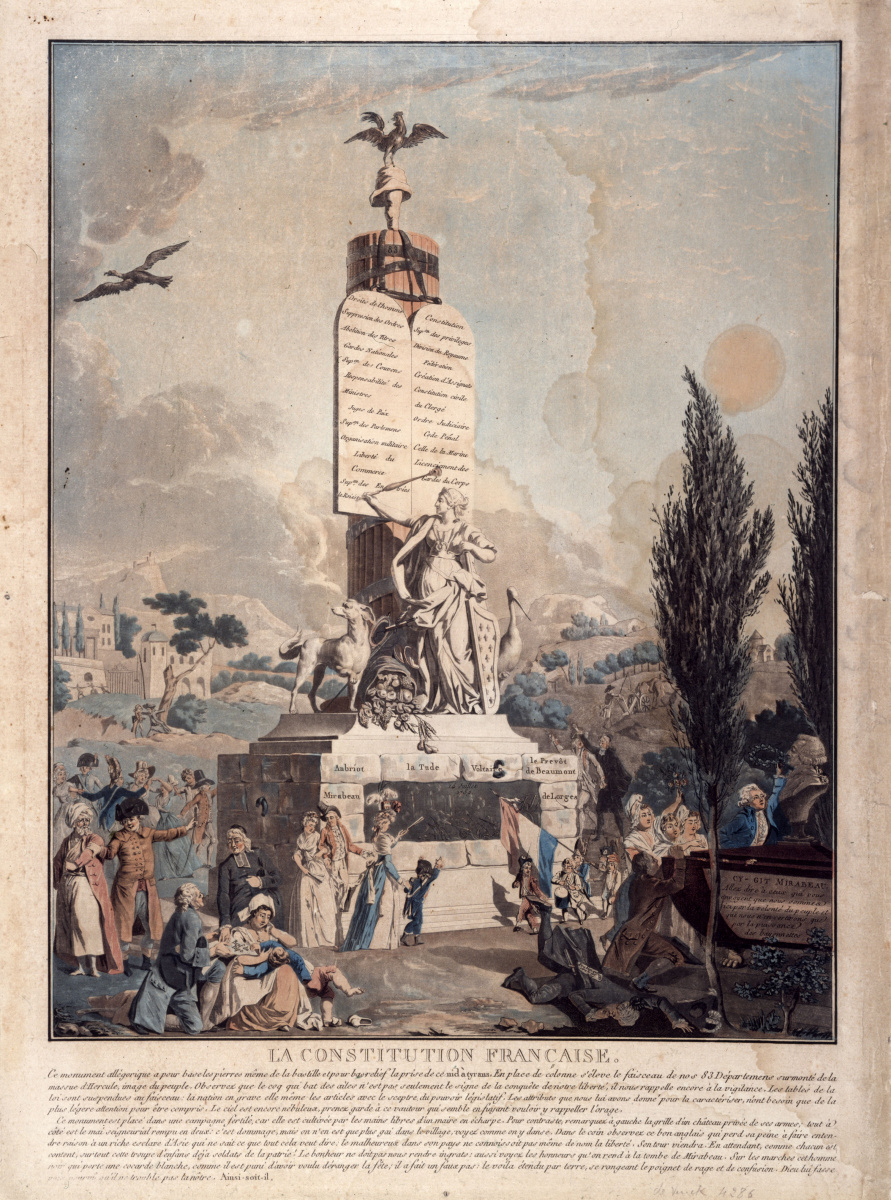
Louis XVI announces his acceptation on September 13, before appearing before the Assembly the following day. On September 14, 1791, in the same Manège des Tuileries hall, he swears the oath to the Constitution in a solemn ceremony. Prints and medals preserved today at the Carnavalet Museum capture the moment and remind us how it was then deemed historic. The constitutional monarchy in France could officially function... but it was already rotting from within.
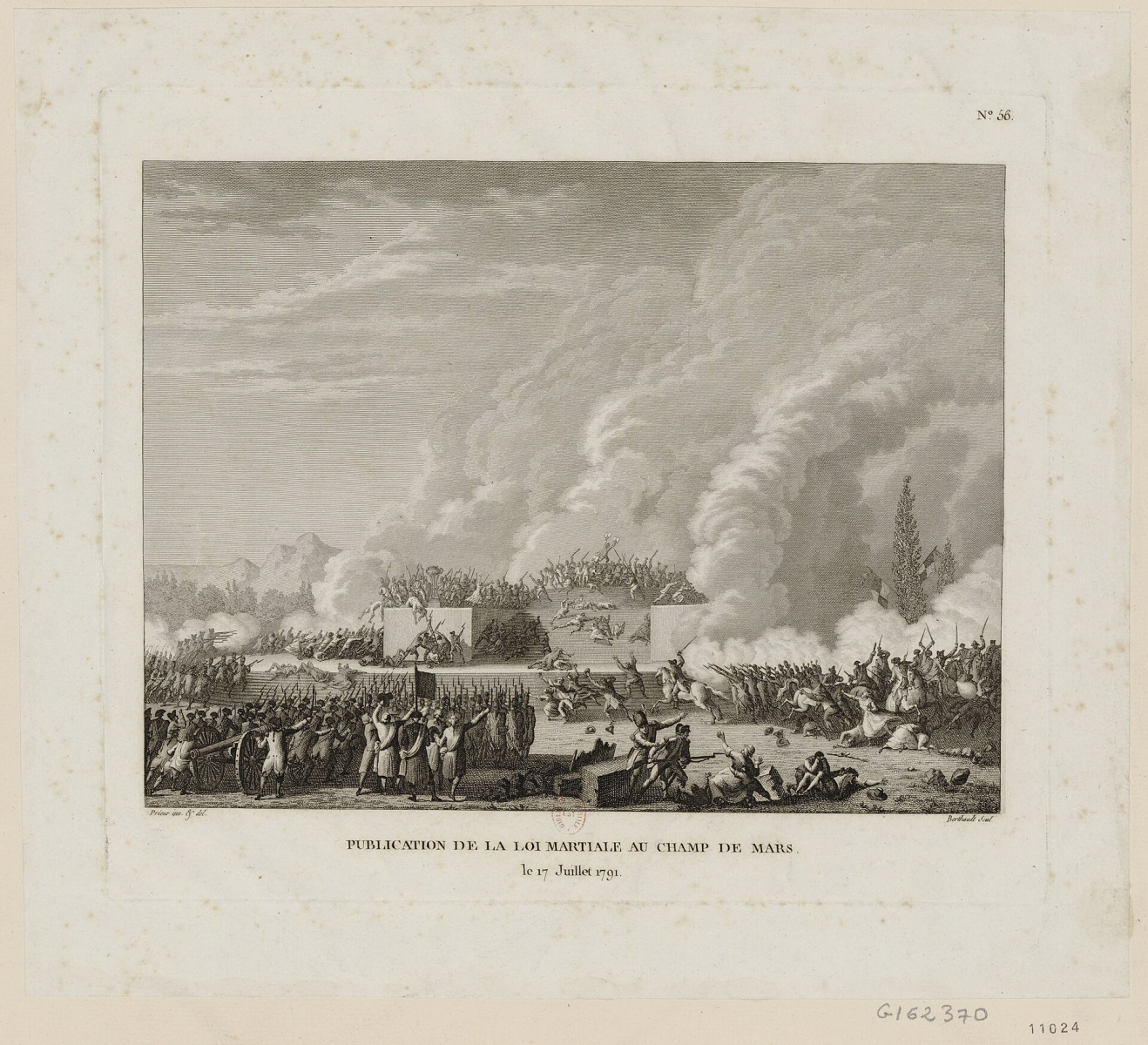
From Varennes, a portion of the revolutionaries no longer trusts the king’s sincerity. On his side, Louis XVI accepts a political system that greatly curtails his prerogatives. In Paris, the republican movement, still a minority at the dawn of the Revolution, has gained ground. The Champ-de-Mars shooting of July 17, 1791, in which the National Guard fired on a crowd demanding the king’s deposition, laid bare the fractures within the revolutionary camp.
The Constituent Assembly adjourned at the end of September 1791, and on October 1 it gave way to the Legislative Assembly. What followed was an almost entirely new political experiment in France: the coexistence of an elected national representation and a hereditary king, each wielding a share of power. And the experiment would be short-lived!
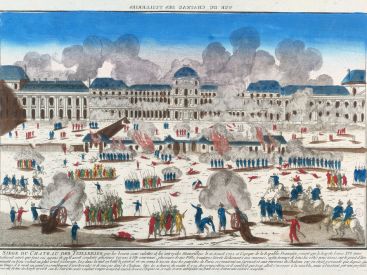
The declaration of war on Austria in April 1792, military defeats, fear of a counter-revolution, the royal veto and suspicions of collusion between the Court and foreign powers push the rupture forward. In Paris, political tension climbs to the insurrection of August 10, 1792. The The Tuileries are seized, Louis XVI and his family seek refuge with the Assembly and the king is suspended from his duties. Less than a year after it came into force, the The 1791 constitutional monarchy has died in effect. On 21 September 1792, the National Convention abolishes the monarchy. The next day, the The Republic becomes France's new regime.
The Constitution of September 3, 1791 thus had only a very brief life. Yet its historical significance far exceeds its limited duration of application. For the first time in France, the exercise of political power was organized by a written constitution that asserts national sovereignty, defines the powers of the institutions, and subjects the king himself to a higher legal order. The text does not establish a modern democracy or a parliamentary regime as we understand it today; rather, it was an attempt—rapidly overtaken by events—to reconcile the monarchical legacy with the principles born in 1789.
And the place where this first French constitutional experiment took shape remains part of the Paris landscape, even though the salle du Manège has disappeared in the early 19th century. It ran along the jardin des Tuileries, near today’s Rue de Rivoli, in the 1st arrondissement of Paris. It was there, on September 3, 1791, that the deputies believed they could close the revolutionary chapter by finally setting the rules for the new regime. But history would prove them wrong in less than 12 months, showing that the Revolution was far from having written its last page!
Further reading:
Ephemeris of August 10 in Paris: Sans-Culottes seize the Tuileries Palace
On August 10, 1792, the Sans-Culottes stormed the Tuileries Palace in a bloody day that sounded the death knell for royalty and monarchy in France. [Read more]
Did you know? The famous Tuileries Gardens once housed a palace. It was the Palais des Tuileries. Remnants of this now defunct royal residence are now scattered around the world. Here's where to find them in Paris. Ready to explore the capital's past? [Read more]
This page may contain AI-assisted elements, more information here.
Dates and Opening Time
On September 3, 2026
Location
Tuileries Gardens
Jardin des Tuileries
75001 Paris 1
Route planner
Accessibility info
More information
Header: Decree of the National Assembly of September 3, 1791. The French Constitution. The Declaration of the Rights of Man and of the Citizen, Paris, 1791. Copyright: CC0 Paris Musées / Carnavalet Museum – History of Paris.





























 Ephemeris of August 10 in Paris: Sans-Culottes seize the Tuileries Palace


 In the footsteps of vanished monuments: Where can you see the remains of the Tuileries Palace in Paris?