On Tuesday, October 9, 1860, a fabulous French-style English garden opens to the public under the patronage of Napoleon III and Empress Eugénie. The Jardin d'Acclimatation, located at the entrance of the Bois de Boulogne, quickly becomes the go-to spot for Parisians seeking strolls and discoveries, as they marvel at its wonderful gardens and its numerous exotic animals brought from around the world.
1852. It has been a decade already since the Bois de Boulogne began undergoing sweeping transformations, in line with Emperor Napoleon III’s aim to put this vast "green lung" to good use at the capital’s doorstep by shaping a landscaped park in the English-garden style.
Thus, on 26 March 1858, the Imperial Zoological Society of Acclimatization secured from the City of Paris a concession for a 15-hectare parcel on the northern edge of the Bois de Boulogne to establish a "garden of leisure and an exhibition of useful animals from all nations."
Founded on February 10, 1854 by zoologist Isidore Geoffroy Saint-Hilaire and a handful of friends, this société savante set out to contribute to the introduction, acclimatization, and domestication of exotic animal and plant species, drawn from distant civilizations, by artificially recreating their natural habitats.
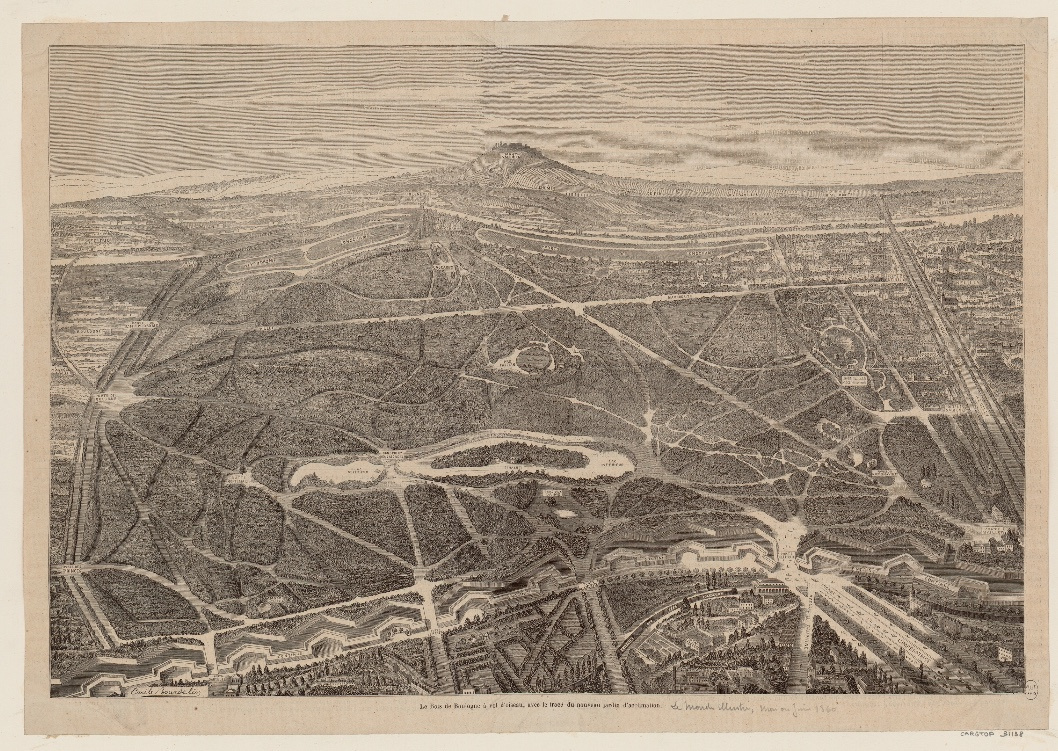
Urban development works were entrusted in July 1859 to the Second Empire’s most prominent creators: the architect Gabriel Davioud, the landscape architect Jean-Pierre Barillet-Deschamps, and the engineer Jean-Charles Alphand, under the patronage of the renowned Baron Georges-Eugène Haussmann.
After fifteen months of work during which the Société d'Acclimatation wins from Napoleon III the concession of four extra hectares, the Jardin d'Acclimatation opens on 6 October 1860, with Napoleon III and Empress Eugénie in attendance, alongside Alexandre Dumas, Prosper Mérimée, Théophile Gautier, and Hector Berlioz.
From its opening to the public, October 9 1860, this vast green space with a scientific, entertaining and educational mission has won the favor of Parisians from all walks of life. The city’s residents crowd there to discover animals that very few have ever seen with their own eyes.
In the garden paths, curious visitors can indeed marvel at giraffes, zebras, kangaroos, cheetahs, antelopes, camels, bears, but also exotic plants such as banana trees and bamboos. In October 1861, The Aquarium opens its doors, and by 1866, the Jardin d'Acclimatation counts more than 110,000 animals.
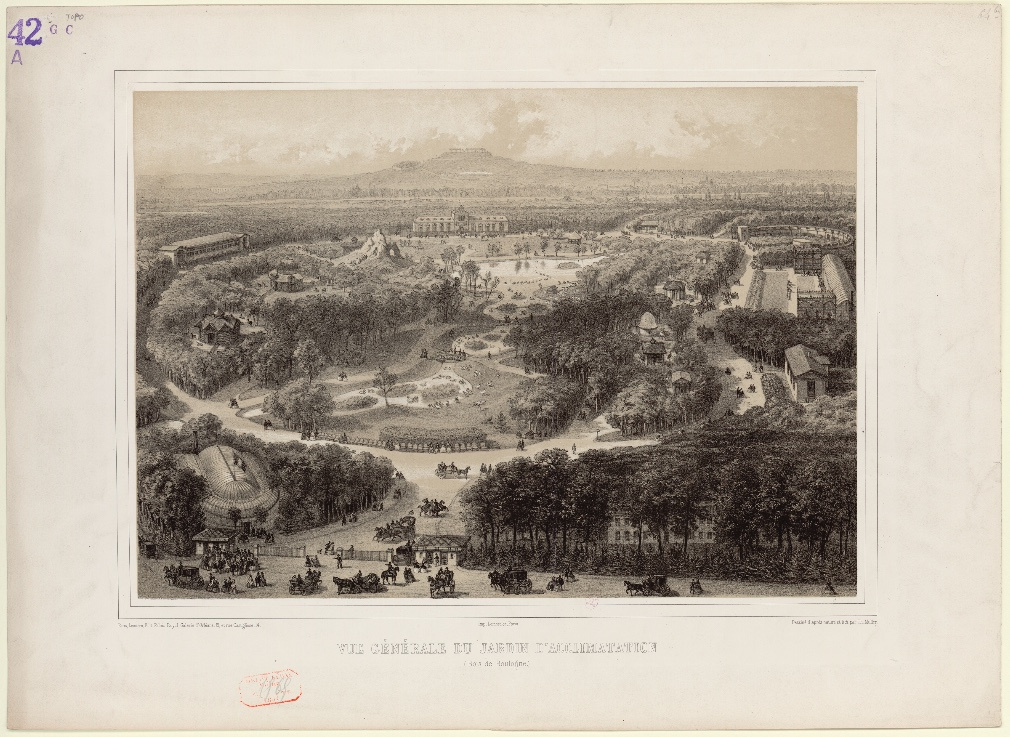
But the Franco-Prussian War of 1870 is set to put a stop to the expansion of the wonderful garden. Besieged by enemy troops from September 20, 1870 to January 28, 1871, Paris is cut off from the rest of the country and endures a brutally cold hiver glacial , coupled with a terrible famine.
Aware that German troops were about to reach Paris, the City of Paris decides to evacuate certain animals from the park to zoos in the provinces. The remaining animals are sent to the Jardin des Plantes and, in the enclosures of the Jardin d'Acclimatation, are replaced by thousands of cattle and sheep destined to feed the people of Paris.
Yet despite rationing and the scarcity of ordinary foods, the last remaining animals are sacrificed to feed the population. Thus, while the working classes must endure rats as meals for months, the well-to-do Parisian classes can indulge in extravagant dishes for a time, such as elephant consommé, kangaroo civet, roasted bear ribs, or even a antelope terrine! At the end of the Siege of Paris, not a single animal remains at the Jardin d'Acclimatation.

Reimagined and beautified, the Jardin d’Acclimatation reopened to the public in 1872 and gradually rebuilt itself through donations, notably two elephants gifted by the King of Italy. Yet the fauna remained more conventional than at its origins, with, alongside a few giraffes, zebras and dromedaries, primarily farm and livestock animals, as well as birds.
Numerous improvements are being made to the Jardin d'Acclimatation, with the creation of new attractions to entertain visitors. An additional sheepfold opens its doors, along with stables, a new silkworm farm, duck-raising parks, a vast kennel, and a gymnasium reserved for children where they can enjoy rides on zebras, camels, goats or even ostriches.
But it was above all the 1878 purchase of its Petit Train, an ingenious narrow-gauge railway system invented by industrialist Paul Decauville, that would capture the public’s imagination. Originally, the line started at l'Étoile and wound through the Bois de Boulogne, but its route was quickly altered and Porte Maillot became the starting station. This little train was France’s first narrow-gauge service to carry passengers!
The Jardin d'Acclimatation now reconnects with its early scientific and educational aspirations, offering families cycles of scientific lectures (on hygiene, travel, medicine, acclimatization), weekly concerts on the main lawn, athletic events, and outdoor cinema screenings, while a Museum of Sport and Hunting opens its doors and the first children’s rides are installed, already hinting at the garden’s future.

But the late 19th century and the early 20th century were also marked by a troubling fascination with exotism, travel and ethnology, set against the backdrop of colonial expansion. The Jardin d'Acclimatation thus became a hub of anthropology and hosted, from 1877 to 1931, no fewer than 22 exhibitions of human beings from distant lands.
The first ethnic exhibition is staged in 1877 by Albert Geoffroy Saint-Hilaire, the site's director, featuring a troupe of Nubians brought in by German zoologist Carl Hagenbeck and placed in front of the stables, between the Lama Pavilion and the Mammal Pavilion. In response to the success of this initial exhibition of human beings, the Jardin d'Acclimatation repeats the experiment with African peoples, Indians, Lapps or even Cossacks.
But already, these "exhibitions of savages" are triggering lively societal debates, as the men displayed are confined like animals in the neighboring cages, and the Société d'Acclimatation harshly disavows the sensationalism of these events, even as the garden's attendance climbs sharply, nearing one million visitors.
The Jardin d'Acclimatation hosts a final ethnographic exhibition in 1931, after several years during which it showcased peoples selected from across the French colonial empire, from Senegal to North Africa and all the way to New Caledonia.
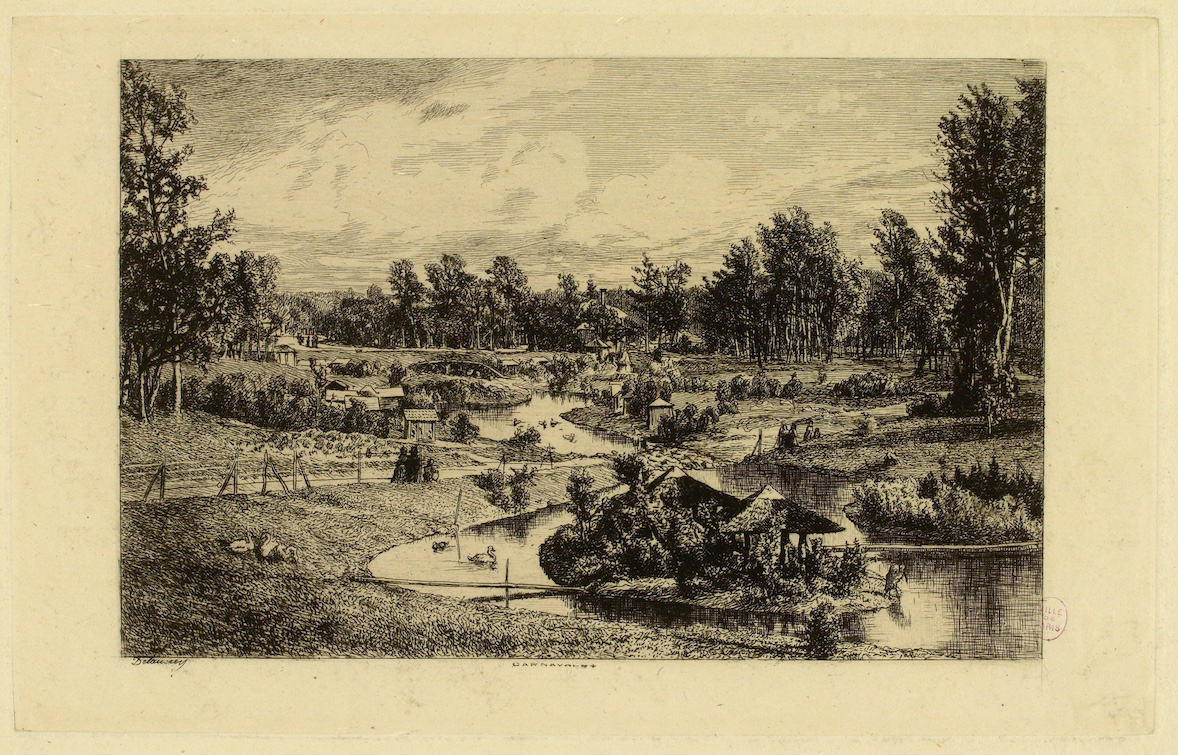
At the beginning of the 20th century, facing a drop in attendance, the Jardin d'Acclimatation drifts away from its educational mission and gradually shifts toward amusement and entertainment. To lure back families who now favor the newer amusement parks such as Luna Park, opened in 1909 at Porte Maillot, or Magic City, installed in 1911 along the Seine, the garden takes Tivoli Gardens in Copenhagen as its model, equips itself with modern rides, and mounts a proliferation of cinema screenings and circus performances.
But once again, war slows the progress of the Jardin d'Acclimatation. While the team contemplates other novelties—such as a swimming pool and a stadium—the Second World War halts the site's momentum, and it isn’t until the 1950s that the Jardin d'Acclimatation regains its stride.
The big cats vanish, the funfair is scaled back, a castelet de Guignol opens to children, as well as a petite ferme where ponies, goats, and donkeys mingle. Now gone, the musée en Herbe is established, just as the National Museum of Arts and Traditions of the People rises in place of the Palmarium, a glass-and-steel masterpiece demolished for the occasion. But the formula no longer works.
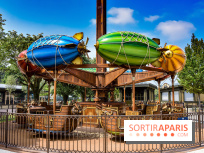
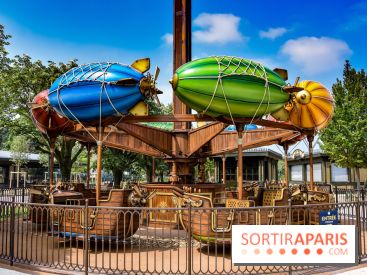
After years of drift, the garden’s concession was entrusted to the LVMH group in 1995, which launched major works and opened up space for greenery and flower-lined paths. With an orientale inspiration in the 2000s, the site chose, from 2017 onward, the steampunk aesthetic, foreshadowing substantial works of modernisation and restauration of the buildings erected under Napoleon III, and added new attractions for families.
The snippet contains only an embedded YouTube video and no French text to translate. If you provide the actual French passage, I can rewrite it into a natural, idiomatic English version (journalistic style) while preserving the HTML tags.Further reading:
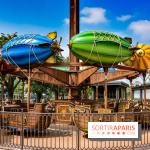
Jardin d'Acclimatation, the amusement park in the heart of Paris
Once again, the Jardin d'Acclimatation welcomes us for some fun and relaxation. This amusement park for small children offers 40 attractions for children from 1 year of age, an educational farm and restaurants on the edge of the Bois de Boulogne at the gateway to Paris. [Read more]
Did you know? At the heart of the Jardin d'Acclimatation is an educational farm: Ferme Sainte-Hilaire, a must-see for the whole family! [Read more]
Dates and Opening Time
On October 9, 2026
Location
Jardin d'Acclimatation
Route de la Porte Dauphine à la Porte des Sablons
75116 Paris 16
Route planner
Booking
Check the prices of this ticketing service
More information
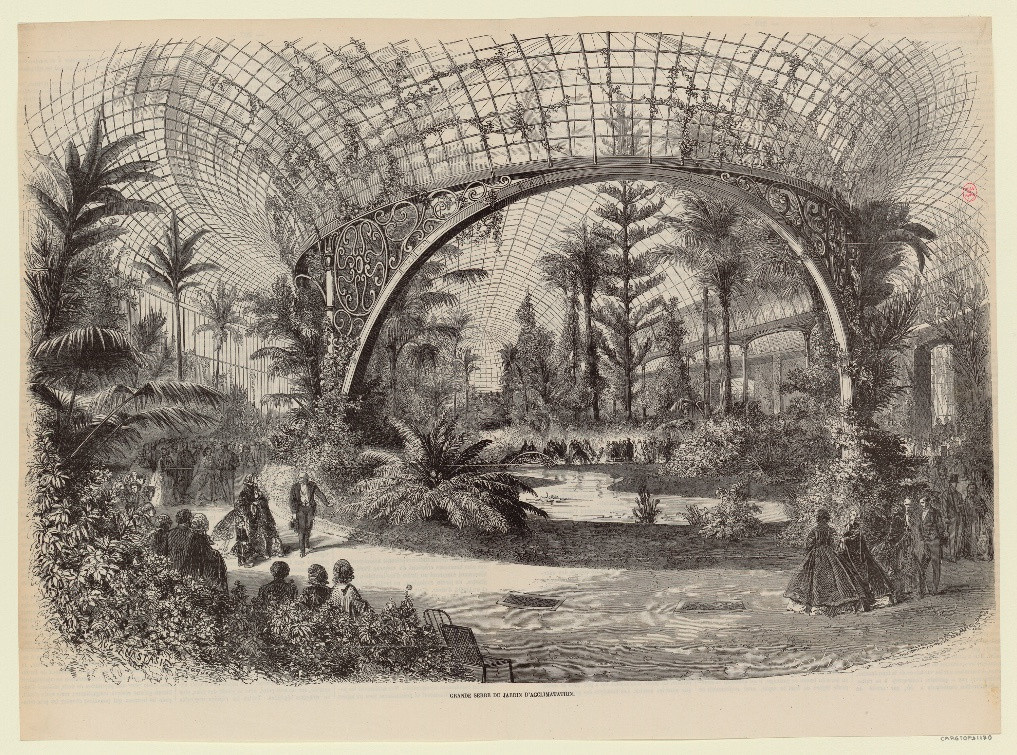
Iconographies : Header : Large greenhouse of the Jardin d'Acclimatation, Jean Best Bois de Boulogne as the crow flies, with the layout of the new Jardin d'Acclimatation, Anonyme General view of the Jardin d'Acclimatation, Th. Muller Menu of December 25, 1870, at Café Voisin Les Achantis - Le Repas, Julien Damoy Jardin d'Acclimatation, Alfred Delauney























 Jardin d'Acclimatation, the amusement park in the heart of Paris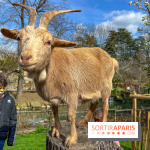
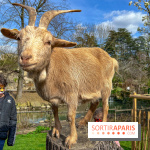
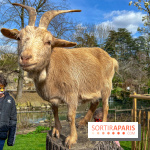
 The Sainte Hilaire educational farm, to discover the world of farms at the Jardin d'Acclimatation