On Monday, October 15, 1917, one of the most famous spy of World War I was executed at the Bois de Vincennes firing range. A courtesan, a beloved Oriental dancer, and an icon of the Belle Époque, Mata Hari was accused of having spied on France for Germany, and was shot by French authorities at the end of a brisk trial that revealed little truth. The former Dutch exotic dancer had, in reality, nothing of the grand spy whose nom de plume continues to fuel fantasies more than a century after her death.
Born under her real name Margaretha Geertruida Zelle, Mata Hari was born on August 7, 1876 in Leeuwarden, in the province of Friesland in the the Netherlands. The daughter of a well-off, attentive hatter, she attends a reputable school where she studies the arts, proper manners, and foreign languages. But since adolescence, the young Margareth dreams of glory, recognition, and, above all, of discovering the Parisian life she fantasizes about.

Thus, after her father's bankruptcy and her mother's death, while she is sent to a teacher-training college in Leiden, the 17-year-old answers a classified ad in a local newspaper from a Scottish-born officer serving in the Dutch colonial army, Captain Campbell MacLeod. The couple marry in 1895 and move to the Dutch East Indies, first Java and then Sumatra, from 1897 to 1902.
After the failure of her marriage, which yielded a son and a daughter, Margareth returns to Europe in 1903 and decides to try her luck in Paris, where she becomes, for a time, a model for painters. Adopting the pseudonym Lady MacLeod, she manages to pass herself off as an aristocratic woman thanks to an elegant wardrobe assembled with her last funds.
It must be said that her education serves her well: she speaks English, German, French, Spanish, and Javanese; she can hold conversations in the most cosmopolitan circles, and her distinctive looks—those mysterious exotic features, her olive-toned skin, her large dark eyes, her curly hair and her slender, graceful frame—have a way of captivating the men who fall under her spell.

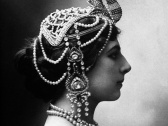
Determined to make a name for herself, Margareth proposes an equestrian act to Ernest Molier, founder in 1880 of the Molier Circus, who advises a nude routine. The Dutchwoman agrees and mounts a horse in a light Hindu-dancer costume: Mata Hari is born. Her artistic career takes off in grand fashion on the Molier Circus stage, which gathers, on stage and in the stands, the great names of the aristocracy and the artistic and social life of the era.
"I was born in the deep south of India, on the Malabar coast, in a holy city called Jaffuapatam, within a family of the sacred caste of brahmins. My father, Suprachetty, was nicknamed, because of his charitable and devout spirit, Assivardam, which means 'Blessing of God.' My mother, the leading bayadère of the Randa Swany temple, died at fourteen, on the day of my birth. The priests, after cremating her, adopted me and baptized me Mata-Hari, which means 'Dawn’s Ward'." raconte-t'elle sur ses origines.
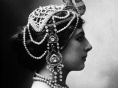
During her years in the Dutch East Indies, Mata Hari embraced local customs, notably the indigenous dances. On March 13, 1905, Emile Guimet invited her to perform at the museum he founded, the Guimet Museum. The next day, headlines celebrated the success of her portrayal of the goddess Shiva.
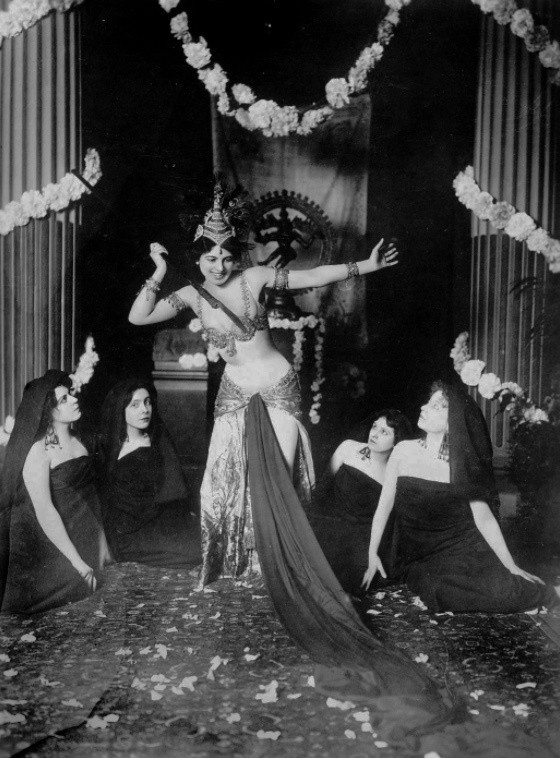
In a 1905 issue of Le Courrier Français, a journalist describes the dancer's act as follows: "She undulates beneath the veils that both hide and reveal her. And it is unlike anything we have seen. Her breasts rise languidly, her eyes grow shadowed. Her hands reach out and fall back, slick with sun and ardor."
Her career as an Oriental dancer is definitively launching, and her numbers blending Oriental dance with striptease are in high demand in fashionable salons and the tight-knit circles of worldly men and women, making her the it-girl of Paris, a figure loved for novelty and exotica.
Frivolous and spendthrift, the dancer leads a luxurious lifestyle, staying at the finest hotels in European cities where she performs, and spending lavishly to cover the costs of her numerous conquests. But Mata Hari gives more time and emphasis to her career as a courtesan than to her artistic career. She accumulates many lovers, high-ranking militaries, politicians, and other influential figures, and lets opportunities slip by.
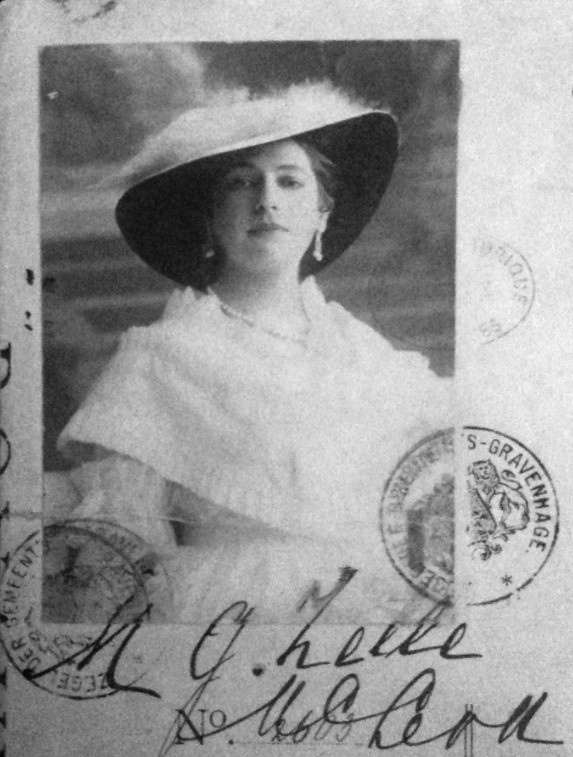
After a series of ups and downs, her career faded, and at the dawn of the First World War her dances no longer drew crowds, fashion now favoring the Russian ballets over Oriental numbers. Penniless, Mata Hari could no longer live in style and returned to the Netherlands, where she was approached, in November 1915, by Carl Krämer, the German consul general, tasked with recruiting individuals capable of helping Germany by gathering information.
Mata Hari accepts Krämer's offer to gather and relay intelligence to the German secret services in exchange for 20,000 francs and a code name: H-21. After five weeks in Paris, during which the rookie spy fails to produce any verifiable information, she is sent to learn the trade from the most famous of German spies, Elsbeth Schragmüller, alias Fräulein Doktor, to train in espionage.
Back in Paris on June 17, 1916, she finds herself in the crosshairs of capitaine Georges Ladoux of the Second Bureau’s centralization of intelligence. Forewarned by British authorities about the woman’s suspicious nature, the contre-espionnage français places her under surveillance constante at the Grand Hôtel where she is staying.

Taken to the War Ministry, she is questioned about her links with Germany. Infatuated with Vadim Maslov, a young Russian officer fifteen years her junior who had been serving France and was being treated at Vittel for an eye injury, Mata Hari accepts Ladoux's proposal: to become a double agent and to gather intelligence on the enemy, in exchange for a pass to Vittel and a million francs — money that would never be paid.
Sent to Madrid, a true nest of spies from all nationalities and, in particular, German, Mata Hari makes contact with the Captain Arnold von Kalle of the Reich's embassy and wins over numerous German diplomats to extract crucial intelligence that she promptly passes on to French counter-espionage. But Kalle is not fooled and keeps his guard up around the spy.
When the Germans realize there’s nothing clever to gain and that the French are using it too, they dispatch a series of telegrams to Berlin in which they note that "Agent H-21 has proven useful," fully aware that the French intelligence services will be able to crack the code and expose the ruse. The trap snaps shut on the spy, who nevertheless decides to return to France to claim her reward for services rendered and to be reunited with her young lover.
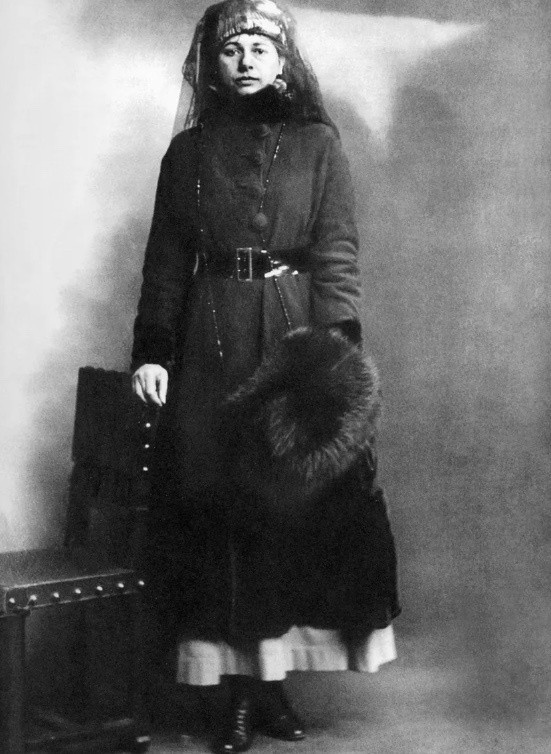
On February 13, 1917, Mata Hari is arrested at the Hôtel Elysée Palace where she was staying and questioned the same day by examining judge Pierre Bouchardon, convinced of her guilt. Held in the women's Saint-Lazare prison, Mata Hari ultimately confesses her allegiance to the enemy after 14 grueling interrogations. But the spy, aware of the peril of a trial, downplays her role and trips over futile attempts at justification, insisting she had only passed along inconsequential information to a German intelligence agent.
The case closed on June 21, 1917 and the closed-door trial of this 'traître de la nation' begins on July 24 of the same year. While Mata Hari was cowardly disavowed by Captain Ladoux and no concrete charges or tangible evidence are presented, the seven jurors, all men and all military, prefer to highlight her immoral and debauched lifestyle. Some will say that Mata Hari's verdict largely served as a propaganda tool to reaffirm France's authority, which was determined to hold firm until victory, even if it meant shooting a woman.
Convicted of treason for wartime espionage against the enemy, Mata Hari was sentenced to death after a flawed trial, even though the true nature and extent of her activities remained uncertain, and history would later show that she was a second-rate, overrated spy who fed information of little consequence.
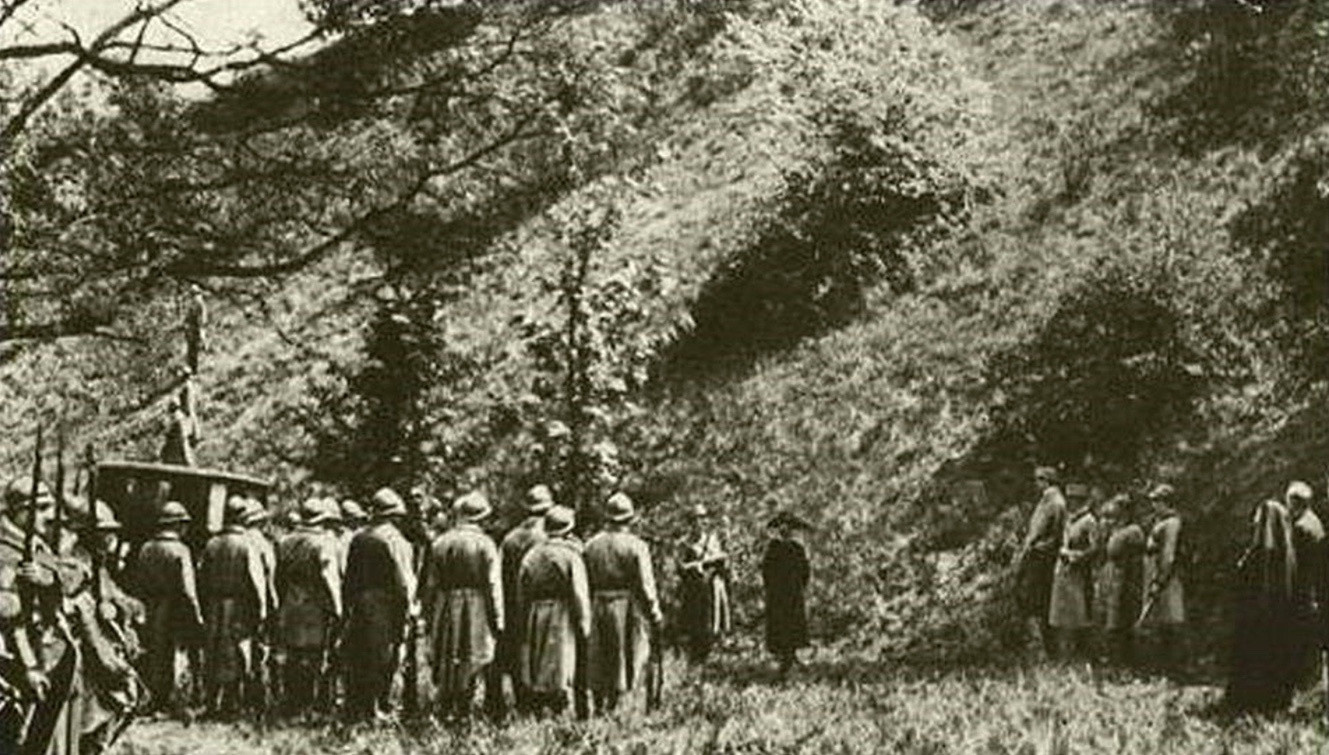
On Monday, October 15, 1917, in the early hours of the morning, the spy was led to the Bois de Vincennes alongside a firing squad of zouaves. Refusing to have her eyes blindfolded until the last moment, Mata Hari was shot in the ditches of the fortress at Vincennes, not without once again displaying a last wave of panache.
Witness to her last moments, Léon Bizard, chief medical officer of the Police Prefecture, recounts the dancer’s unflinching calm before death in his memoirs published in 1925: "While an officer reads the verdict aloud, the dancer, who refused to have her eyes blindfolded, remains stoic, positioning herself against the post, a rope—barely tied—looped around her waist... (…) Mata Hari still smiles at Sister Léonide kneeling nearby and offers a farewell gesture. The commanding officer raises his saber: a sharp crack, followed by a more muted coup de grâce, and the Red Dancer collapses headfirst, a lifeless mass from which blood drips."
For further reading:
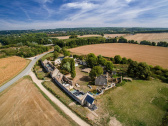
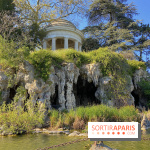
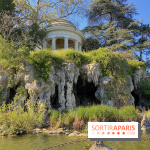
Paris's Bois de Vincennes, a green haven of peace to the east of the capital
The Bois de Vincennes in Paris is the perfect place to go green! Accessible by metro, this verdant haven of peace is the perfect place to stroll, picnic, do sport and enjoy nature at the same time. [Read more]
Dates and Opening Time
On October 15, 2026
Location
Bois de Vincennes
Plaine de la Belle Etoile
75012 Paris 12
Route planner
More information
Iconographies : Mata Hari at the Musée Guimet Residence permit granted to Mata-Hari. Service Historique des Armées



























 Paris's Bois de Vincennes, a green haven of peace to the east of the capital