Did you know that the Seine flood in January 1910 is considered one of the most catastrophic in Paris’s history? Often referred to as the 100-year flood, it not only inundated half the city but also left an indelible mark on Parisian history. Let’s take a look at the story of this flood, which remains etched in people’s memories.
In January of that year, the river reached 8.62 meters at the Pont d'Austerlitz, turning the capital into a veritable inland lake. More than a century later, as the Seine once again rises above 3.50 meters this February 2026 and the riverside roads are closed in Paris, history invites us to look back to better understand what the future may hold.
That winter, weather conditions were particularly harsh: heavy rain and cold temperatures froze the ground, making it impermeable. Water could no longer seep into the soil; instead, it ran across the surface and caused the rivers to swell. The Seine’s tributaries—the Yonne, the Loing, the Grand Morin and the Marne—swollen with rainwater, poured torrents into the main river. The geographical setting of Paris, a kind of natural basin, made matters worse. And one thing is often overlooked: the recently modernized sewer network also helped spread water through the city, like an enormous system of communicating vessels.

On January 20, 1910, the flood began. Paris was then France’s major port, in the midst of modernization: electrification, the expansion of the Metro and the first automobiles. Despite a major flood in 1876, no one really took the warning seriously. Faith in progress was absolute, and that was what made the disaster all the more devastating.
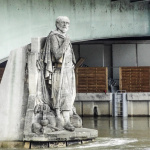
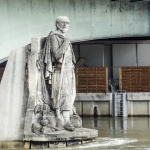
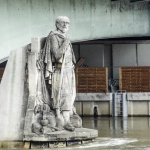
The Zouave on the Alma Bridge sounds the alarm. That morning, Parisians discover the famous statue of the Zouave on the Alma Bridge submerged up to its feet. Traffic on the Seine is quickly halted. The signal is clear: a crisis is imminent.
On January 26, the riverbanks are underwater. The water level is close to 7.51 meters. Iconic places such as the Gare Saint-Lazare and Boulevard Haussmann are submerged. Paris is beginning to look like a city of canals.
On January 28, the flood peaks at 8.62 meters. It is a record high, never matched since. By comparison, the 2018 flood reached just 5.84 meters. Some neighborhoods in the 7th, 13th, 15th and 16th arrondissements are left under 1.50 to 2 meters of water.
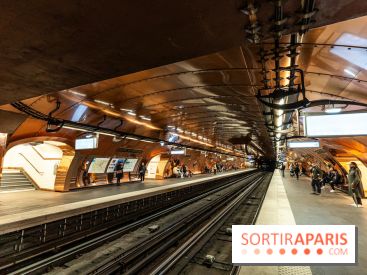
The metro is flooded. The network, barely a decade old, is not watertight. Several lines fill with water, and the tunnels become submerged passageways. It will take several weeks after the waters recede to restore service. The episode bears a striking resemblance to the disruptions currently affecting the RER and metro networks during flooding.
Paris gets around by boat. In many neighborhoods, the streets are navigable. Striking photographs show Parisians in canoes in front of Haussmann-era buildings. Members of Parliament travel to the National Assembly by boat. Delivery workers, doctors, firefighters: everyone rows to get around this ghost town.
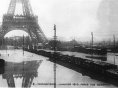
The Eiffel Tower is surrounded by water. The Champ-de-Mars looks like a tranquil bay, and the Iron Lady, barely twenty years old, rises from the waters like a metal island. This image is seen around the world. These photographs can be viewed in the BnF archives on Gallica and in the collections of Paris Musées.
200,000 Parisians are affected by the disaster, and 40 kilometers of urban roads are under water. Entire families are crammed into the upper floors of their neighbors’ homes. The Palais de Justice and its precious archives are submerged. The Jardin d'Acclimatation and the Gare d'Orsay disappear beneath the floodwaters. And to top it all off, a giraffe at the Jardin des Plantes dies of pneumonia because of the damp conditions.
Groundwater plays a little-known role. Streets several hundred meters from the river are flooded from below, even though the Seine has not yet overflowed nearby. Water rises through cellars, pipes and sewers. The shutdown of the Société urbaine d'air comprimé plant even causes public clocks and elevators to stop working. This is the mechanism that Météo-France and the BRGM now monitor in their forecasting tools.
The damage is colossal, and the outpouring of solidarity remarkable. Losses are estimated at more than 400 million gold francs, or around 1.5 billion euros in today’s money, according to some estimates, and several tens of billions if the value of modern infrastructure is included. Although there were only five direct victims, the health consequences were severe: cases of typhoid and scarlet fever multiplied. But the disaster also brought a wonderful display of solidarity: the Red Cross, the League of French Women and numerous associations distributed soup, food, coal and clothing. The Seine did not return to its normal course until March 15, 1910, nearly two months after the flood began.
The rivers Yonne, Loing, Grand Morin and Marne, swollen by incessant rainfall, pour their raging waters into the Seine, causing an unprecedented rise in water levels. On January 26, the water reaches almost 7.51 metres, flooding the riverbanks and turning landmarks such as Saint-Lazare station and Boulevard Haussmann into expanses of water. January 28 marks the peak of the flood, with water levels at 8.62 metres, radically altering the daily lives of Parisians, who have to navigate the city by boat.
The following day, although the rain stops and the Seine begins to recede, the consequences are disastrous: 40 kilometers of urban roads are flooded, affecting 12 districts and 200,000 buildings. Numerous monuments, including the Palais de Justice and its precious archives, are submerged. Material damage totals more than 400 million gold francs, equivalent to around 1.6 billion euros today. The restoration and reinforcement of damaged structures require immense effort. The event leaves a profound mark on society, dominating conversations and the French postcard market until 1913. Below, the Gare d’Orsay and the Jardin d’Acclimatation are seen underwater.

The floodwaters gradually recede after January 30, but the Seine will not return to its normal course and life to its usual rhythm until March 15. This natural disaster leaves a heavy toll: nearly €1.5 billion in damage, five victims and the tragic loss of a giraffe at the Jardin des Plantes, which died of pneumonia, not to mention the impact on public health, with cases of typhoid and scarlet fever. This sad episode highlights Paris’s vulnerability, despite its status as a major port city undergoing modernization.


The flood also exposed the vulnerability of Paris’s infrastructure. The sewer networks, recently modernized, were overwhelmed by the influx of water, contributing to the flood’s rapid spread. In addition, the shutdown of the Société urbaine d'air comprimé plant brought public clocks and elevators to a halt, adding to the chaos.
The economic consequences were devastating. Booksellers and publishers in particular paid a heavy price, losing entire stocks of books. As the waters receded over several weeks, they left behind a scene of desolation, with muddy streets, damaged buildings and an economy in need of rebuilding. Entire neighborhoods were submerged, vital infrastructure was damaged and the local economy was severely affected. Period photographs show deputies traveling to the National Assembly by boat and the Zouave statue on the Pont de l’Alma—an iconic Paris flood marker—with water up to its shoulders. Navigation on the Seine was suspended, major factories shut down, and rising waters brought essential services to a halt, including public clocks and elevators, compounding the chaos.

This historic flood also prompted remarkable acts of solidarity. Organizations such as the Red Cross, the League of French Women, and even the Camelots du Roi mobilized to help those affected, distributing soup, food, coal, and clothing.
Despite the considerable damage, the 1910 flood was not particularly deadly. However, it left behind a heavy economic toll and an indelible memory in the minds of Parisians. This once-in-a-century flood stands as a testament to the power of nature in the face of human progress and a reminder of the need to anticipate and prepare for such events. Even today, we still regularly face flooding on the Seine.
The answer is yes, and the authorities know it. The city has changed profoundly since 1910: concrete has sealed the ground, the population has tripled, and underground infrastructure is far denser. A similar scenario today would bring not only Paris but the whole Île-de-France region to a standstill, with major consequences for transport networks, hospitals and roads. The Île-de-France regional prefecture also maintains a permanent monitoring system for the Seine basin to anticipate these risks. The 1910 flood is certainly more than a page of history: it is a warning etched into Paris’s memory, and onto the façades of some buildings in the 15th arrondissement, which still bear the indelible mark of how high the waters rose that January. We also invite you to discover the history of the Fontaine de Mars in the 7th arrondissement, one of the silent witnesses to this historic flood.
The story of the Zouave of the Alma Bridge: the statue that gauges the Seine’s floods in Paris
Are you familiar with the Zouave, the iconic statue on the Pont de l'Alma that serves as a gauge for the Seine's water levels during major floods in Paris? Here’s the story behind it. [Read more]
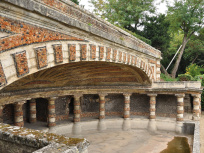
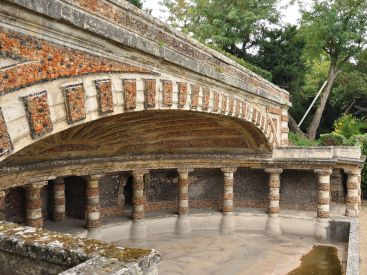
Discover the Fontaine de Mars, a neoclassical jewel in Paris's 7th arrondissement. Erected between 1806 and 1809, this fountain, which bears witness to the 1910 flood, is a landmark in Parisian history. [Read more]
The rising waters of the Seine in Paris are disrupting daily life for residents and drivers alike. The river’s level has surpassed the critical threshold, leading to the closure of several embankment roads and causing traffic disruptions. With peak levels expected, quays closed, and ongoing alerts, here’s a comprehensive update to help everyone stay prepared. [Read more]
Sources:
Pawlowski. Auguste. The Seine Floods (6th–20th centuries)
Wikipedia: the 1910 flood
Photos: Paris Musées
Prices
Free


































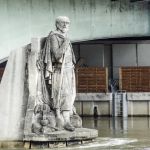 The story of the Zouave of the Alma Bridge: the statue that gauges the Seine’s floods in Paris



 Did you know? The Fontaine de Mars, also known as the Fontaine du Gros-Caillou, bears witness to the 1910 flood.



 Flooding of the Seine in Paris: Quays closed off — traffic restrictions in place this Thursday