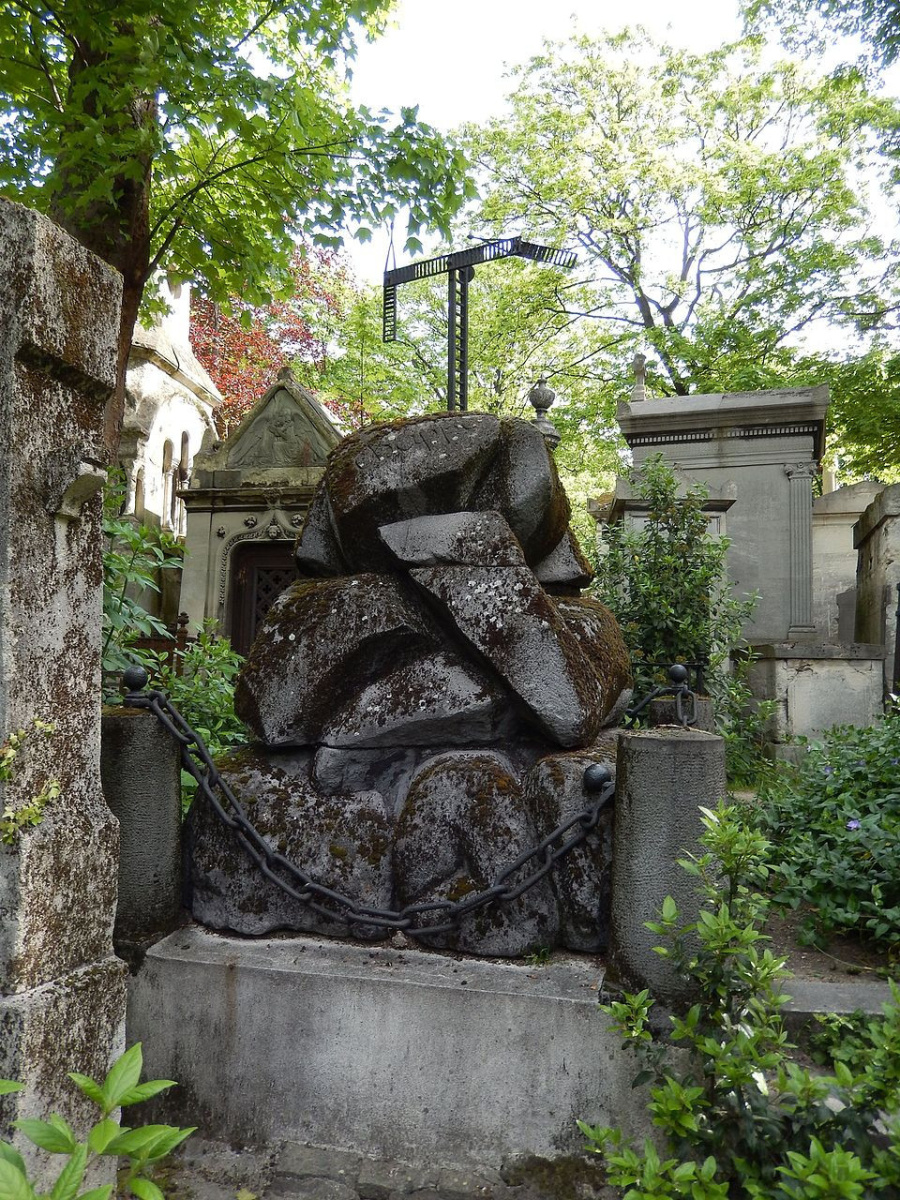
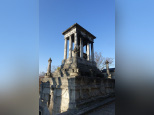
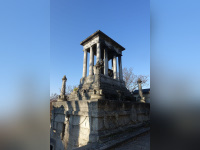
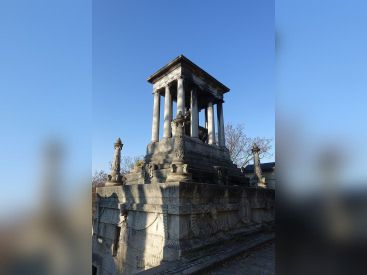
At the bend in the 29ᵉ division of Père-Lachaise, hidden among the tombs, a curious structure interlocks: a pile of mossy rocks, carved without artifice, topped by a small iron telegraph. This is one of the cemetery's most unusual tombs, that of Claude Chappe. But what is the secret behind this strange tomb?
Born in 1763, Claude Chappe was an abbot turned inventor. His name is often forgotten, and yet... he was the father of the very first long-distance communications network: the optical telegraph. As early as 1794, his articulated arms perched on towers could transmit coded messages between Paris and Lille in less than two hours! In an age without electricity, this was a technical and political revolution. The system was adopted by the Republic to transmit military orders in real time. Claude Chappe became a true hero of pre-wire communication.
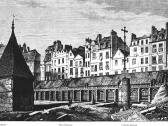
Chappe was initially buried in the now-defunct Vaugirard cemetery. When the cemetery was disused, his remains were transferred to his brother's tomb in Père-Lachaise, along with this characteristic rock stele. The rough, irregular rocky mass can be interpreted as a metaphor for obstacles. In his quest to gain acceptance for the optical telegraph, Chappe had to contend with the skepticism of scientists, bureaucratic delays and technical challenges... Perhaps these rocks represent the path strewn with pitfalls he had to climb.
Perched at the very top of the monument, the miniaturized optical telegraph represents the culmination of his work. It dominates the stones like an idea that triumphs over difficulties.
This page may contain AI-assisted elements, more information here.