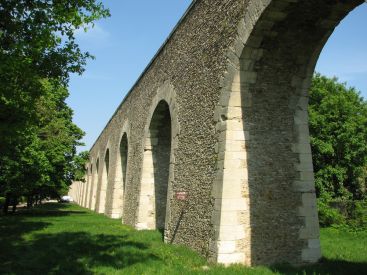
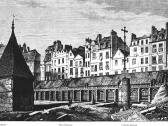
The capital's underground passages hold many secrets, including catacombs, stone quarries, sewers and tunnels. In the 14th arrondissement, you'll find the remains of an aqueduct, which a few centuries ago brought water to the capital from Rungis. Based on an idea put forward by Henri IV and taken up by Marie de Médicis, an infrastructure was built along the route of the ancient Roman aqueduct to supply water to Parisian fountains as early as 1623.
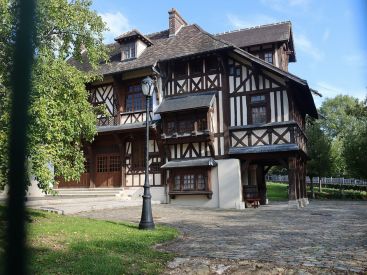
Dotted with 27 manholes over a distance of more than 13 kilometers, the aqueduct runs underground beneath the capital, but in the communes of L'Haÿ-les-Roses and Arcueil where it circulates, the remains of the manholes are quite well preserved. It then enters Paris at the Cité Universitaire, as far as the Maison du Fontainier, the last, a beautiful building listed as a historic monument. Today, the aqueduct is operated by Eau de Paris and is still in service, although it is no longer very useful. Since 1904, however, it has been supplying water to the Lac de Montsouris reservoir.
Very few of them are still visible and accessible to the general public:


 La Maison du Fontainier: one of the last underground remains of the Aqueduc Médicis in Paris
In the heart of the 14th arrondissement, the Maison du Fontainier is home to the last glimpse of the Médicis aqueduct. Listed as a historic monument, this underground vestige opens its doors only on guided tours, to discover the history of water in the capital. [Read more]