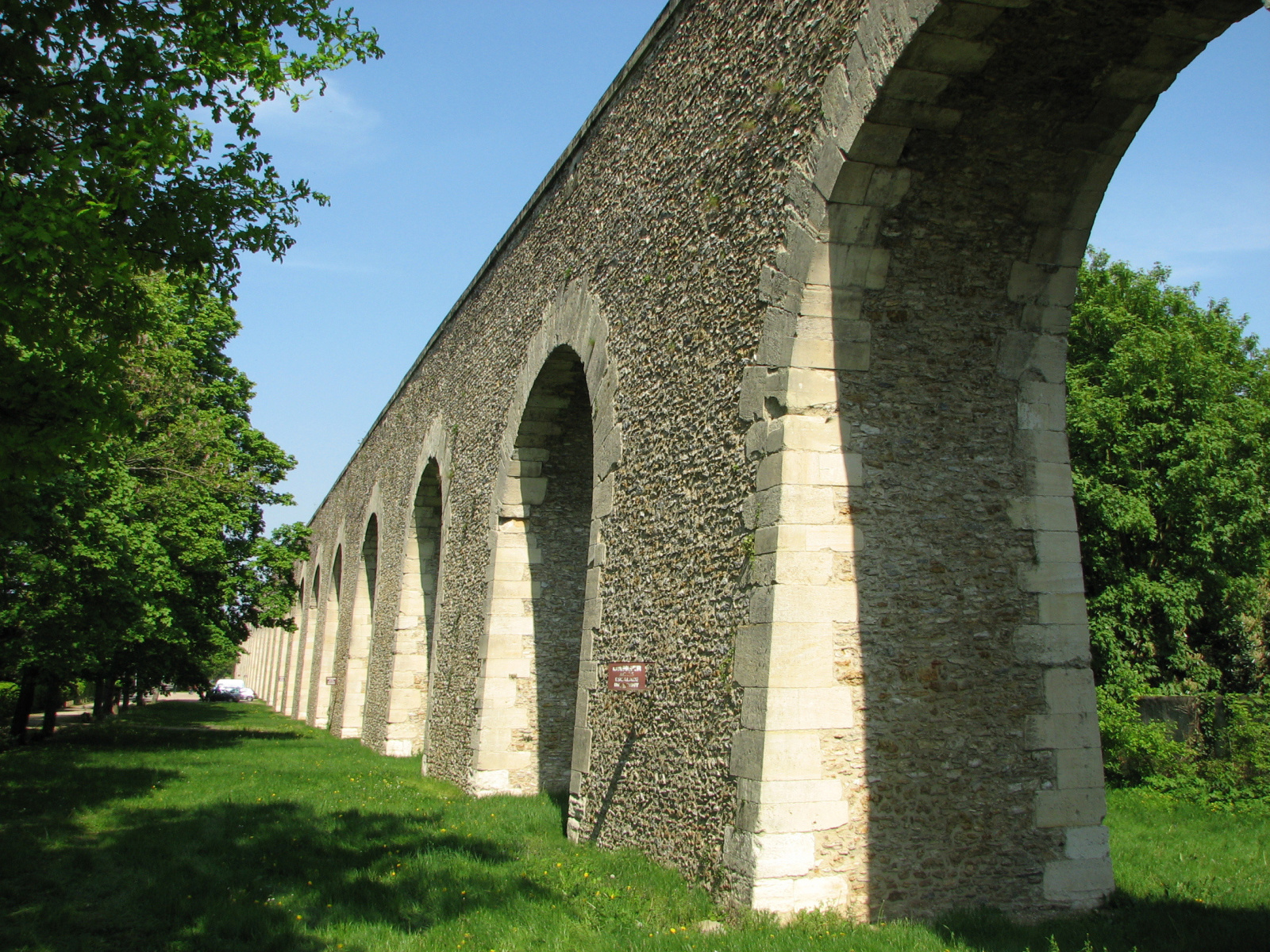
Long before the modern era, during the reign of the Sun King, water poured from the grand fountains of Versailles through engineering feats worthy of a fairy tale: this is the achievement attributed to the Louveciennes aqueduct, sometimes called the Marly aqueduct, in the Yvelines. Built between 1681 and 1685 during Louis XIV’s rule, it was part of an extensive system designed to channel water from the Seine all the way to the gardens of the Versailles and Marly palaces—a monumental challenge aimed at meeting the water needs of the fountains and elaborate water features cherished by the Sun King.
This aqueduct didn't operate in isolation: it was the culmination of a system centered around the Machine of Marly, an enormous hydraulic installation situated on the Seine in Bougival. Made up of 14 paddle wheels, this machine siphoned water from the river and lifted it up to the top of the Louveciennes hill – nearly 150 meters above the Seine's surface – using an intricate network of pumps and pipes.
The Louveciennes aqueduct is a striking landmark: stretching over 643 meters in length, it is supported by 36 imposing arches that still loom over the surrounding landscape. Its width ranges from 2 to 4.4 meters, and it rises up to 20 meters high, standing as a remarkable example of 17th-century hydraulic engineering.
At one end stood the Levant Tower, which received water piped in from the Seine, while at the other was the Juggler’s Tower, through which the water was then directed toward reservoirs serving the royal gardens. A central canal, lined with lead and measuring one meter wide by two meters deep, enabled the water to flow by gravity throughout the entire structure.
The aqueduct was taken out of service around 1866, replaced by more modern underground pipelines. Since then, it has been designated a Historic Monument, celebrated for its essential role in shaping the quintessential French way of life under Louis XIV.
Over the centuries, it has evolved into a subtle yet vital emblem of Yvelines' heritage: today, strolling beneath its arches provides a captivating glimpse into the region's hydraulic history, allowing visitors to envision the water once channeled to feed the royal fountains.
This page may contain AI-assisted elements, more information here.
Dates and Opening Time
Next days
Friday:
from 12:00 a.m. to 11:59 p.m.
Saturday:
from 12:00 a.m. to 11:59 p.m.
Sunday:
from 12:00 a.m. to 11:59 p.m.
Monday:
from 12:00 a.m. to 11:59 p.m.
Tuesday:
from 12:00 a.m. to 11:59 p.m.
Wednesday:
from 12:00 a.m. to 11:59 p.m.
Thursday:
from 12:00 a.m. to 11:59 p.m.
Location
Louveciennes Aqueduct
Chemin de l'Aqueduc
78430 Louveciennes
Route planner