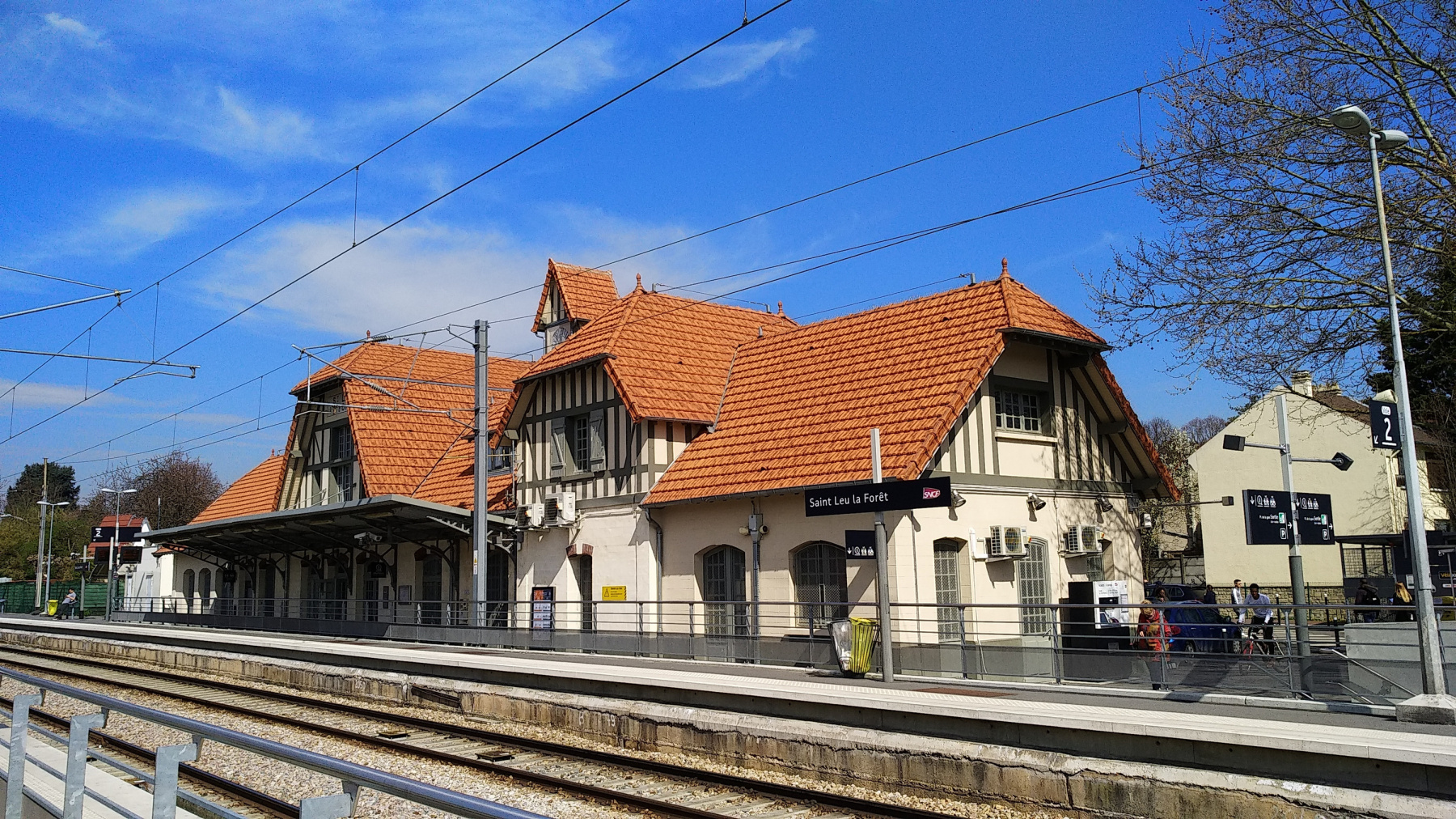
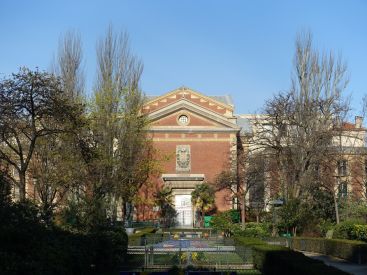
Sometimes you pass through without lifting your eyes, in a rush to catch your train. Yet, the Saint-Leu-la-Forêt train station deserves a moment of attention. With its clock tower, its half-timbered façades, and its air of a quaint seaside resort station, this building on the H line hardly looks like the others. Granted the Regional Heritage of Interest label, it reminds us that the Île-de-France heritage also hides in everyday places.
Its name is simply that of the town it serves since the late 19th century. The station opened in 1876, with the launch of the Ermont-Valmondois line by the Compagnie des chemins de fer du Nord. At the time, the passenger building was rather plain, conceived first to ride the railway boom and to connect this commune in the Montmorency valley more easily to Paris and to nearby towns.
It was in the 1920s that the station took on the look we know today. The building was transformed to feature a spacious central hall, a clock tower, and a half-timbered façade that gives it that distinctly recognizable regionalist charm. The ensemble, credited to architect Gustave Umbdenstock, echoes with the nearby Taverny station, rebuilt in the same spirit. The result: a warm, almost theatrical silhouette, far from the cold image sometimes associated with suburban railway stations.
Still serving passengers on Line H, the station continues to anchor everyday journeys while preserving its interwar-era character. It’s not merely a waypoint: it’s a small urban landmark, recognizable by its clock and its ornate façades. A reminder, between trains, that some stations deserve almost as much attention as the destination.
This page may contain AI-assisted elements, more information here.