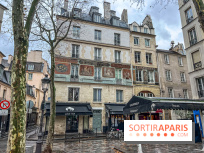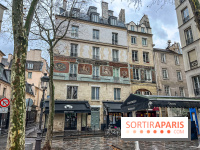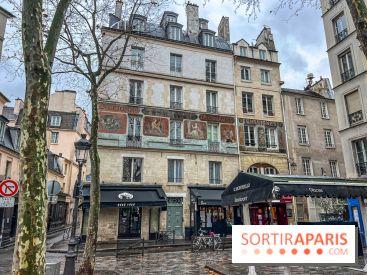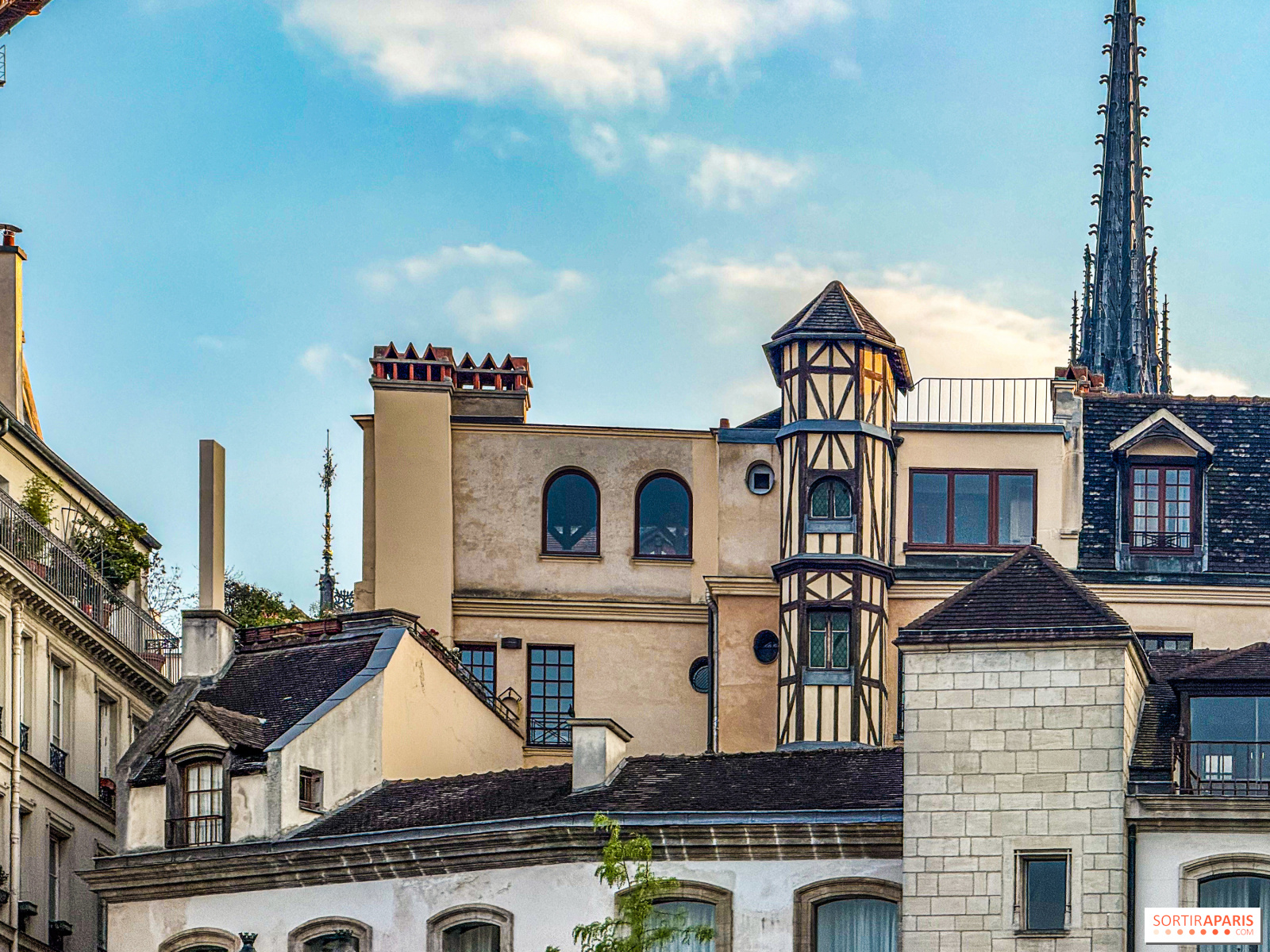
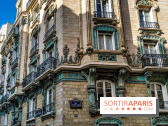
At first glance, everything suggests that this house on the Rue des Ursins is one of the rare medieval residences still visible in Paris. Located at the corner of Rue des Chantres, on the Île de la Cité, it showcases all the telltale signs of civil Gothic architecture: a turret, ogival openings, mullioned windows, ironwork, and an imposing wooden door. Yet, this building is not a relic of the Middle Ages. It was conceived by architect Fernand Pouillon and reworked in 1958, with the aim of recapturing the aura of old Paris that has vanished.
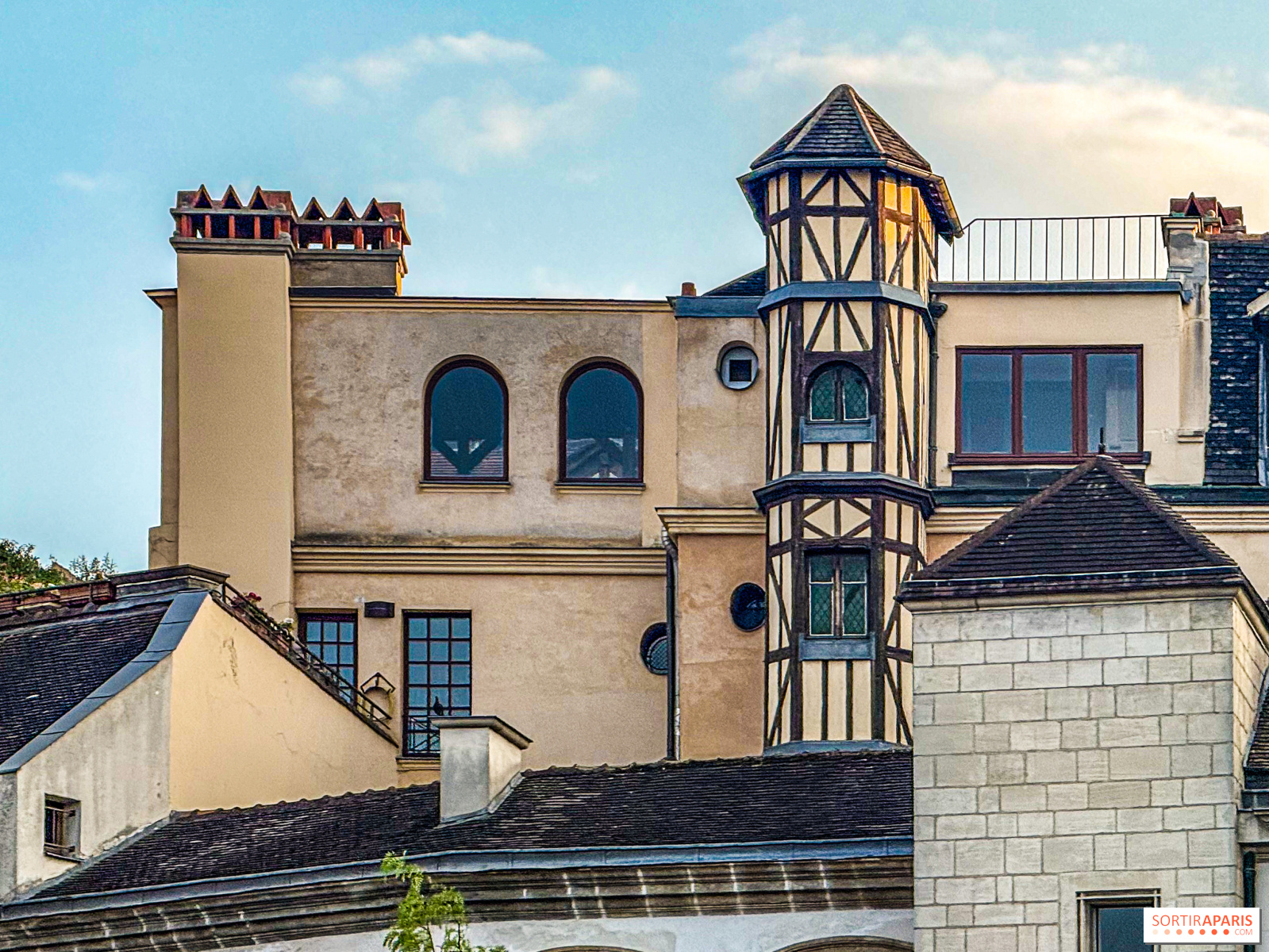
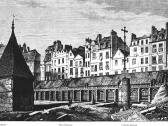
The project sits on a plot steeped in history. At the Moyen Âge, the hôtel de Jean de Jouvenel des Ursins, provost of merchants at the end of the 14th century, occupied this site. The building was, however, destroyed in the 17th century and no trace remains. Much later, photographs by Eugène Atget show a modest structure housing, among other things, a wine merchant and a hand-cart rental operator. After acquiring the parcel, Fernand Pouillon preserves part of the existing building but profoundly changes its appearance. He assembles antique elements salvaged from various edifices, such as window frames, doors or wrought iron, which he pairs with a carefully crafted contemporary framework to give the illusion of an old mansion.
This achievement also echoes the image many associate with the Île de la Cité, straddling medieval heritage and literature. The district was radically transformed in the 19th century during Haussmann’s renovations, which wiped out much of the old alleyways. The Rue des Ursins is among the few streets that preserve its historic layout. In his Memoirs of an Architect, published in 1968, Fernand Pouillon revisits this project: "After a year of work, the ruin, dismantled piece by piece, was replaced by a deft pastiche of deliberately disparate architectural elements, which since then have provoked envy and admiration in all who dream of a view of the Seine," the text reads.
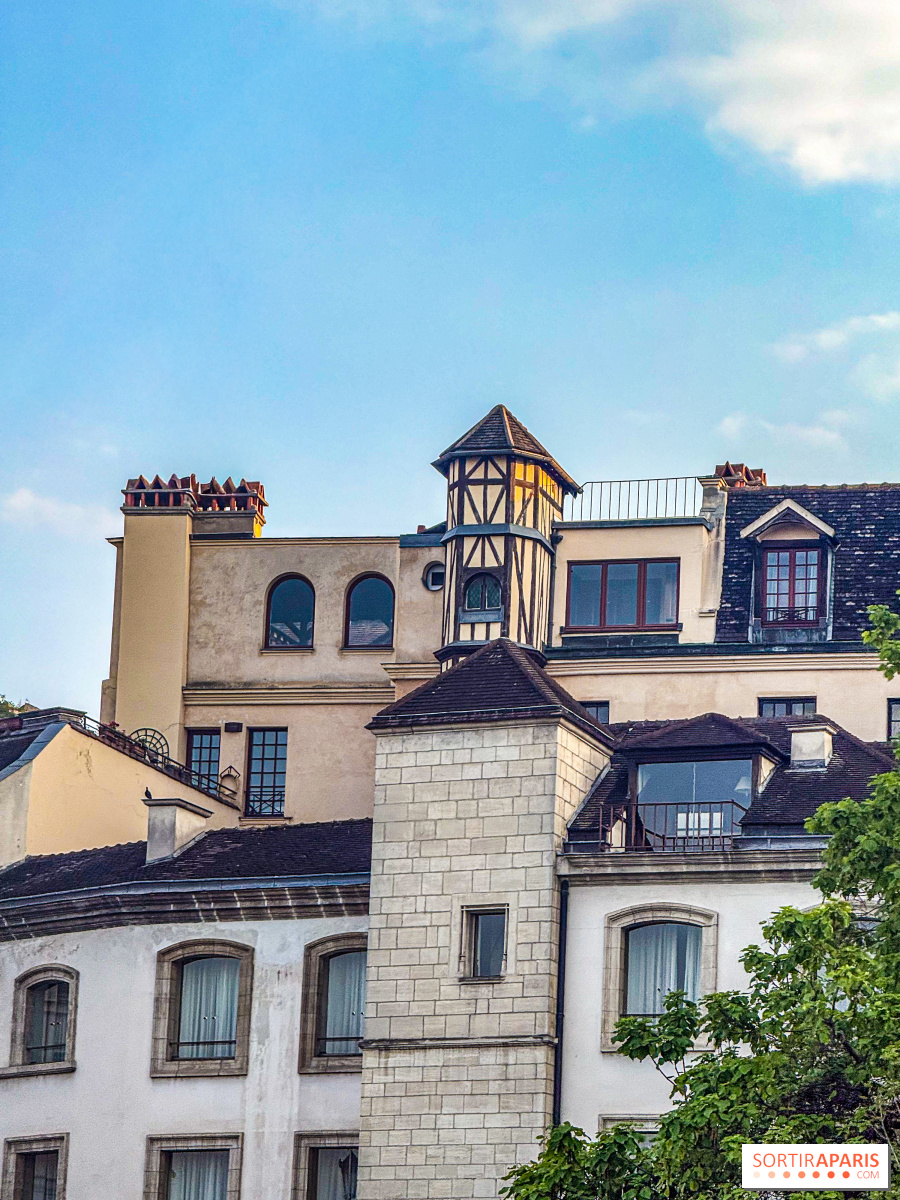
Today, this surprising residence shares its courtyard with the Hôtel de la Motte-Montgaubert, the former Maison des Chantres protected as a Monument historique. The complex notably housed, for several decades, the Paris residence of the Aga Khan and his family. As for the house on Rue des Ursins, it continues to catch the eye of walkers and cruise-ship passengers gliding along the Seine, whose river-facing perspective makes its architecture stand out, often leading them to mistake it for an authentic medieval building, even though it remains one of the capital’s most convincing architectural pastiches.
This page may contain AI-assisted elements, more information here.
























![[En attente de visuels] Sous les arbres de ce domaine se cache une demeure dessinée par l’architecte de Napoléon](https://cdn.sortiraparis.com/images/1021/66131/1327749-sous-les-arbres-de-ce-domaine-se-cache-une-demeure-dessinee-par-l-architecte-de-napoleon.jpg)
![[En attente de visuels] Sous les arbres de ce domaine se cache une demeure dessinée par l’architecte de Napoléon](https://cdn.sortiraparis.com/images/1022/66131/1327749-sous-les-arbres-de-ce-domaine-se-cache-une-demeure-dessinee-par-l-architecte-de-napoleon.jpg)
![[En attente de visuels] Sous les arbres de ce domaine se cache une demeure dessinée par l’architecte de Napoléon](https://cdn.sortiraparis.com/images/1023/66131/1327749-sous-les-arbres-de-ce-domaine-se-cache-une-demeure-dessinee-par-l-architecte-de-napoleon.jpg)
![[En attente de visuels] Sous les arbres de ce domaine se cache une demeure dessinée par l’architecte de Napoléon](https://cdn.sortiraparis.com/images/1024/66131/1327749-sous-les-arbres-de-ce-domaine-se-cache-une-demeure-dessinee-par-l-architecte-de-napoleon.jpg)