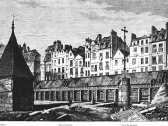
At the heart of 18th‑century Paris, a crowd gathers daily in a modest cimetière du faubourg Saint-Marcel... People don’t come to admire a monument or attend a ceremony, but to hope for a cure, to witness a miracle, or to behold scenes many deem inexplicable. For a few years, the cimetière Saint-Médard becomes one of the kingdom’s most controversial sites, to the point that it draws the attention of Louis XV. A very real story that seems right out of a fantastical novel.
The story begins in 1727 with the death of diacre François de Pâris, a prominent figure in the Jansenist current, famed for his austere life and care for the poorest. His tomb, located in the cimetière Saint-Médard, quickly draws devoted followers convinced that extraordinary healings occur there. At a time when medicine was limited and religious questions threaded through society, accounts spread across Paris at remarkable speed. Pilgrimages multiply and the tomb becomes a genuine site of popular devotion.
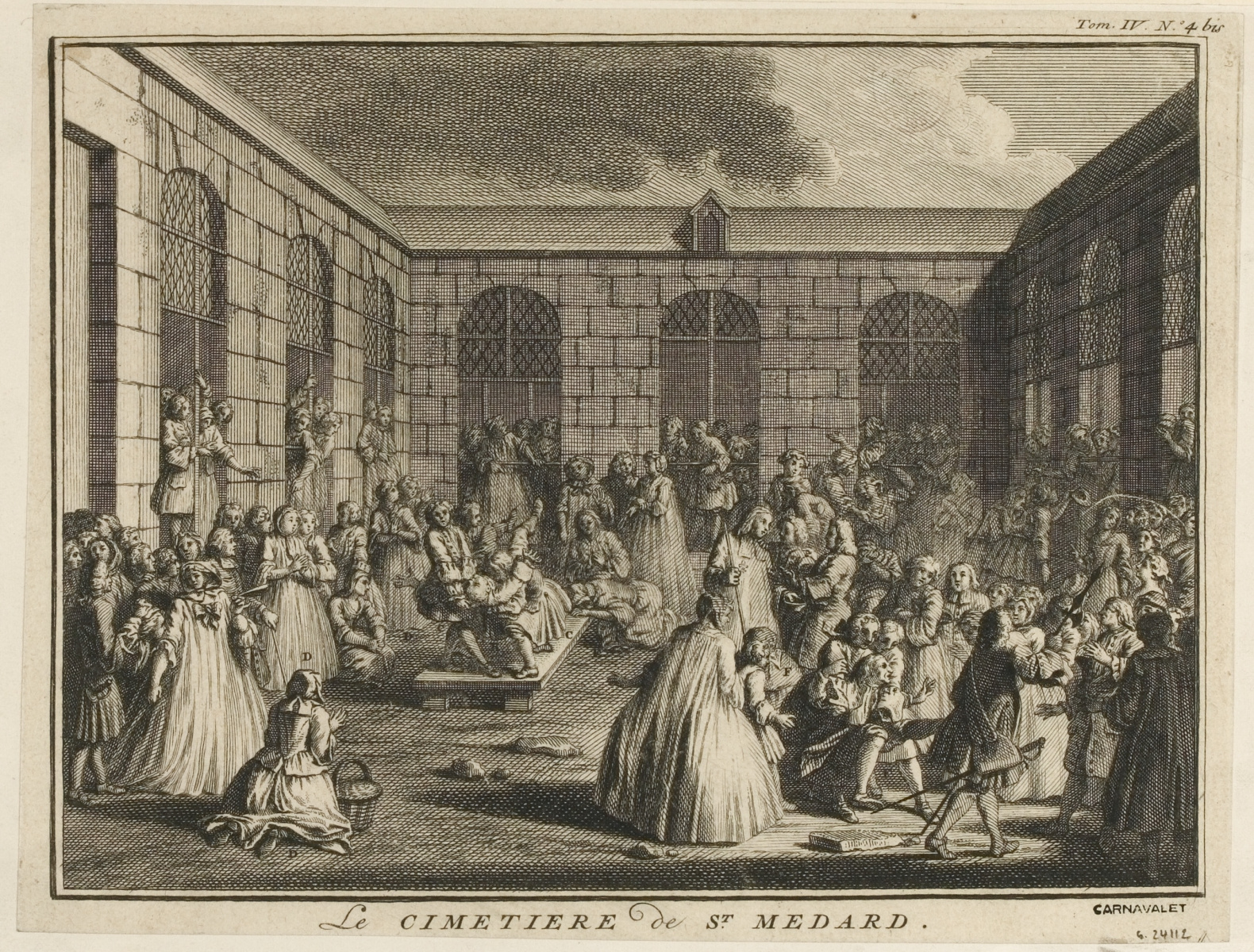
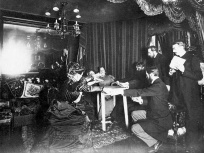
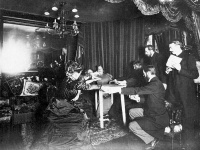
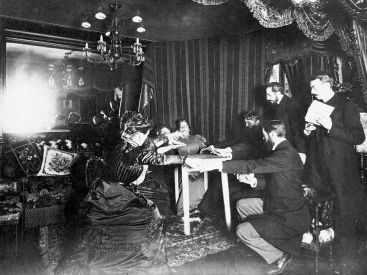
But soon the testimonies take on a far more spectacular turn. Pilgrims fall into a trance, are seized by convulsions, emit screams, or assume postures that witnesses deem impossible. Some even demand the famous "help" — asking to be struck with planks, logs, or iron bars, convinced that these blows relieve their suffering rather than intensify it. Contemporary chroniclers describe scenes that today would evoke both tales of possession and sequences from a horror film. Three centuries later, it’s hard not to think, with caution, of the imagery popularized by The Exorcist, even though contemporaries saw it first and foremost as a religious phenomenon.
The affair quickly outgrew the purely spiritual sphere. Religious authorities clash over how to interpret these manifestations, while the royal power fears increasingly hard-to-control crowds. In 1732, Louis XV orders the closure of the Saint-Médard Cemetery to put an end to the pilgrimages. The decision gives rise to an anonymous slogan that would become famous, posted on the cemetery gates: "By the King, God is forbidden to work miracles in this place". This phrase, both ironic and cutting, endures as one of the best-known lines in Parisian history.
Today, the episode of the Convulsionnaires de Saint-Médard remains one of the most singular chapters of old Paris. Between popular beliefs, religious clashes and political decisions, this affair reminds us that the capital has not only inspired the novels of Victor Hugo or the investigations of Fantômas. It also has its own catalog of stories where History and the surnaturel seem, for a moment, to walk side by side.
This page may contain AI-assisted elements, more information here.