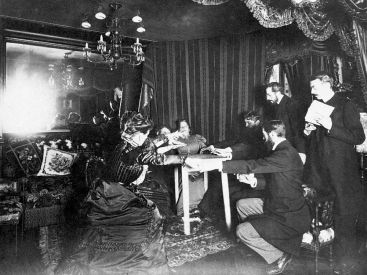
In the 19th century, Paris isn’t just a political, artistic, and scientific proving ground. The capital is also captivated by the unseen. In salons, table-turning takes place, spirits are summoned, and people seek to understand phenomena that intrigue as much as they divide. Gradually, spiritualism moves beyond mere fashionable entertainment to become a true current of thought, with its figures, its publications, and its meeting places.
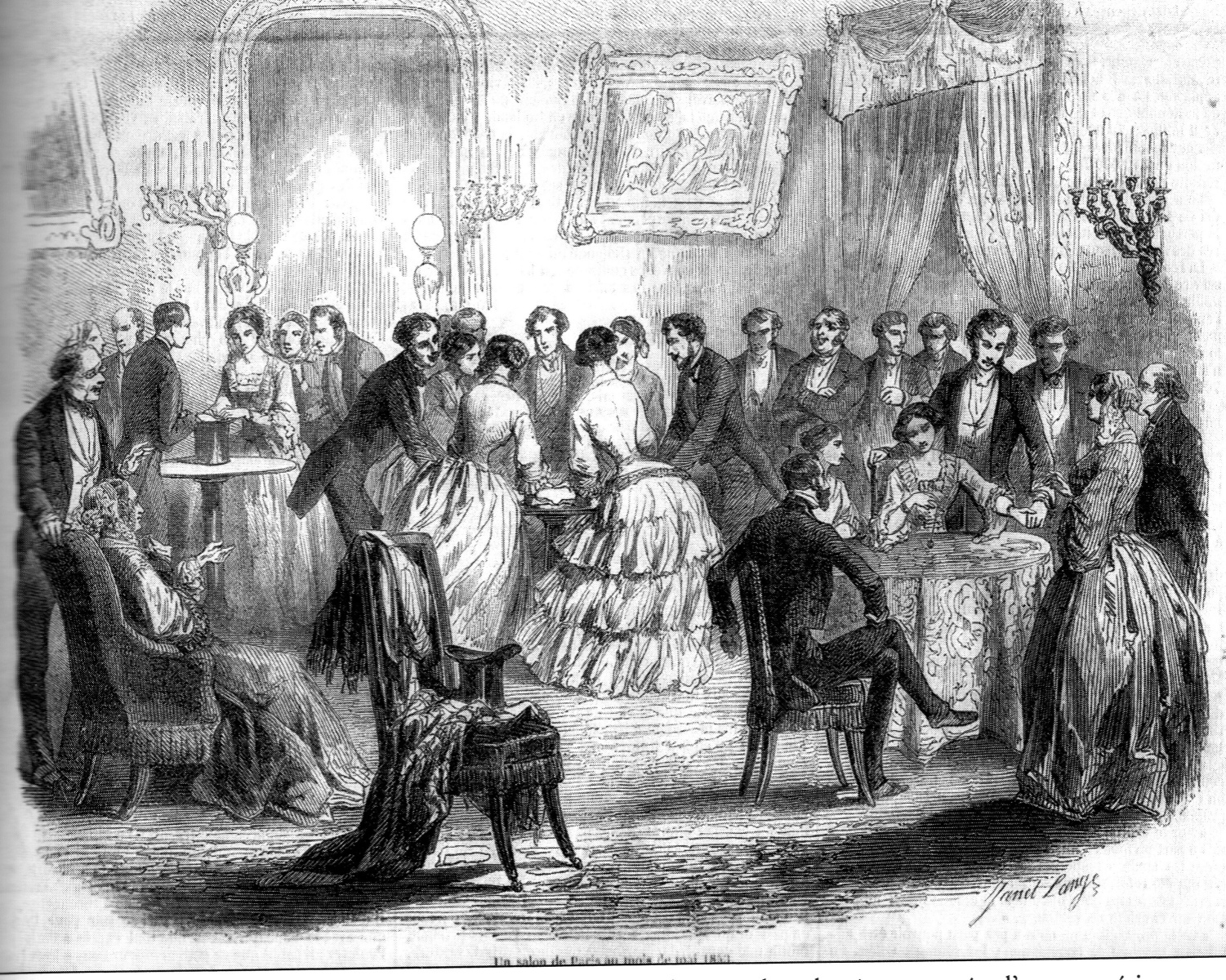
But a brief historical reminder: modern spiritualism did not arise in Paris. It took shape in the United States at the end of the 1840s, before spreading rapidly to Europe. The famous table-turning séances soon became a global curiosity. In France, they spread through drawing rooms in the early 1850s, where people tried to move furniture, provoke mysterious raps, or elicit answers allegedly from the afterlife. At this stage, the phenomenon was as much a parlor game as a mystical experiment.
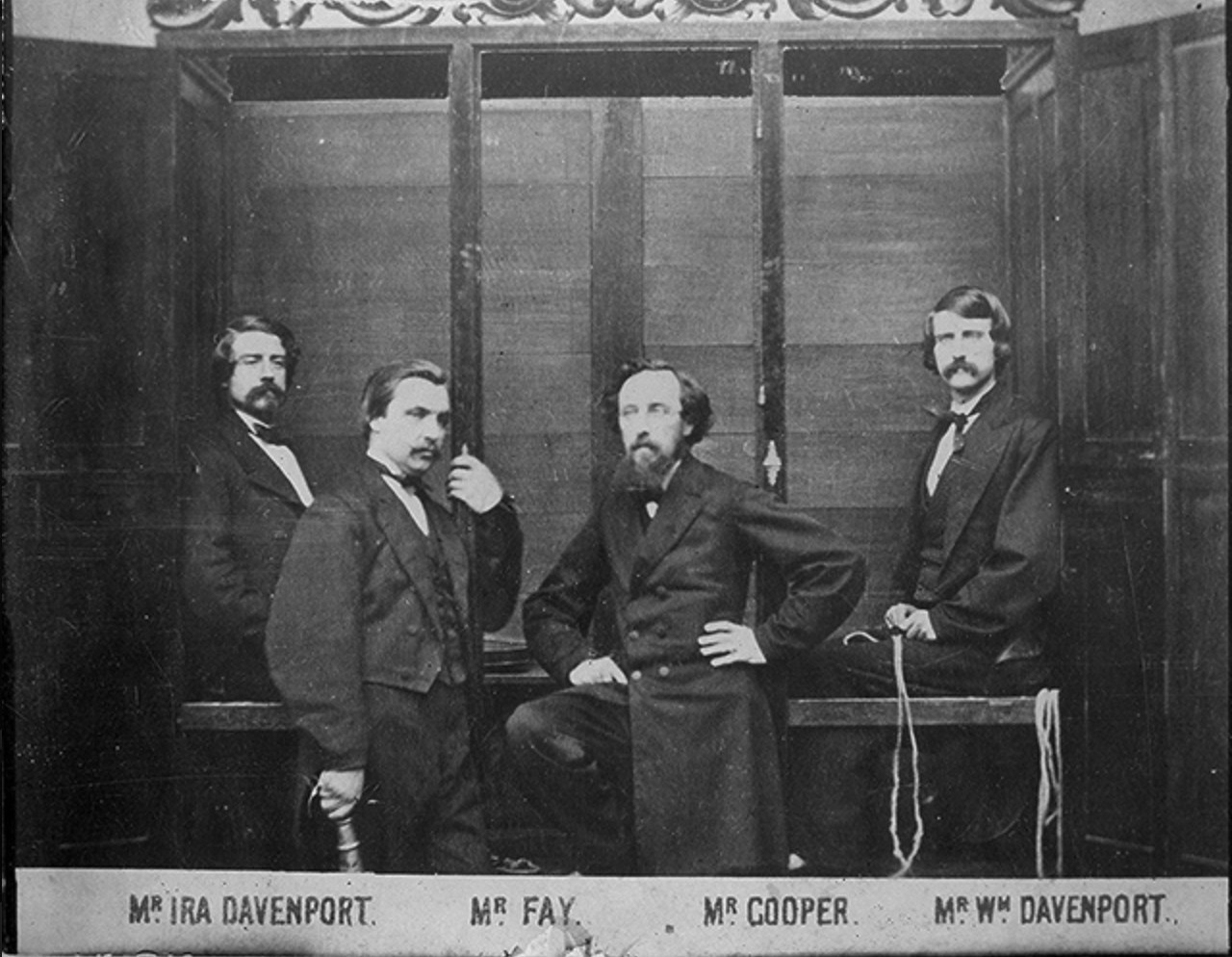
In Paris, however, this vogue quickly outgrew salon entertainment and hardened into a structured current of thought, with its own texts, societies, and leading figures. Sessions now attract the bourgeoisie, intellectuals, and writers—some out of curiosity, others convinced they were witnessing a genuine attempt to communicate with the au-delà. This success helps to entrench spiritism in the conversations and circles of the capital.
In this context, a Parisian pedagogue, Hippolyte Léon Denizard Rivail, begins to take an interest in the subject. He soon adopts the name Allan Kardec and sets out to organize the testimony gathered from various mediums. His approach rests on comparing the answers obtained and on the idea that spiritist phenomena can be studied rationally. His work culminates in the 1857 publication of The Book of Spirits, which has become one of the foundational texts of modern Spiritism.
The following year he helped found the Société parisienne des études spirites and launched the Revue spirite. Paris then becomes one of the main centers for disseminating this new doctrine. Meetings, lectures and publications enable the movement to take shape, while the ideas of Kardec quickly cross French borders. The spiritisme thus ceases to be merely a salon curiosity and becomes an intellectual, religious and social phenomenon in its own right.
The phenomenon has broad appeal beyond specialist circles. The mediumistic séances attract curious minds, writers and scientists. Victor Hugo, while in exile on Jersey, also experiments with the talking tables, as researchers such as Camille Flammarion or Charles Richet would later turn their attention to psychic phenomena. This fascination also stems from the era’s context: science was advancing rapidly, new invisible forces were being uncovered, and the idea that some still-unexplained phenomena might one day be explained scientifically seemed less incongruous than it does today.
In the Belle Époque, this curiosity takes a more organized form. Institutions and researchers set up experimental séances with renowned mediums, among whom Eusapia Palladino. In Paris, Pierre and Marie Curie attend some of these experiments, where researchers seek to measure or control movements of objects, unexplained noises, or supposed contacts with entities. The objective isn’t always to prove the existence of spirits, but rather to determine whether certain phenomena withstand the hypothesis of fraud or illusion.
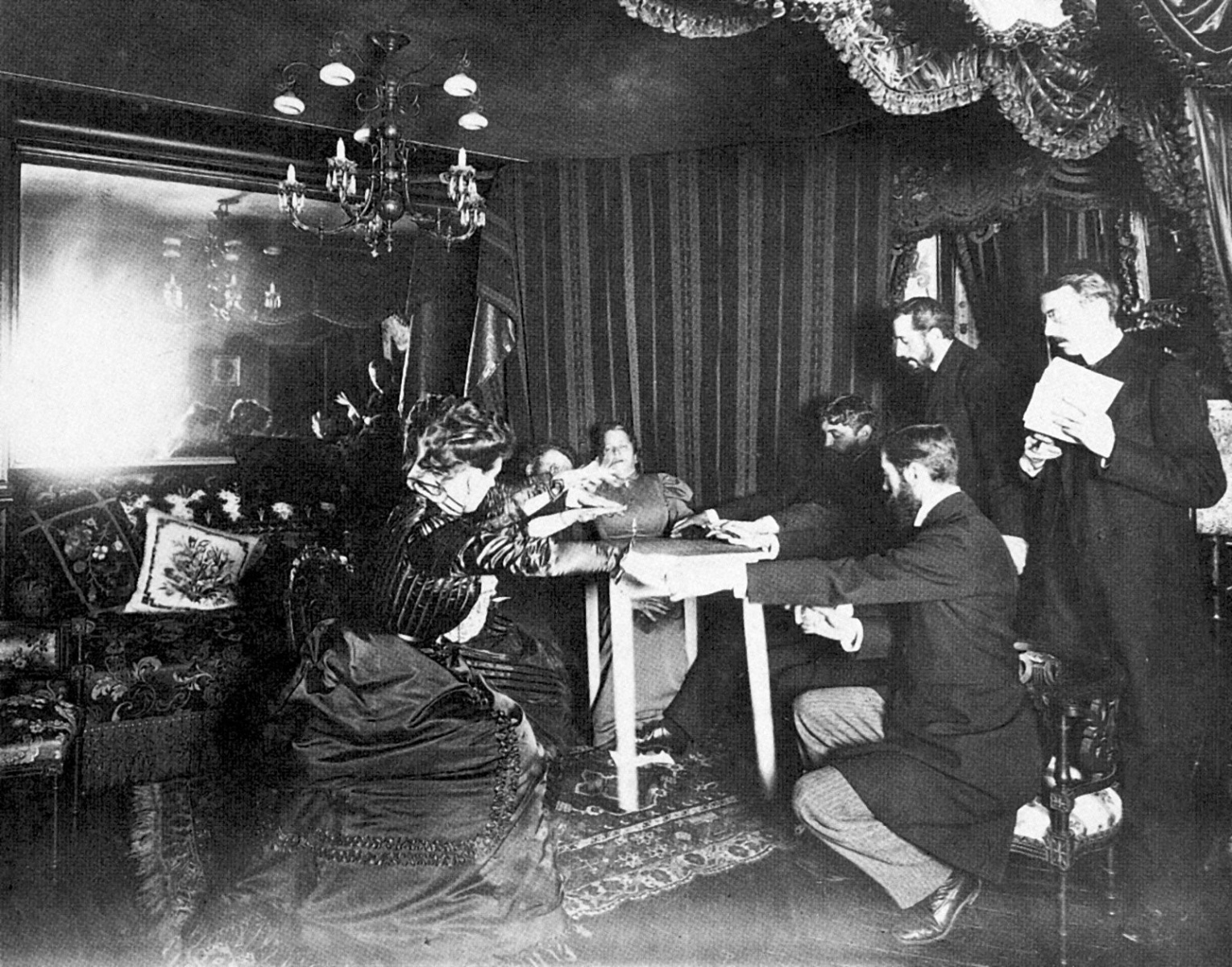
Obviously, not everyone is convinced. Criticism runs from religious, scientific, or rationalist circles. Several mediums have been caught red-handed in fraud, and some spectacular experiments quickly lose their credibility. Debates can be heated, because spiritism touches on sensitive issues: life after death, religion, the role of science, and the limits of what we can truly observe.
Despite these controversies, the movement goes on. The ideas of Allan Kardec circulate widely beyond France and leave a substantial afterlife, notably in Brazil, where the spiritisme kardéciste remains especially prominent. In Paris, the phenomenon gradually loses ground among cosmopolitan circles, but it leaves behind a rich body of literature, study societies, and numerous narratives that continue to feed the history of the paranormal in the capital.
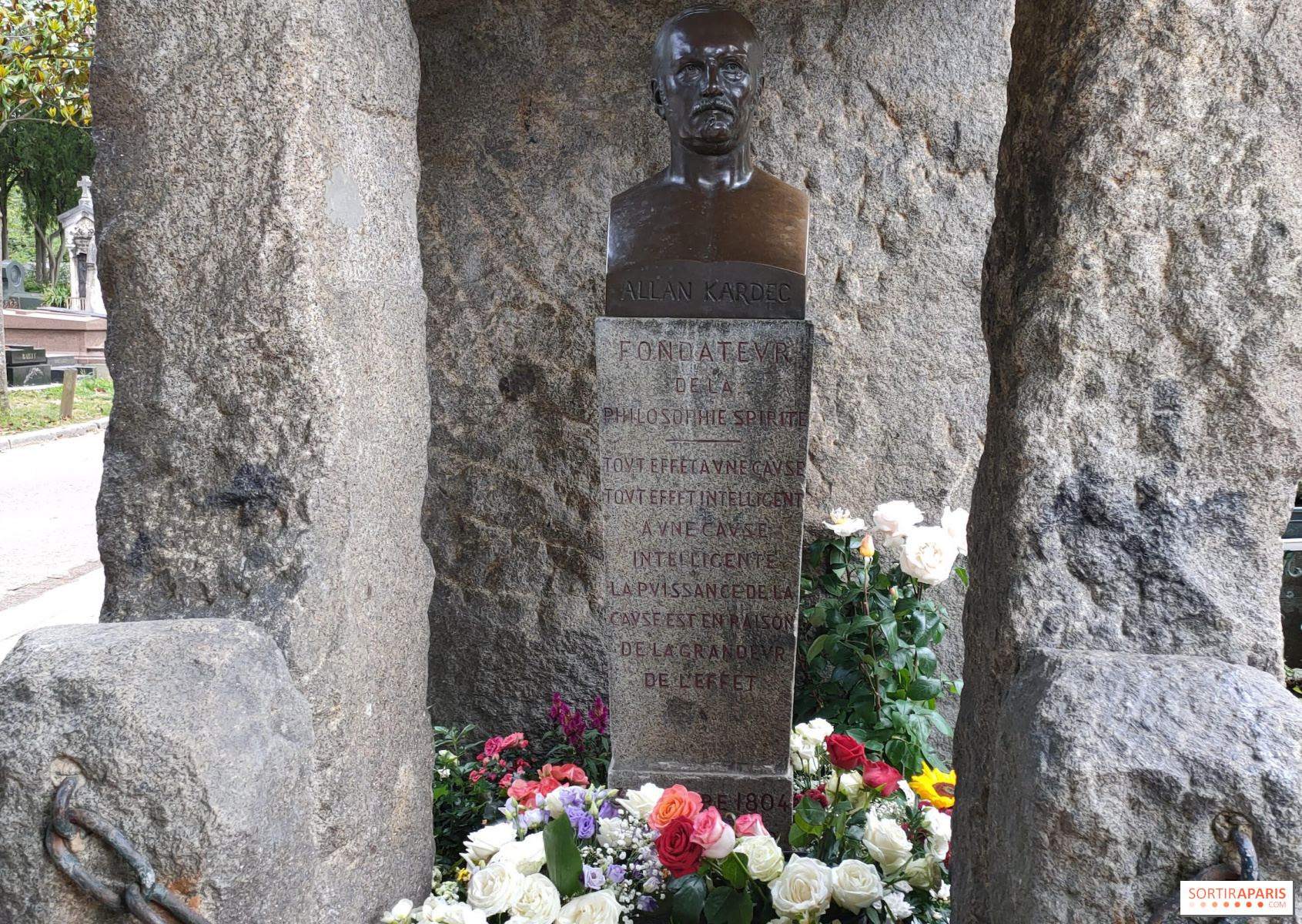
Paris still holds a very tangible symbol of this history. At the Père-Lachaise Cemetery, the Allan Kardec’s tomb continues to draw visitors, many of them coming to lay flowers or simply to discover this distinctive 19th-century figure. His grave has become one of the most recognizable stops for anyone interested in the history of spiritism.
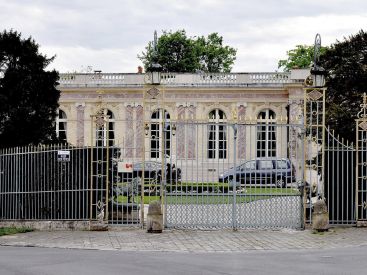
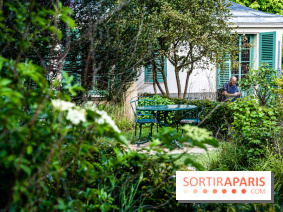
Other places also help trace this history, such as the Victor Hugo House, which houses documents tied to the writer’s spiritist sessions, or the Institut Métapsychique International, heir to France’s earliest research on psychic phenomena. Between scientific advances, a fascination with the beyond, and salon culture, spiritualism held a singular place in 19th‑century Paris and the early 20th centuries. A history that shows how the line between science, belief and curiosity could be remarkably fluid at the time.
This page may contain AI-assisted elements, more information here.