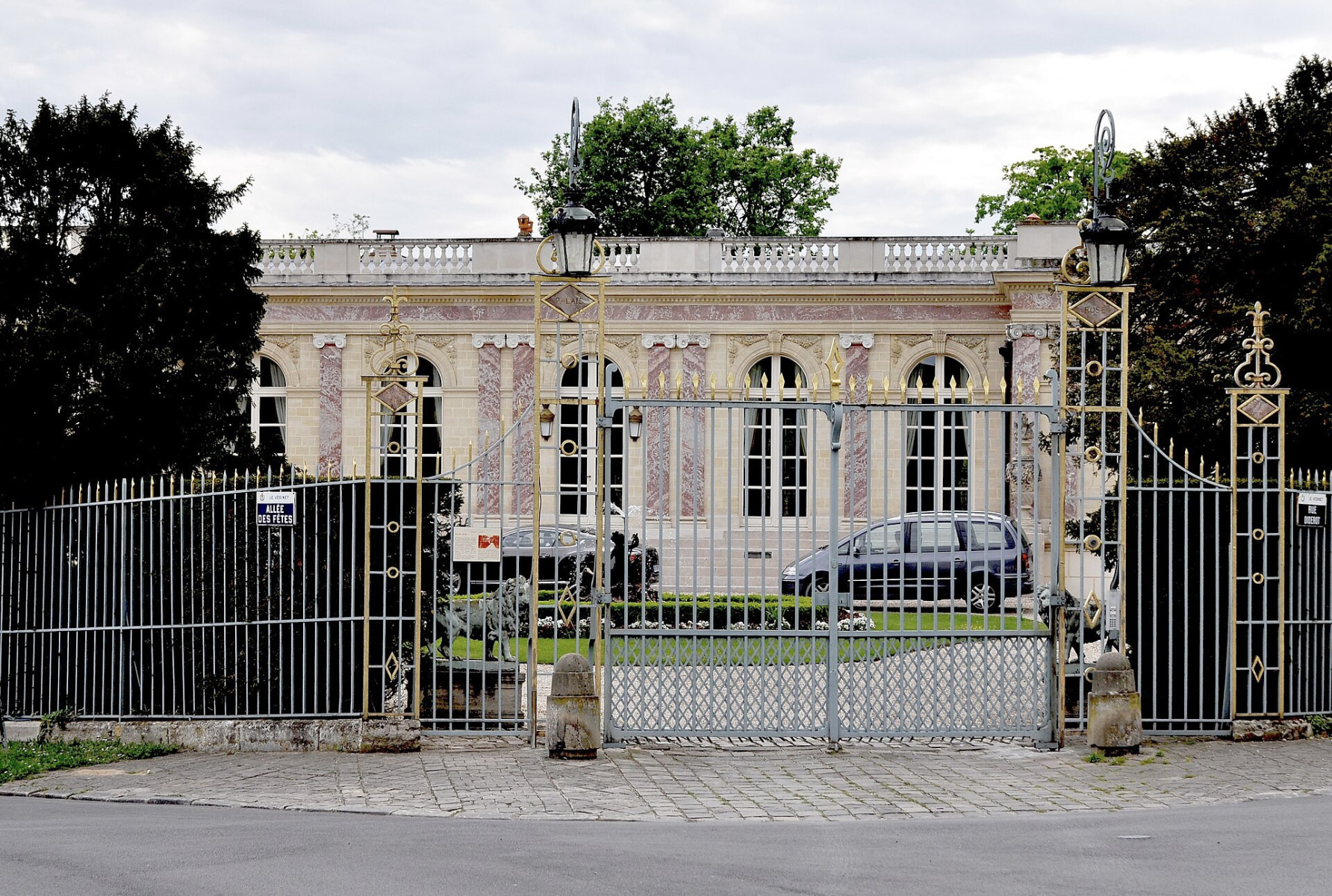
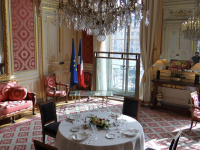
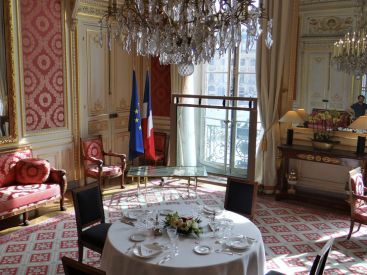
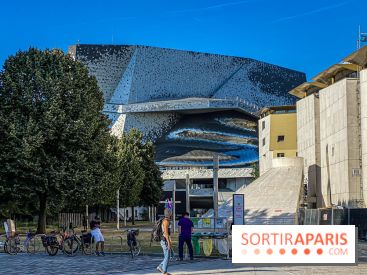
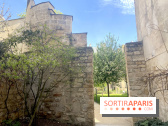
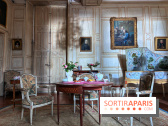
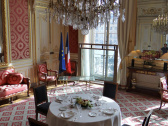
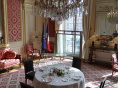
Behind the gates of this sumptuous estate in the Vésinet hides one of the most astonishing houses in the Île-de-France region. With its pink marble façades inspired by the Grand Trianon de Versailles, the Palais Rose has plenty to catch the eye. But if its architecture impresses, its history is just as remarkable. For this elegant residence housed one of the most singular women of her era: the Italian marchioness Luisa Casati, whose extravagances continue to fuel stories more than a century later.
Built at the end of the 19th century for engineer Arthur Schweitzer, the Pink Palace adopts the architectural vocabulary of the Grand Trianon at Versailles. Columns, pink marble, broad openings and a symmetrical composition quickly earn it the nickname “Pink Palace.” Located in the heart of Le Vésinet, a garden city renowned for its elegant villas, it soon becomes one of Île-de-France’s most striking residences.

A few years later, the poet and dandy Robert de Montesquiou purchases it. A devotee of art and refinement, he enriches the estate with numerous works and remodels the gardens into a true landscaped jewel. It is during this period that the Palais Rose earns its reputation as a fashionable, cosmopolitan hotspot.
In 1908, the Palais Rose changed hands again. It became the French residence of Luisa Casati, a wealthy Italian aristocrat determined to be unlike anyone else. Enormous eyes lined with kohl, spectacular gowns, oversized jewelry... The marchioness cultivated a theatrical look that fascinated the artists of her time. Her ambition was simple: to turn her own life into a work of art. Painted by Giovanni Boldini, Augustus John, or Kees van Dongen, she became one of the great muses of the Belle Époque.

At Rose Palace, she hosts lavish receptions where writers, painters, aristocrats and leading figures from the art world mingle. Contemporary accounts describe sumptuous evenings, bathed in light and with spectacular décor.
Many legends have circulated about her: the marchioness is said to have walked cheetahs on a leash or kept snakes in her home. While these tales have helped shape her image, they are often recounted by contemporaries and should be treated with caution. One thing is certain, however: Luisa Casati meticulously curated her extraordinary persona and left no one indifferent.
Today listed as a Historic Monument, the Palais Rose remains a private property that is opened only on very rare occasions, such as during the Heritage Days. More than a century after the flamboyant fêtes of Luisa Casati, the residence continues to spark the imagination. Behind its pink marble façades lies an unexpectedly little-known chapter of Île-de-France heritage.
This page may contain AI-assisted elements, more information here.
Dates and Opening Time
From August 4, 2026 to December 31, 2027
Location
Pink Palace
14 Rue Diderot
78110 Vesinet (Le)
Route planner