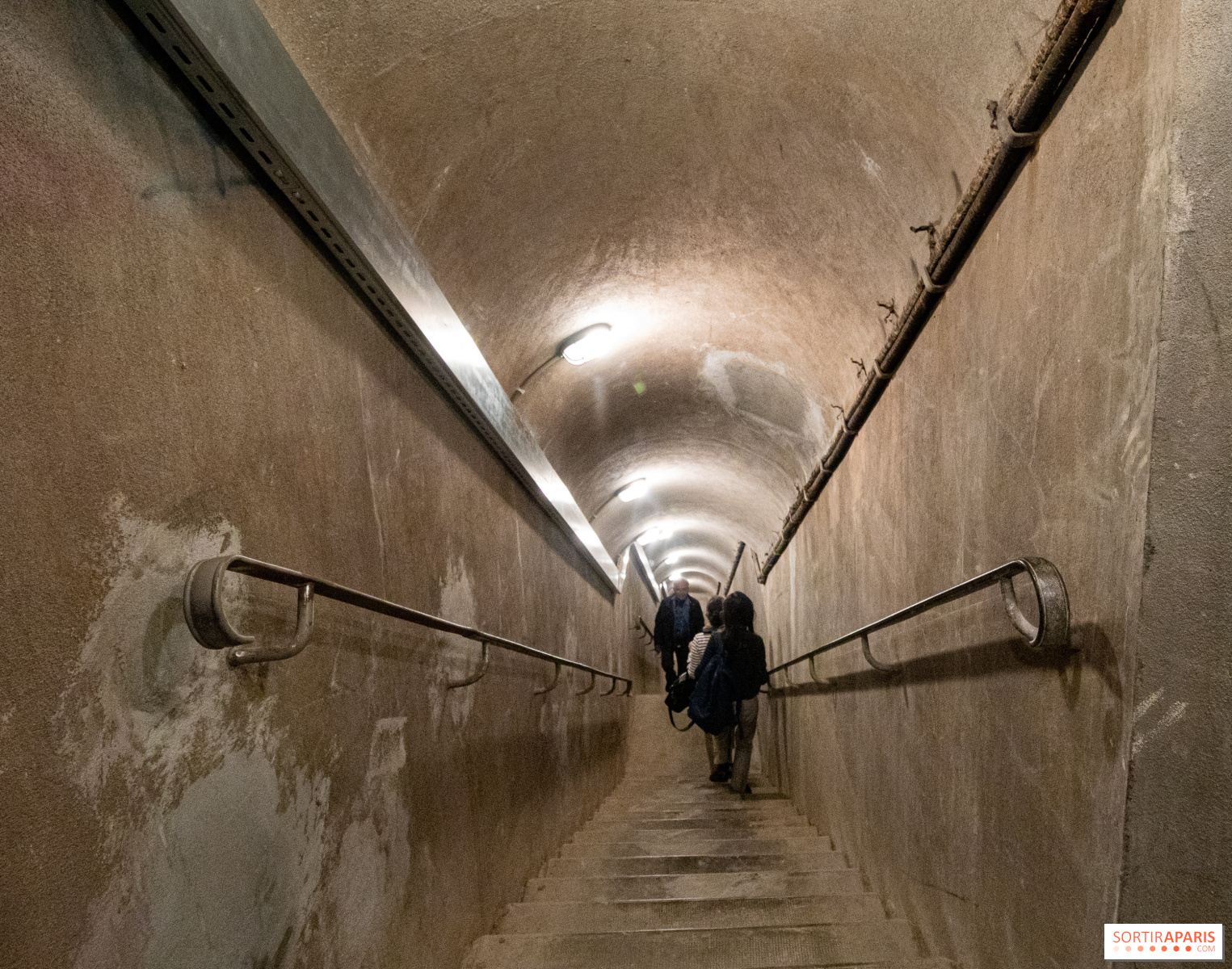
Paris is a city steeped in history, and the capital's underground spaces are filled with memories from bygone eras, notably the First and the Second World War. In the early 1930s, the Paris authorities decided to develop 40,000 underground shelters to protect residents if needed. Today, you can still find some of these unused bunkers in the city's underground network, under the Eiffel Tower, beneath Gare de l'Est, or at the City Hall.
As you head to catch your train at Gare de l'Est, imagine that under your feet lies a bunker. Once a train-control hub, it remains remarkably intact, tucked beneath tracks 3 and 4. Built in 1939, the shelter secured a secret line of communication with the other Parisian stations and could house about 70 people in wartime. It was rarely used by the French; the Germans, however, completed its construction in 1941. Today it sits on SNCF property, occasionally open to visitors during the Journées du Patrimoine.
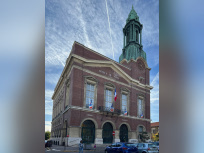
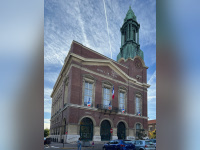
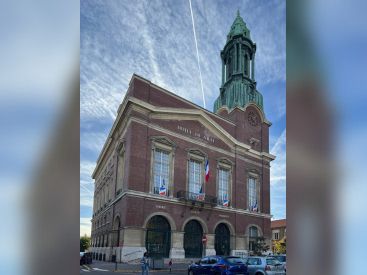
Even more unusually, did you know the Eiffel Tower housed its very own bunker, just as Paris City Hall does with its own underground shelter? As for the latter, it’s a place that never welcomed anyone. Indeed, it was built in 1937 after World War I to preempt future disasters.
The basements of four-storey buildings could also be viewed as underground shelters, much like the metro, which served as a refuge for thousands of Parisians. A notable part of Parisian heritage, this history testifies to the darkest hours of our past.


 The Jupiter Command Post, the nuclear bunker tucked beneath the Élysée Palace.
Hidden beneath the Élysée Palace in Paris sits one of the Republic’s most sensitive spaces: PC Jupiter, a command post housed in an old anti-air shelter. Protected by armored doors and designed to run in a major crisis, this bunker is closely linked to France’s nuclear deterrent command. [Read more]



 Is the secret bunker at Gare de l’Est open to visitors? A historic underground shelter preserved exactly as it was.
Built in 1939 to protect railway workers and keep rail traffic moving in the event of an attack, the bunker at Gare de l’Est is one of the best-preserved World War II remnants in Paris, and it is open to visitors... only on rare occasions! [Read more]
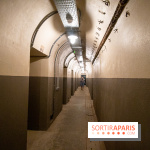
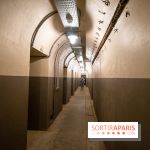 The Denfert-Rochereau bunker, Paris's secret Resistance site that you can visit for free.
Hidden beneath Denfert-Rochereau Square lies an old passive-defense shelter that became the headquarters of the Parisian Resistance in August 1944. An exceptional historic site, it had long been off-limits, but is now open to visitors. [Read more]
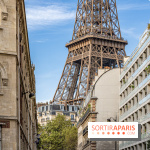
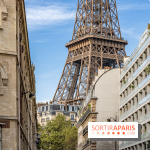
 Engine rooms, bunker, Eiffel’s apartment: Can you visit the Eiffel Tower’s behind-the-scenes areas?
Behind the elevators of the Eiffel Tower lies a fascinating technical universe. Machine rooms, maintenance workshops, technical spaces, a bunker, Gustave Eiffel's apartment... These areas closed to the public tell another story of Paris's most famous monument. But can they sometimes be visited? [Read more]
Find the locations of these sites by clicking the map at the bottom of the article
Underground Paris, discovering the underside of the capital
Would you like to discover the Dessous de Paris? The capital's underground passages are full of surprises... Catacombs, ghostly stations and secret lakes, set off on a voyage of discovery of underground Paris. [Read more]


























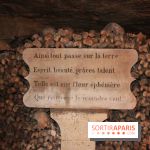 Underground Paris, discovering the underside of the capital