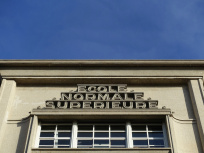
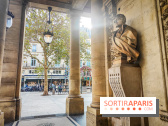
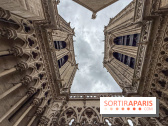
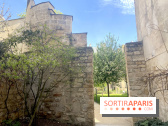
Located on Place de la Sorbonne in the 5ᵉ arrondissement, the Sorbonne ranks among the capital's most iconic buildings. For more than 7 centuries, it has stood at the heart of education and research in France.
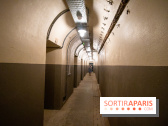
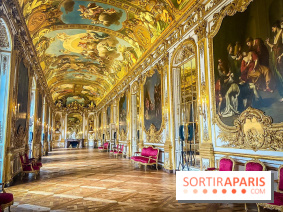
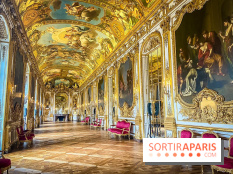
While the site today houses several universities, it also preserves an exceptional architectural heritage, most of which is not accessible to the public... available only on rare occasions!
The history of the Sorbonne begins in 1257, when the theologian Robert de Sorbon, chaplain to King Louis IX, founds a college to support theology students who lack the means to continue their studies. Over the centuries, the college earns a formidable reputation and its name eventually comes to represent the entire University of Paris.
The Sorbonne becomes one of Europe’s leading intellectual hubs, a place where many prominent figures in philosophy, science, literature, and law teach and study. Yet the institution undergoes several upheavals.
Closed during the Révolution française, the Sorbonne gradually rises again in the 19th century. The medieval buildings, now ill-suited for modern needs, are almost completely replaced by the expansive academic palace that dominates the current campus, built between 1885 and 1901 under the direction of architect Henri-Paul Nénot.
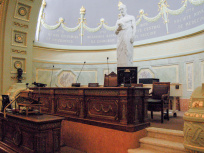
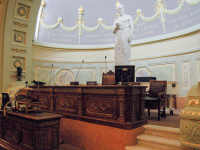
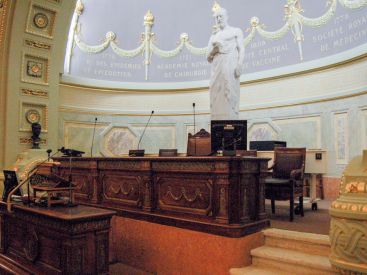
The Grand Amphithéâtre, inaugurated in 1889, remains one of France's most prestigious university venues. With a capacity of almost 1,000, it is adorned with statues of figures such as Descartes, Pascal, Lavoisier, and Richelieu. Above the stage looms the immense painting Le Bois sacré by Puvis de Chavannes, one of the Sorbonne’s most famous works.
The Grand Amphithéâtre still hosts graduations today, conférences internationales, concerts and cérémonies officielles. Around it lie many remarkable spaces, such as the péristyle, the salons d'apparat, the salle des Actes or the cour d'honneur.
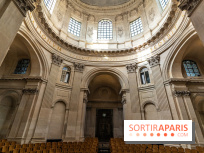
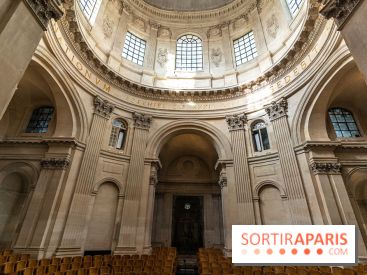
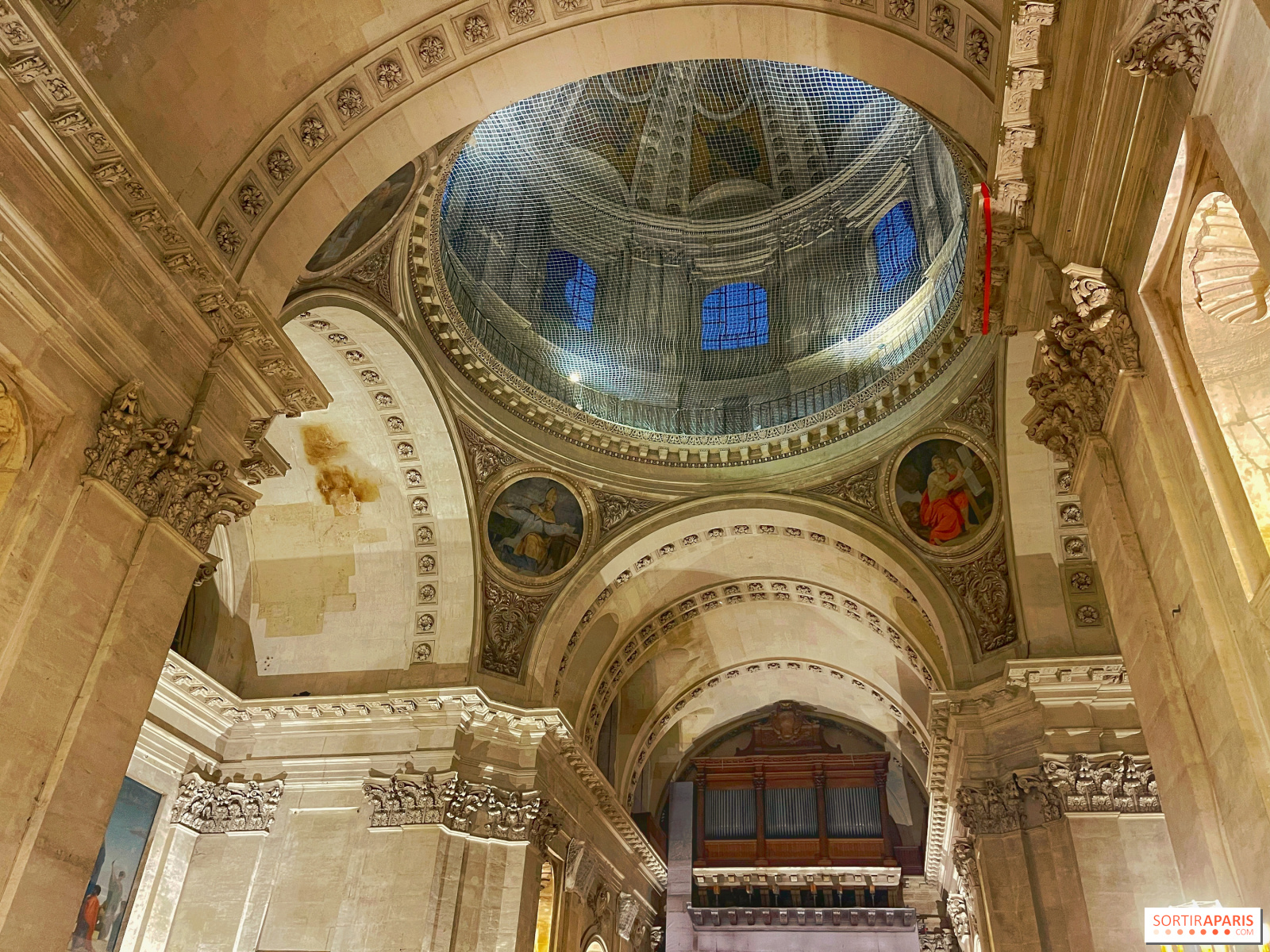
The Sorbonne Chapel, whose cornerstone was laid in 1635 at the behest of Cardinal Richelieu, stands as one of the site’s crown jewels. It also houses the tomb of the famous minister of Louis XIII, carved by sculptor François Girardon in the 17th century.
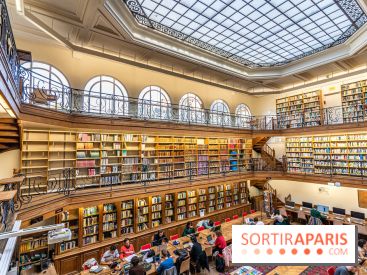
Another jewel in the palace, the Sorbonne's Inter-University Library houses several million documents and ranks among the leading university libraries in France. Its majestic Jacqueline-de-Romilly Reading Room, typically reserved for students and researchers, is often regarded as one of the most beautiful reading spaces in Paris.

Over the centuries, the Sorbonne has welcomed a stream of personalities who shaped intellectual history. Descartes, Marie Curie, Henri Bergson, Louis Pasteur, and even Simone de Beauvoir studied there, taught, or delivered lectures as different eras and institutions came and went on the site.
The building also remains a high point of French academic life. It is in its Grand Amphitheatre that some of the most prestigious ceremonies in higher education are staged, as well as international colloquia welcoming researchers, heads of state and prominent figures from around the world.
The Sorbonne isn't freely accessible all year long. Access to the palais académique is reserved for students, university staff, and authorized people. However, the European Heritage Days offer each year an exceptional opportunity to step inside this monument.
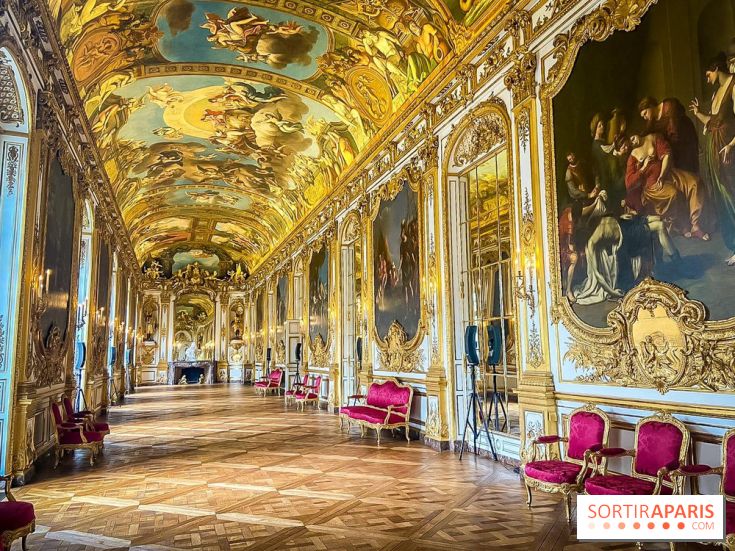
The public can then tour the Grand Amphitheatre, the Richelieu Chapel, several historic salons, the ceremonial courtyard, as well as the spectacular reading room of the Sorbonne Interuniversity Library. Outside of this event, group tours can exceptionally be arranged, notably of the library, by prior reservation.
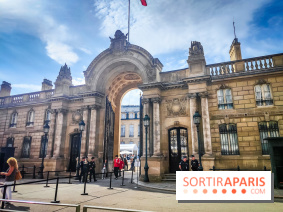
These Paris spots people think are closed… but you can actually visit them (and here’s how).
Discover these iconic Parisian sites that many assume are off-limits to the public, reserved for institutions or officials, yet they actually open their doors to visitors. The Élysée Palace, the Hôtel de Matignon, the Senate, religious monuments… Here’s when and how to visit. [Read more]
Location
La Sorbonne Paris
Quai de la Sorbonne
75005 Paris 5
Route planner
Accessibility info
Official website
www.sorbonne-universite.fr







 These Paris spots people think are closed… but you can actually visit them (and here’s how).