For decades, climbing the towers of Notre-Dame has been one of the capital’s must-see experiences. After six years of closure following the fire on April 15, 2019, this iconic route is back open. It’s now possible to tackle the 424 steps that lead to the summit of the two towers.
Towering over the Île de la Cité since the 13th century, Notre-Dame’s towers are not merely an extraordinary vantage point: they embody eight centuries of Gothic architecture, restoration, technical feats, and national history.
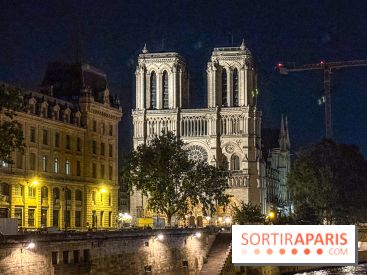
The western facade of Notre-Dame was largely built between 1200 and 1250, during the golden era of Gothic architecture. Its two square towers rise to almost 69 meters tall. Unlike many French cathedrals, they are not topped with spires, a design choice that underscores their massive, perfectly balanced silhouette.
Their architecture embodies the principles of classic Gothic: a spectacular elevation, expansive bays designed to lighten the structure, and a richly sculpted decoration. Behind their thick walls winds a spiral staircase that leads to the various levels of the towers. For nearly eight centuries, they have watched over Paris, surviving wars, revolutions and the great upheavals of history.

Visitors often flock to Notre-Dame to admire its 'gargoyles'... but these creatures watching over Paris from the cathedral's heights are actually chimeras! These fantastical sculptures were created in the 19th century during the great restoration led by Eugène Viollet-le-Duc. Drawn from the medieval imagination, they serve no practical purpose; they form a symbolic decoration meant to enrich the cathedral's architecture.
The most famous of them is the Stryge, a pensive figure propped on her elbows as she gazes over the capital. She has become one of Paris's most iconic images. The real gargouilles, mind you, are rainwater drainage spouts. Their mouths help steer water away from the façades to protect the building's stonework.
The towers also house the famous bells of Notre-Dame. The most prestigious is Emmanuel, installed in the south tower since 1686. Weighing over 13 tons, it is regarded as one of the most beautiful bells in Europe thanks to the exceptional quality of its tone.
It accompanies the nation’s major moments: key religious celebrations, wartime liberations, national tributes, and even exceptional festivities. célébrations exceptionnelles. The north tower houses several other bells, completely renewed in 2013 to restore the soundscape imagined in the Middle Ages.

In the early 1800s, Notre-Dame was in a deteriorating state. The wear and damage accumulated since the French Revolution threatened to erase it entirely. In 1831, Victor Hugo published Notre-Dame de Paris. His novel struck a chord with readers and dramatically raised public awareness about the preservation of the monument. A few years later, the state entrusted the cathedral’s restoration to Jean-Baptiste Lassus and Eugène Viollet-le-Duc.
For over 20 years, they restored Notre-Dame’s splendor and created several elements that have become iconic, including the famous chimeras atop the towers. Without this monumental restoration, the image of Notre-Dame would be very different today!
On 15 April 2019, a fierce fire ravaged Notre-Dame's medieval framework and triggered the collapse of Viollet-le-Duc's spire. The two towers, however, escaped the worst. Firefighters focused part of their efforts on preventing the blaze from reaching the wooden bell towers that anchor the bells. Had these structures given way, the bells' fall could have toppled part of the towers.
The sprawling project ahead mobilizes hundreds of specialized craftsmen: stonemasons, carpenters, roofers, ironworkers, art conservators and engineers. The cathedral’s reopening in December 2024 will be followed, on 20 September 2025, by the reopening of the towers, after the improvements designed to welcome the public once again have been completed.

The Centre des monuments nationaux took the opportunity to completely rethink the visitor route. Visitors now discover new interpretation spaces devoted to the history of the cathedral, its construction, the 2019 fire, and the extraordinary restoration project.
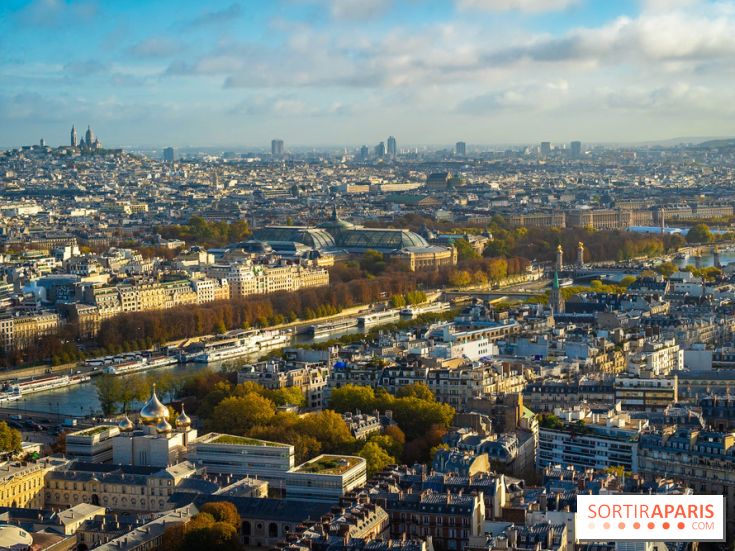
The journey leads up to the Chimères Gallery, revealing privileged access to the belfries and letting visitors admire up close the sculptures, the flying buttresses, and the new spire that now again dominates Paris. From the summit, the panorama sweeps across Île de la Cité, the Seine, the Louvre, Montmartre, the Eiffel Tower, the Panthéon and much of the capital.
Yes. Since September 2025, Notre-Dame’s towers are once again open to the public. The visit is run by the Centre des monuments nationaux and is self-guided. Because only a limited number of visitors can be admitted at the same time through the medieval stairs, booking of a time slot is mandatory on the official Notre-Dame Towers site. No tickets are sold directly on site.
These Paris spots people think are closed… but you can actually visit them (and here’s how).
Discover these iconic Parisian sites that many assume are off-limits to the public, reserved for institutions or officials, yet they actually open their doors to visitors. The Élysée Palace, the Hôtel de Matignon, the Senate, religious monuments… Here’s when and how to visit. [Read more]
This test was conducted as part of a professional invitation. If your experience differs from ours, please let us know.
This page may contain AI-assisted elements, more information here.
Dates and Opening Time
Next days
Saturday:
from 07:45 a.m. to 10:45 p.m.
Sunday:
from 07:45 a.m. to 10:45 p.m.
Monday:
from 07:45 a.m. to 10:45 p.m.
Tuesday:
from 07:45 a.m. to 10:45 p.m.
Wednesday:
from 07:45 a.m. to 10:45 p.m.
Thursday:
from 07:45 a.m. to 10:45 p.m.
Friday:
from 07:45 a.m. to 10:45 p.m.
Location
Notre Dame de Paris Cathedral
Cathédrale Notre-Dame
75004 Paris 4
Route planner
Access
Metro - RER: - Cité (4) - Saint Michel - Notre-Dame (B,C) - Hôtel de Ville (1,11) - Maubert-Mutualité / Cluny - La Sorbonne (10) - Châtelet - Les Halles (7,14,A,D)
Official website
www.tours-notre-dame-de-paris.fr
Booking
www.tours-notre-dame-de-paris.fr




























 These Paris spots people think are closed… but you can actually visit them (and here’s how).