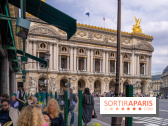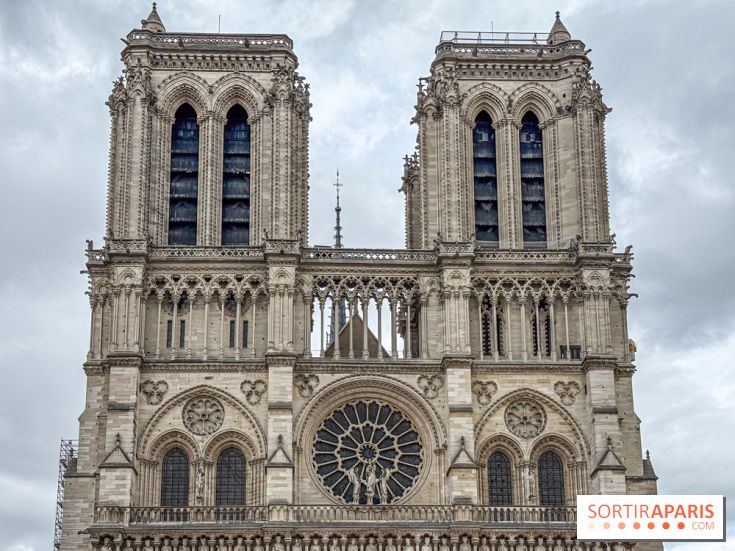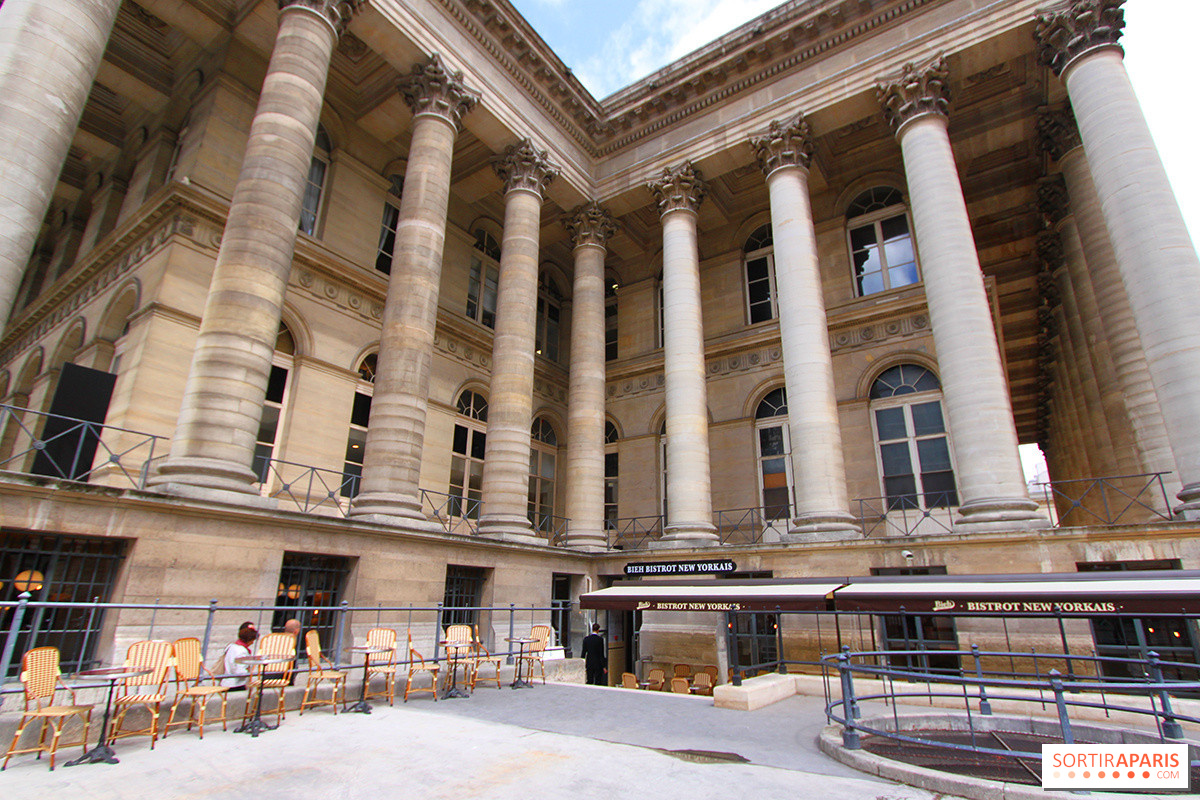
Paris, September 24, 1724. Four years after one of the most spectacular financial crises of the Ancien Régime, the monarchy moves to restore control over a money trade it deems too important to operate on the street, in the offices of companies, and in private homes. By a decree of the King’s Council, the Paris Stock Exchange is officially established in the Hôtel de Nevers, on Rue Vivienne, just a few steps from the Palais-Royal. It bears little resemblance to the monumental colonnaded palace its name evokes today: the Palais Brongniart will not be inaugurated until a century later, in 1826.
The establishment of 1724, by the way, does not mean that Parisians suddenly discover financial operations. For a long time, merchants, bankers and money-changers have met in various corners of the capital. As early as 1563, Paris already has a "place commune des marchands". At the dawn of the 18th century, the growth of joint-stock companies and negotiable papers profoundly reshapes these exchanges. Actions, billets d’État, lettres de change and other credits circulate ever more widely, while there is still no true marché parisien organisé comparable to Amsterdam, whose stock market has been running since the early 17th century.
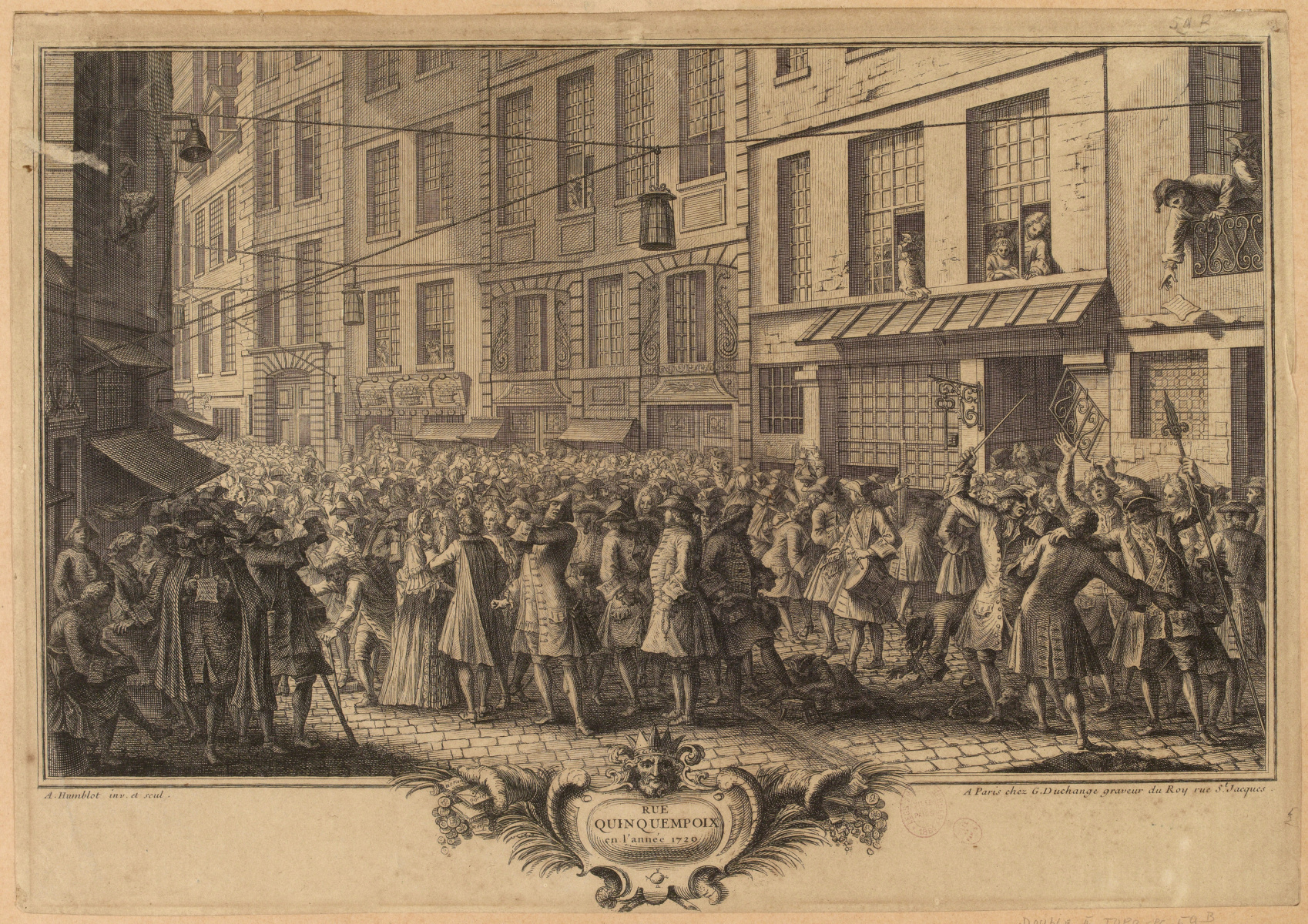
It is in this context that John Law emerges, a pivotal figure in French financial history. Arriving in France at the dawn of the 18th century, this Scottish adventurer convinces the authorities to develop credit and paper money to revive an economy crushed by the debts left by Louis XIV. His General Bank, founded in 1716 and soon renamed Royal Bank, accompanies the rise of the Compagnie d’Occident, the future East India Company. The price of its shares soars, drawing a crowd of speculators.
In Paris, the fever centers particularly on Rue Quincampoix, a narrow thoroughfare between today’s Halles and the Marais. Here people buy and sell the company’s shares, sometimes several times in a single day, while fortunes seem to mushroom within weeks. In 1720, authorities try to shift the operations to the Hôtel de Soissons, on the site of the present-day Bourse de Commerce. But the mechanism falters: confidence collapses, holders scramble to recover their money, and the company’s shares plummet. The famous "system of Law" collapses in 1720, and the stock exchange housed at the Hôtel de Soissons closes on 25 October 1720.
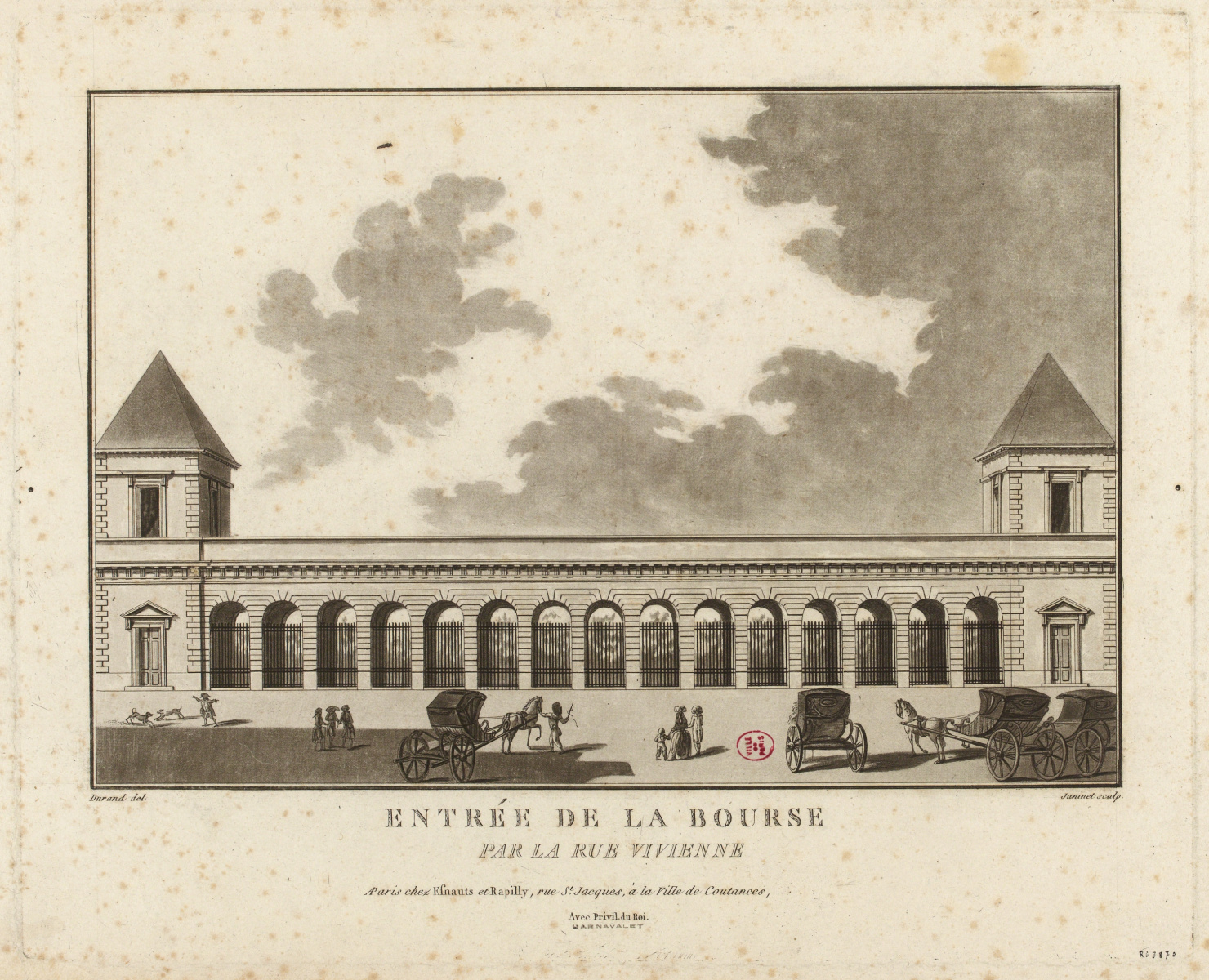
For several years, those in power vacillate between distrust and necessity. Banning exchanges doesn’t make the need to trade debts, commercial paper, or securities disappear; it simply pushes such activity toward transactions that are harder to control. The solution chosen in 1724 was therefore less about eradicating the market than about confining it within a precise framework. The decree of 24 September 1724 establishes an identified place where commercial affairs will be handled and, notably, where letters of exchange, bearer notes, and promissory notes will be negotiated, "to the exclusion of all other places." The authorities thus aim to move a portion of financial transactions out of backrooms, private houses, and improvised gatherings, and concentrate them in a space they can monitor.
The choice fell on the Hôtel de Nevers, rue Vivienne, in a district already closely tied to the world of business and power. The building itself carries a striking financial history: acquired by the Crown in 1716, it was later ceded to John Law for the needs of the Royal Bank before, after its collapse, being allocated to the Bibliothèque royale. A portion of this vast complex now houses the new Stock Exchange.
Its operation is meticulously calibrated. The Exchange opens every day except Sundays and holidays, from 10 a.m. to 1 p.m. The lieutenant general of police is charged with monitoring the surroundings and preventing speculative crowds from reforming outside, which is precisely what is being sought to eradicate. Even inside, practices are regulated: it is notably forbidden to artificially provoke price movements with shouted announcements or signals meant to drive prices up or down. The futures market is also prohibited: before the session, the buyer must deliver the necessary funds and the seller the securities he wishes to transfer. The trauma of 1720 remains perceptible in each of these precautions.
Stockbrokers occupy a central place in this new framework. Candidates must be over 25, French and Catholic, show assurances of moral integrity, and have no record of bankruptcy. A commission of 10 eminent citizens reviews their applications. A few weeks after the founding act, a new decree dated October 14, 1724 appoints the first 60 stockbrokers of the Paris Bourse, who are required to take an oath and register their transactions. One provision, in particular, has an even stiffer sting today: women are expressly excluded from the Bourse, even though some had actively participated in financial operations during the Law era.
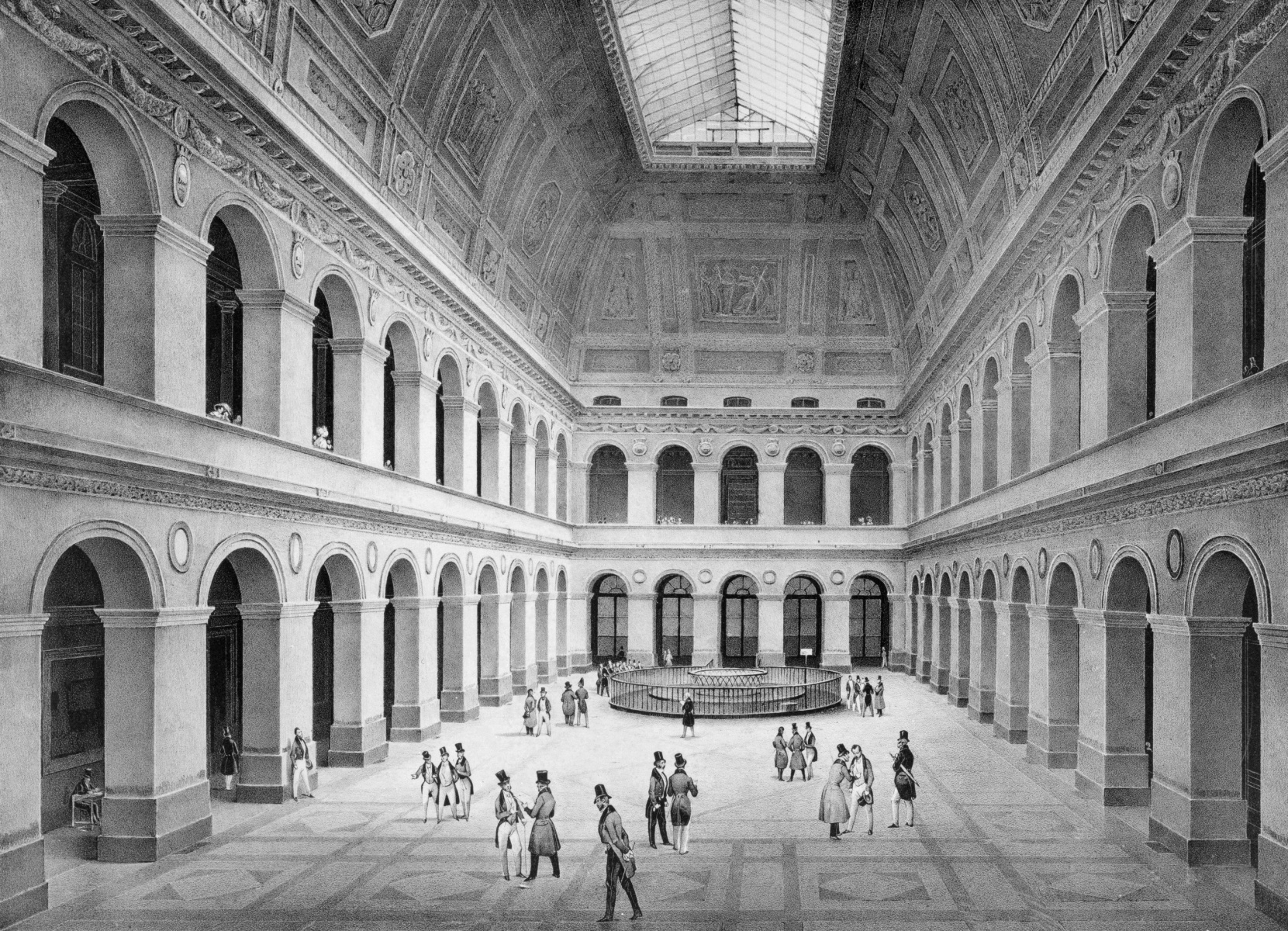
It is, however, important not to imagine the Bourse of 1724 as a miniature version of today’s financial markets. The number of available securities remains limited. The shares of the Company of the Indies play a central role, while the letters of exchange, promissory notes, annuities and other instruments constitute a significant portion of transactions. The institution created on Rue Vivienne is as much a bourse de commerce et de change as a market of securities in the modern sense of the term. Its organization evolves gradually: by 1774, the titles must in particular be traded at the criée and a space reserved for stockbrokers appears, the parquet, a term that will remain associated for two centuries with how the Bourse operates.
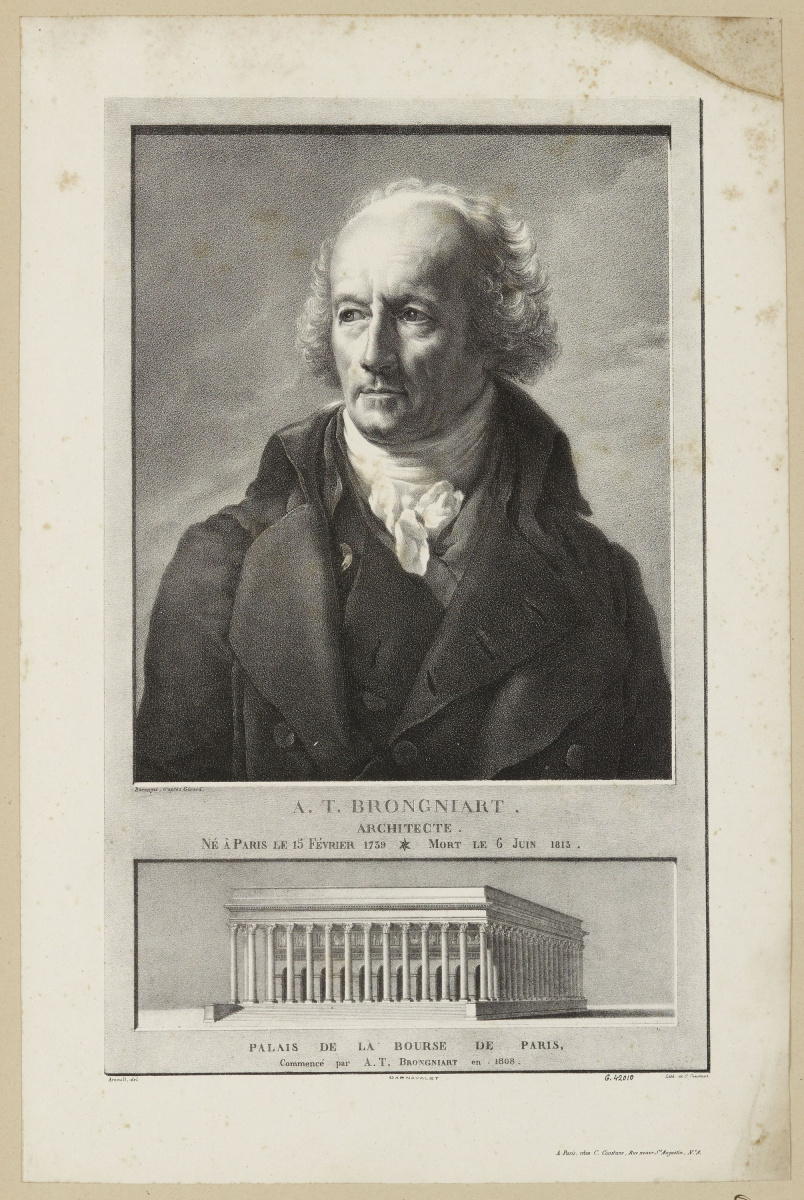
The Revolution shakes the institution once again, until its survival is firmly restored under the Directory. Under Napoleon I, the decision is ultimately made to create a true Palace of the Stock Exchange. Architect Alexandre-Théodore Brongniart envisions a sweeping neoclassical edifice surrounded by a Corinthian colonnade. The cornerstone is laid in 1808, but Brongniart dies in 1813 before the project is completed.
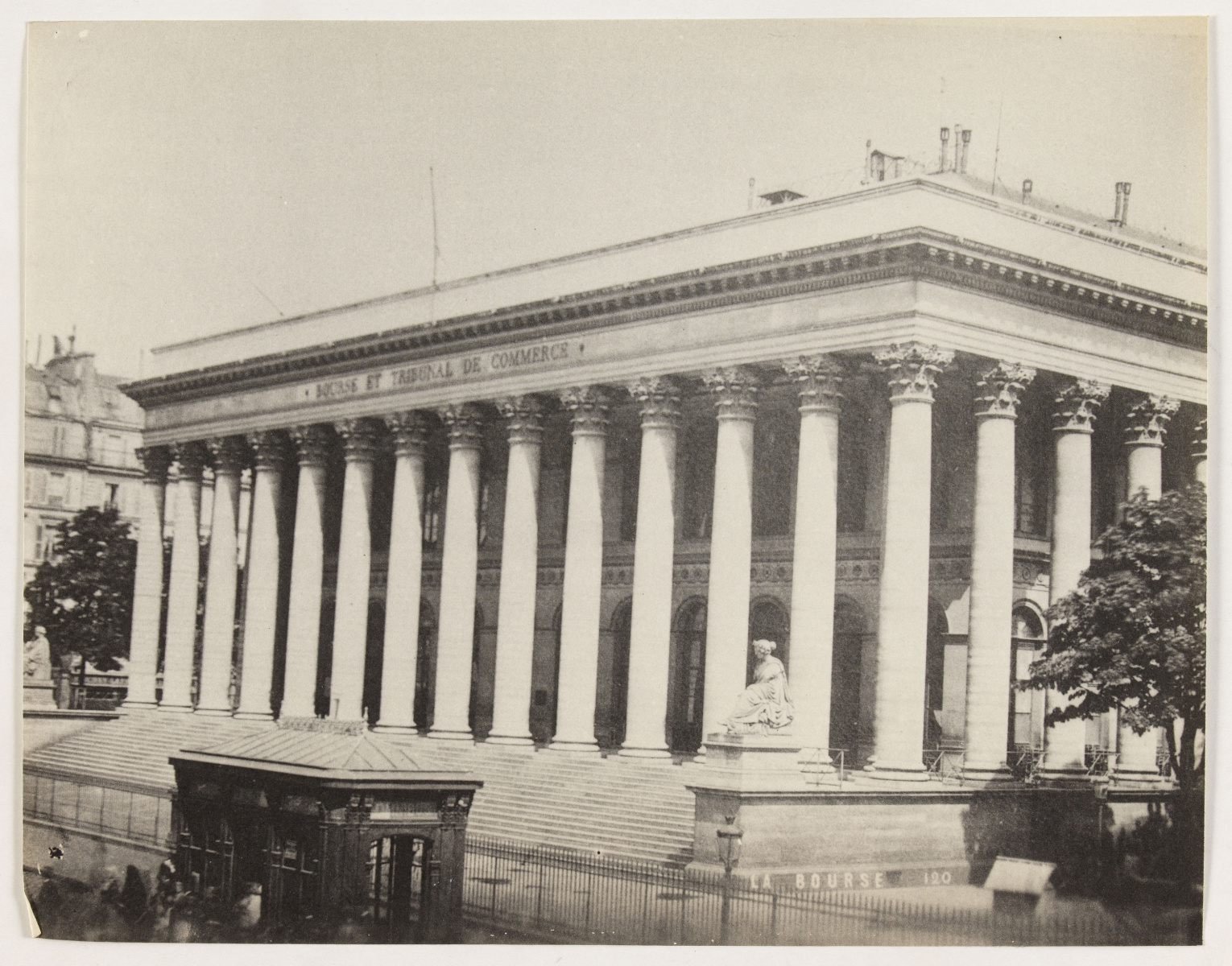
Work is pursued by Éloi Labarre and the building finally opens in 1826, giving birth to the monument of the Place de la Bourse that Parisians know today!
To go further:
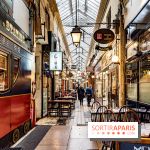
What to do in the Sentier and Bourse district: outing ideas and top spots
Strolling through Paris's Sentier and Bourse neighborhoods in the 2nd arrondissement? Follow the guide to make sure you don’t miss a thing! [Read more]
In Paris, the national palaces embody the authority of the state, while other civil buildings are called "palaces" because of their monumentality. Some are open to the public for only a few days a year, others house museums, and still others have disappeared, destroyed in the course of history. Let's take a look at some of these magnificent landmarks of Parisian history. [Read more]
This page may contain AI-assisted elements, more information here.
Dates and Opening Time
On September 24, 2026
Location
Palais Brongniart
Place de la Bourse de Paris
75002 Paris 2
Route planner
Accessibility info
























 What to do in the Sentier and Bourse district: outing ideas and top spots


 The palaces of Paris, discovering these monumental sites steeped in history