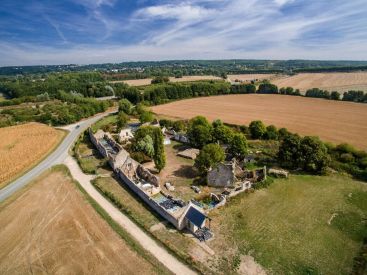
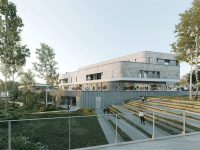
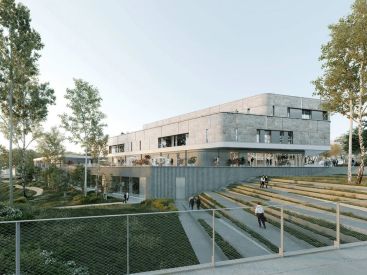
Behind its stone walls, the Coulevrain Farm is poised to begin a new chapter in its history. Located in Savigny-le-Temple, in Seine-et-Marne (77), this former Templar commandery, nearly nine centuries old, is now the focus of a rehabilitation project undertaken by the Town Hall and Banlieues Climat. The aim? To revive this agricultural heritage by imagining new uses centered on ecology, culture, and social ties.
A former Templar farm with nearly 900 years of history
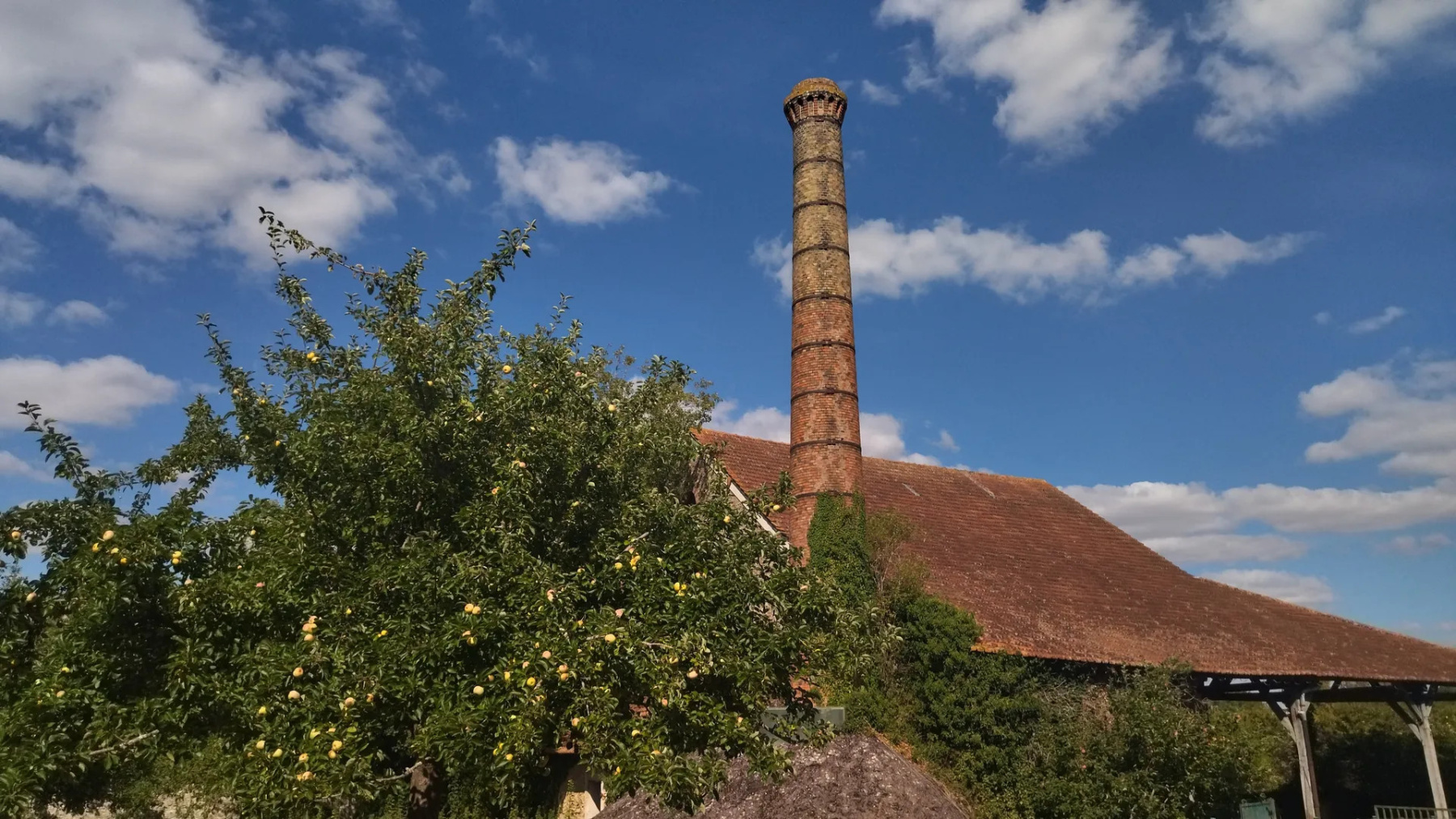
The History of Coulevrain Farm goes back to the 12th century, when the estate came under Templar control. After the order's dissolution, the site kept its agricultural vocation and underwent several changes over the centuries. The current buildings, typical of Brie’s grand farmsteads arranged around a central courtyard, bear witness to the renovations undertaken between the 16th and 20th centuries.
The farm thus preserves a remarkable architectural heritage, with its stone buildings, outbuildings, and its former manor. Operated for centuries, it ceased agricultural activity in 1986 before hosting an eco-museum dedicated to local history and rural traditions. The museum finally closed its doors in 2016.
Since then, several plans to repurpose the site have been proposed, including turning it into a Montessori school, but that idea was abandoned. A portion of the estate has remained unused, prompting questions about the future of this historic property.
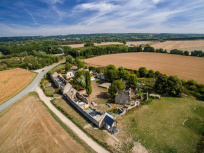
The Coulevrain farm covers around 8 hectares, including notably 5,500 m² of buildings to be rehabilitated, a courtyard, 2 hectares of conservatory orchard, and 3.6 hectares of agricultural fallow land. In November 2025, the municipality launched a new initiative with Safer Île-de-France to identify project developers capable of reviving a sustainable activity on the estate.
The project now being developed with Banlieues Climat aims to preserve the farm’s historical identity while giving it an agricultural, educational, and cultural purpose. The association, dedicated to raising environmental awareness, hopes in particular to turn this site into a hub for transmission and participation that is open to local residents.
Among the avenues being explored are the creation of shared gardens, the launch of educational workshops, the revitalization of natural spaces, and the development of activities tied to agriculture and the ecological transition. The project should also enable the repurposing of currently underused buildings without erasing their architectural character. The exact modalities of the restoration remain to be defined.
Beyond its historic buildings, the farm reveals another treasure: its heritage orchard, established in 1986. Spanning about two hectares, it gathers old varieties of apples and pears traditionally grown in eastern Île-de-France. It helps safeguard this fruit heritage while also serving as a platform to explore biodiversity and arboricultural know-how.
Its valorization plays a central role in the discussion about the future of Le Coulevrain, on par with the revival of neighboring farmland. The municipality has in particular mentioned the possibility of developing organic market gardening there.
The project takes a new step forward this Saturday, October 17, 2026, in conjunction with the National Architecture Days and the second edition of the Honey and Apple Festival.
Following an initial unveiling during European Heritage Days in September, visitors will be able to discover the rehabilitation plans and the first architectural sketches. The drawings by the firm Orge & Canal are eagerly anticipated on this occasion.
The day will also offer a chance to explore the conservatory orchard, meet beekeepers, and discover heirloom fruit varieties, with demonstrations and tastings around apples and honey. From 5:00–7:00 p.m., a discussion with Banlieues Climat will give residents the opportunity to share their views on the estate’s future uses and to tackle the challenges of the ecological transition.
As of now, no precise completion or opening date has been announced. The project remains in a definitional and consultative stage. In its original timeline, the municipality planned to begin initial work on the agricultural land and orchards from 2027, without committing to a firm date for restoring the entire complex.
After several attempts at transformation, this new approach opens up fresh prospects for the Coulevrain farm. It remains to be seen how the agricultural, social and heritage ambitions will take shape in a site that has stood at the heart of Savigny-le-Temple’s history for nearly nine centuries.
This page may contain AI-assisted elements, more information here.
Location
14 Place Georges Henri Rivière
77176 Savigny le Temple
Route planner
Official website
www.savigny-le-temple.fr