In the cemeteries of Paris and Île-de-France, some visitors have developed remarkable traditions for honoring their favorite artists, writers and public figures. From Père-Lachaise to Montparnasse Cemetery, and from Montmartre to Auvers-sur-Oise, these unusual tributes by ordinary people tell us as much about the lives of the departed as they do about the affection the living feel for them. And sometimes, the offerings are truly unexpected!
At Montparnasse Cemetery, in Paris’s 14th arrondissement, admirers vie with one another in their inventiveness. On Serge Gainsbourg’s grave, bouquets sit alongside old metro tickets—a clear reference to his song Le Poinçonneur des Lilas. There are also cigarettes, sometimes bottles and even cabbages, in memory of his album L'Homme à tête de chou. It just goes to show that a discography can also be told through a few objects!
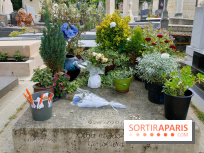
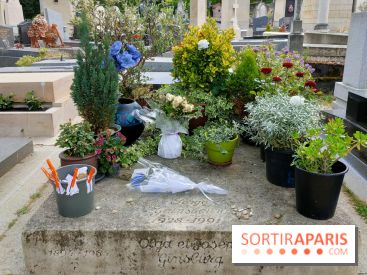
A little farther on, Marguerite Duras’s grave sometimes looks like a miniature stationery shop. Her readers leave pens, markers and pencils in small pots. True bouquets of writing for the author of The Lover.

But perhaps the most unexpected offerings are those left for Agnès Varda. The filmmaker, buried alongside her husband Jacques Demy, sometimes receives potatoes, including heart-shaped ones. This is a nod to her documentary The Gleaners and I, in which she explored the world of these discarded tubers. Baskets of potatoes were also brought to her funeral in 2019.
Politicians are not spared these curious tributes either! Visitors have left apples on Jacques Chirac’s grave, a reference to the famous “Eat apples!”, popularized during his 1995 presidential campaign. A few sweets have also been added to these edible tributes.
As for Jean-Paul Sartre and Simone de Beauvoir, their shared grave receives messages, books and, sometimes, sugar packets, evoking the Parisian cafés where the two philosophers loved to talk.
The famous Père-Lachaise Cemetery, in the 20th arrondissement, is no exception. Some visitors leave potatoes on the grave of Antoine-Augustin Parmentier. A rather fitting tribute to the pharmacist who helped popularize their consumption in France in the 18th century.
A few paths farther on, Marcel Proust is sometimes brought madeleines, in remembrance of the famous episode in In Search of Lost Time in which the taste of a little cake dipped in tea brings back childhood memories.
But one of the most mysterious tributes is to Marie-Anne Lenormand, a famous 19th-century fortune-teller. Visitors leave playing cards, divination decks and good-luck charms on her grave. Some even hope that these objects will symbolically absorb her powers of divination. This belief is, of course, superstition.
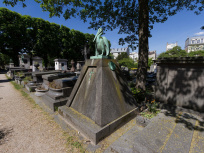
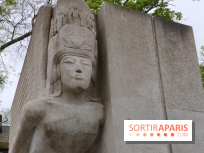
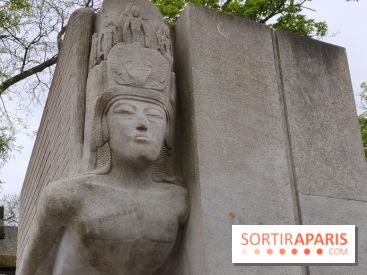
Other visitors prefer to show their affection in a more… tactile way. For years, the tomb of writer Oscar Wilde was covered in lipstick kisses. The tradition became so popular that it was damaging the stone. Since 2011, a glass barrier has protected the monument.

Singer Alain Bashung also received hundreds of kiss prints on his grave, especially around his epitaph: “So loved.”
As for the journalist Victor Noir, his bronze effigy has become the subject of a strange legend. Touching certain parts of the statue is said to promote fertility and romantic encounters. While these supposed powers have no scientific basis, the areas polished by visitors’ hands attest to the popularity of this belief.
Finally, admirers of Jim Morrison, lead singer of the Doors, have for years marked the area around his grave with graffiti and, even more curiously, chewing gum stuck to the guards around nearby trees. A far less romantic tribute—and, above all, damaging to the heritage site!
In the quiet Saint-Vincent Cemetery in Montmartre, cat lovers have found a place of pilgrimage.
They come to leave photographs of cats on the grave of Théophile Alexandre Steinlen, the artist who created the famous poster for the cabaret Le Chat Noir. It’s a touching way to pay tribute to the man who depicted the cats of Montmartre so often.
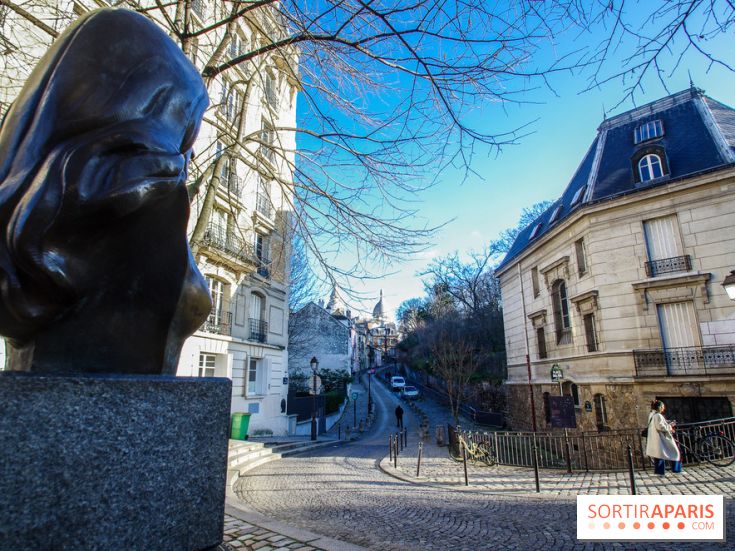
At the grand Montmartre Cemetery, it is songs that tend to linger in people’s memories. Dalida’s grave, dominated by a statue of the singer surrounded by golden rays, regularly receives impressive bouquets. Every year, around the anniversary of her death, her admirers gather to honor her memory. In April 2022, some even sang Bambino in front of her grave.

Parisian cemeteries aren’t the only places with these surprising traditions. In Dannemois, in Essonne, the tomb of Claude François remains a gathering place for his admirers. During commemorations, fans have placed bouquets in the arms of his life-size bronze statue. Some also come to sing his hits, as if to carry on a concert that was cut short.
Still in Essonne, at the Russian Cemetery of Sainte-Geneviève-des-Bois, Rudolf Nureyev’s grave has received photographs and ballet shoes, as well as bouquets. This was once a tradition among some admirers of the legendary dancer, whose final resting place is itself adorned with a sumptuous mosaic depicting an Oriental carpet.
Finally, at the Asnières-sur-Seine dog cemetery, in the Hauts-de-Seine, owners pay tribute to their departed companions with equally personal items. Stuffed animals, photographs, garlands and sometimes even small Christmas trees decorate the animals’ graves.
In the small cemetery in Auvers-sur-Oise, in Val-d’Oise, two almost identical gravestones stand beneath a thick blanket of ivy. Here lie Vincent van Gogh and his brother Theo, united even in death.
Visitors come from all over the world to pay their respects at this touchingly simple grave. And some bring a very special gift: sunflowers!

It must be said that these yellow flowers have become one of the Dutch painter’s best-known symbols. A leading figure of post-Impressionism, Van Gogh stood out in particular for his intense colors, thick brushstrokes and vibrant compositions. His famous sunflower paintings, created in Arles, did much to associate his name with the flower.
On July 29, 2015, to mark the 125th anniversary of his death, several descendants of the Van Gogh family laid sunflowers and yellow dahlias on the brothers’ graves, recreating a floral tribute that had also been present at the painter’s funeral in 1890.
Another poignant detail: the ivy uniting the graves is said to have been planted at the suggestion of Dr. Gachet, a close friend of the painter, to symbolize their friendship.
Behind these sometimes eccentric gifts lies a rather touching idea: keeping the memory of someone who has passed away alive through the things that made them unique. A madeleine brings a novel to mind, a subway ticket brings a song back to life, a sunflower calls to mind a masterpiece, and a simple photograph of a cat extends an artist’s world.
These traditions are not all permanent: objects may be removed, replaced or placed there only during commemorations. Some practices, such as rubbing sculptures, lipstick kisses or chewing gum, also damage monuments and should not be repeated.
Because, in the cemeteries of Paris and the Île-de-France region, the finest tribute is one that keeps the memory of the departed alive while respecting their final resting place. And after all, who would have thought a potato could tell so many stories?
This page may contain AI-assisted elements, more information here.