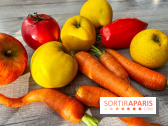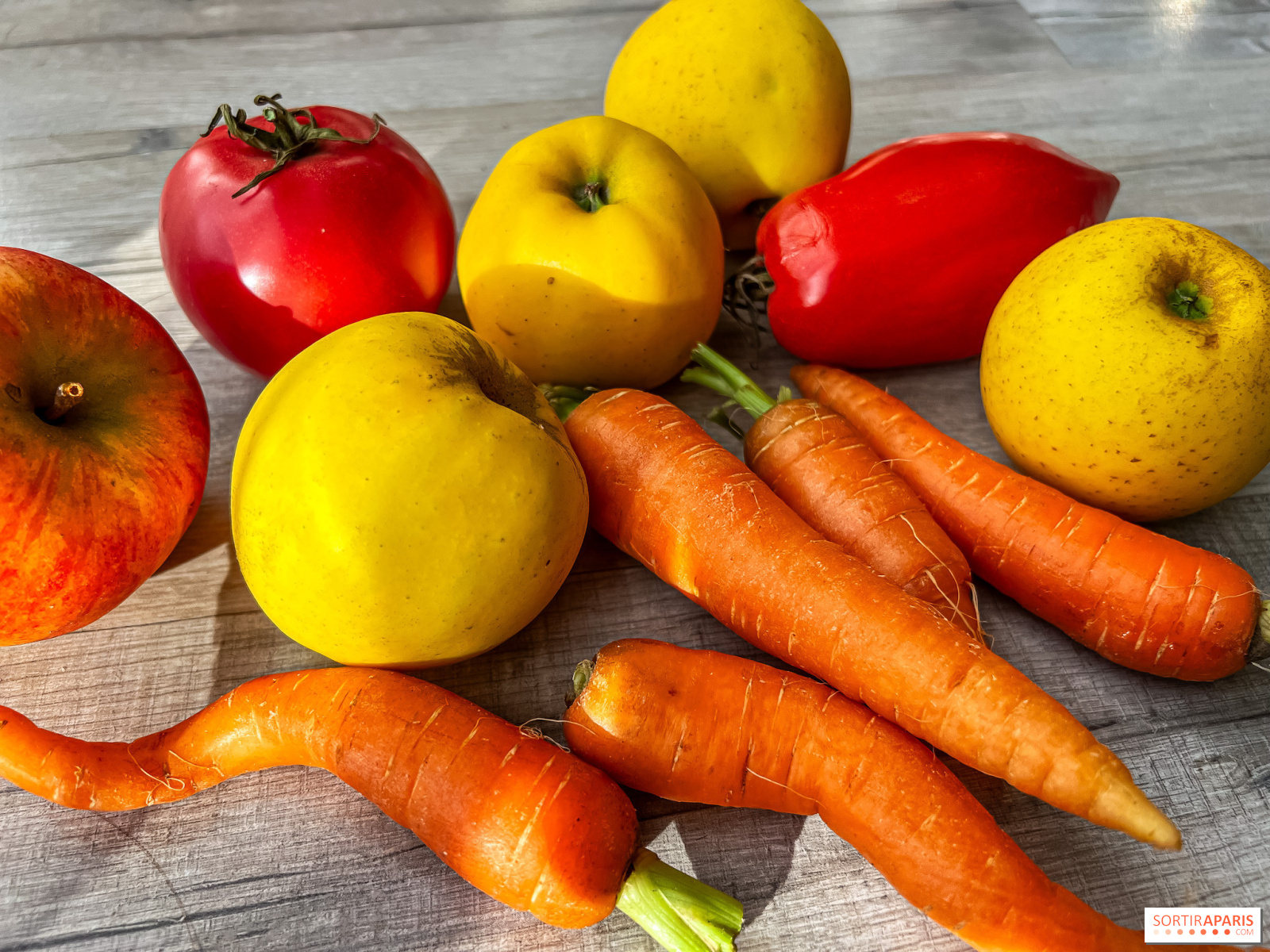
What if your next jars of jam could be free? In Île-de-France, you can collect free fruit and vegetables, legally, as long as you follow a few simple rules. The practice has a name: gleaning. It’s done as much in Paris (75) as in Hauts-de-Seine (92), Seine-Saint-Denis (93), Val-de-Marne (94) or the wide plains of Seine-et-Marne (77), Essonne (91), Yvelines (78) and Val-d'Oise (95).
A fig tree spilling into a narrow alley, a walnut tree by the edge of a path, brambles heavy with blackberries along a greenway, potatoes forgotten in a field after harvest: the opportunities are more plentiful than you might think. Once reserved for post-harvest fields, gleaning has moved into the city, into vacant lots, along park paths and into the forest.
The big question is where to look. Good news: a collaborative tool maps out freely accessible edible treasures, neighborhood by neighborhood. Here’s how to use it, what to pick according to the season, and the rules to follow to forage without a hitch.
The Falling Fruit map was launched in 2013 in Boulder, Colorado, by Ethan Welty and Caleb Phillips. The idea is simple: each dot marks a place where something edible grows and is freely accessible—no fence required. At first, the database drew on city tree inventories. Today, it’s mainly driven by users, and it boasts more than a million locations around the world.
Centered on Paris, the map of the capital and its inner suburbs fills with markers as you zoom into a neighborhood. To explore elsewhere, simply type the name of your city and nearby spots will appear. By clicking on them, you’ll see the species, sometimes a photo, and comments on the quality or abundance of the harvest and its ripening period. The filters let you search for a specific fruit, handy when you’re suddenly craving plum jam.
The map is also available as a mobile app on iOS and Android, so you can check it while you’re out and about. The only downside, as with any participatory tool, is that some information can be a little out of date. A tree may have been felled, or its fruit already picked by a earlier-arriving neighbor.
Foraging follows nature’s calendar. Each season brings its own finds, and that’s exactly what makes this guide worth revisiting all year long. Here’s what you might come across in Île-de-France:
Agricultural fields remain another option, especially in the wide plains of Seine-et-Marne, Essonne and Yvelines. Once the harvest is over, there are sometimes potatoes, carrots or onions left on the ground. In that case, however, the farmer’s permission is essential.
Gleaning is an ancient tradition in France, tracing back to an edict of Henry II on November 2, 1554. Today, there is virtually no national rule governing it. The old Article R26 of the Penal Code, frequently cited, disappeared in 1994. The government clarified its position in a response published to the National Assembly: gleaning after harvest is allowed during the day, by hand and without tools, unless a municipal order says otherwise, and it is forbidden on fenced land.
In the city, the golden rule is to keep public space separate from private property. The fruit from a tree planted in a garden belongs to the owner, even if it overhangs the sidewalk. Those that fall onto the public way fall into a murkier area, and courtesy remains the best guide: a word to the neighbor can go a long way. In parks and public gardens, local rules apply and foraging is usually regulated.
In public forests, picking berries, nuts, or chestnuts for personal use is generally tolerated in small amounts, unless local restrictions apply. People simply avoid returning with full bags.
Foraging is also about knowing what you’re picking. Wild garlic can be easily mistaken for lily of the valley or autumn crocus, two poisonous plants. If you’re unsure, skip it, or show your harvest to a pharmacist. Fruits growing along busy roads also tend to accumulate pollutants: give them a thorough rinse, and it’s wiser to prefer trees set back from the road.
Ethically speaking, the benevolent forager takes only what he plans to eat, leaves enough for those who follow, and never harms the branches. And if he discovers a forgotten tree, he can add it to the map himself so others can benefit.
To glean in groups in the fields, the association SOLAAL Île-de-France runs solidarity gleanings with farmers, food-aid charities and agricultural high schools. Each operation is covered by a contract with the producer, and the harvested fruits and vegetables are sent to food assistance programs. To participate, the easiest path is to get in touch with a local food-aid charity or contact the regional office. The association also offers an online gleaning guide.
Budget-wise, nothing to spend: the Falling Fruit card is free, just like foraging itself. All you need is a cloth bag, a small box for delicate fruits like blackberries, and mud-ready shoes to get started.
Gleaning will appeal to families who want to teach children to recognize a walnut tree or a fig tree, to urban dwellers curious to rediscover their neighborhood, and to anyone looking for a concrete anti-waste gesture. The map turns a simple stroll into a treasure hunt, and you’ll never look at the trees along your street the same way again. In autumn, the season is fairly prolific, with apples and other late-season fruits. And since it stores well and is free, we'd be wise not to miss out.
A word of warning: gleaning remains a tolerated practice, not a right to forage wherever you please. Without the owner's permission, keep moving.
If you’d rather fill your basket on plots reserved for this, our guide to pick-your-own in Île-de-France — where you can harvest your own fruit, vegetables and flowers — brings together farms open to the public, from Seine-et-Marne to Yvelines. The picking is paid, but the harvest is guaranteed.
To stay close to the city, head for the urban gardens and farms of Paris and Île-de-France, where gardening workshops and participatory harvests let you get your hands dirty without leaving the subway. And for more budget-friendly ideas, our free outings are worth a look.
This page may contain AI-assisted elements, more information here.