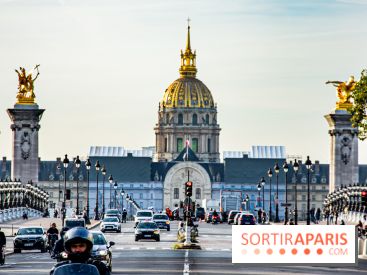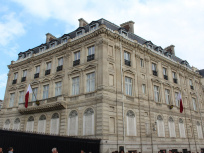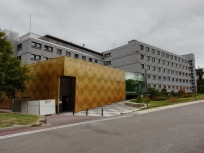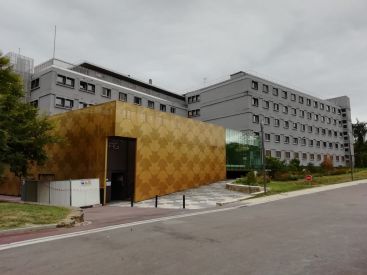
Every year, the third weekend in September sees the European Heritage Days, an annual event that began in 1984 and has since become a not-to-be-missed event in Paris and across Europe. For each edition of the event, places that are often closed to the public open their doors - ministries, museums, embassies, cultural institutes - with architectural heritage as the main theme in 2025. It's an opportunity to discover the richness of our neighborhoods in a different way, and to explore history beyond closed doors.
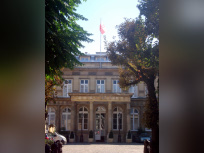
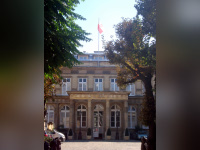
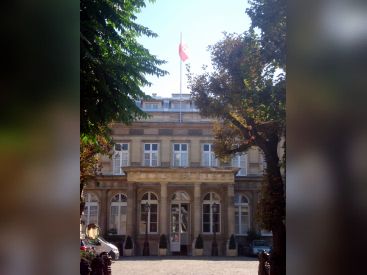
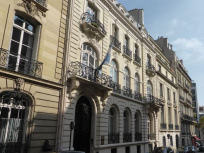
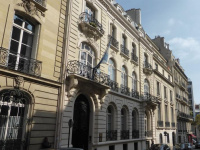
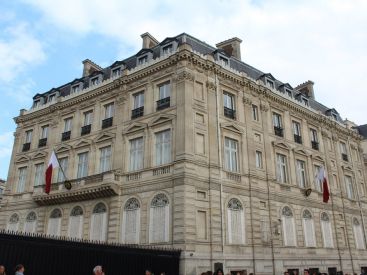
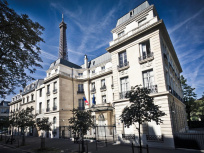
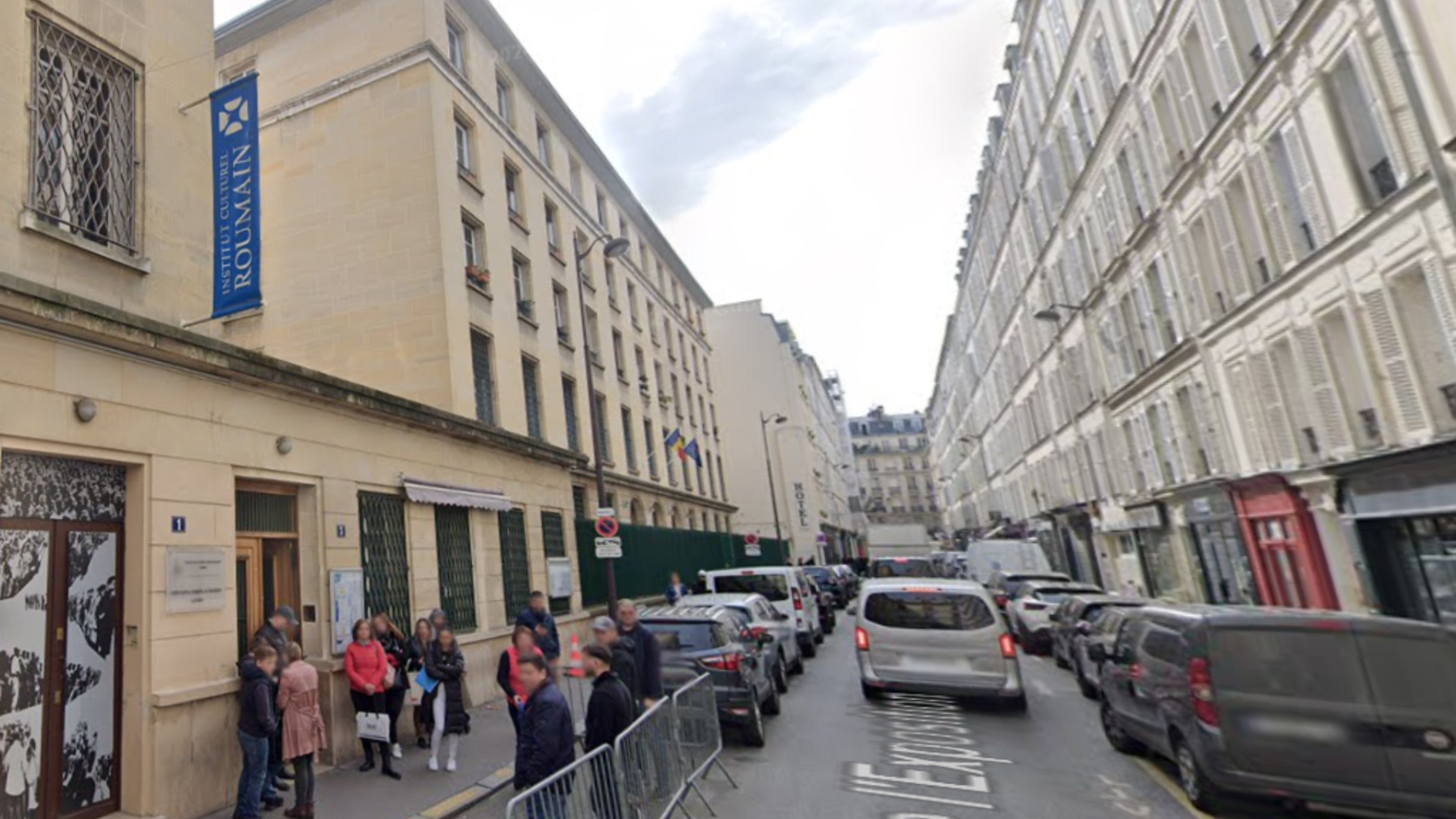
Once again this year, theRomanian Cultural Institute in Paris, located in the 7ᵉ arrondissement, is taking part in this fine heritage celebration. On the occasion of the weekend of September 20 and 21, 2025, it is offering two remarkable exhibitions. On the one hand, Parks and Gardens of Romania, which honors the beauty of Romanian green spaces, both public and private, inscribed in a historical past and in a contemporary approach in conjunction with the Pro Patrimonio Foundation. On the other, L'Athénée roumain, une histoire européenne, an open-air installation on the walls of the Hôtel de Béhague, highlighting the eclectic architecture of this temple to music, inaugurated in 1888 and designated a European heritage site in 2024.
The Romanian Athenaeum, an emblematic European cultural heritage site
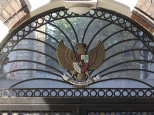
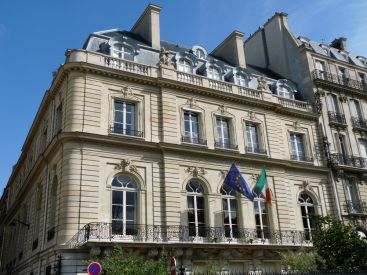
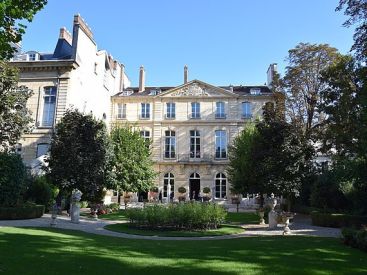
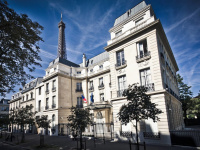
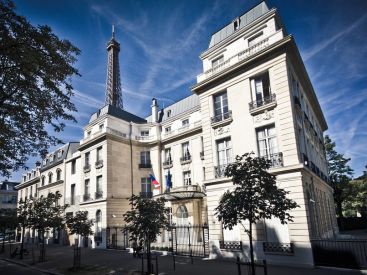
To mark the award of the European Heritage Label to the Romanian Athenaeum in 2024, the Romanian Cultural Institute in Paris, in partnership with the Romanian Embassy in France and the "George Enescu" Philharmonic, has organized the open-air exhibition "The Romanian Athenaeum, a European history" on the outside walls of the Hôtel de Béhague, Residence of Romania in France | 22-24 avenue Bosquet, 75007 Paris.
The Romanian Athenaeum is a major cultural symbol, a tribute to Romania's national identity and modernization at the end of the 19th century. Through photographs of the building as a whole and the decorative elements inside, you'll discover the richness of this architectural heritage and the strength of the cultural ties between Romania and France.
Constantin Esarcu, a diplomat and politician, was determined to find a lasting solution to the problem of building a worthy home for the Athenaeum. In 1885, to raise the necessary funds, a public lottery was organized. On November 30, during a ball organized at the National Theatre, the winning ticket was drawn from among the 12,300 tickets issued, each at the symbolic price of one leu (Romania's currency unit). It was in this context that the famous motto was launched:
"Give a leu for the Athenaeum!"
A veritable temple to classical music in Romania, the Athenaeum, located in the center of Bucharest on the prestigious Calea Victoriei, was inaugurated in 1888 and completed in 1897. A splendid example of eclectic architecture, harmoniously blending neoclassical style with Baroque elements, it is the work of French architect Albert Galeron and Romanians Ion Băicoianu and Leonida Negoescu, as well as engineer Schwalbach, who designed the structure. The ornamentation of the concert hall's backdrop was entrusted to Italian architect Lerdel. The large wall fresco is the work of painter Costin Petrescu, while sculptor Carol Storck fashioned the stone staircases. The monumental bronze doors, designed by Galeron, were created by Giorgio Vasilescu. Finally, the elegant stucco decorations imitating marble were created by Franz Bohacker, then by the Axerio brothers.
The Athenaeum is distinguished by its perfectly symmetrical massing, also reflected in the orderly layout of the interior spaces. The main façade features a colossal portico with eight Ionic columns and eight engaged columns with Doric-Tuscan capitals, topped by a monumental pediment framing the main entrance.
In contrast to the sober exterior, clad in white stone and simple plaster, the interiors are distinguished by a richly decorative and chromatic palette, subtly hierarchical according to the function and importance of each space.
On April 17, 2024, at a ceremony held in Antwerp, the European Commission awarded the Romanian Athenaeum the European Heritage Label, in recognition of its significant role in European history and culture.
The Romanian Athenaeum, owned by the Romanian state and home to the George Enescu Philharmonic, is a cultural and architectural treasure that combines beauty, history and social commitment in a dynamic, constantly evolving process.
Parks and Gardens of Romania
Following on from the Heritage Cycle initiated three years ago by the Romanian Cultural Institute in Paris and Pro Patrimonio France, celebrating the parks and gardens of Romania, a country of magnificent natural beauty, is an opportunity to place these achievements of various categories in the context of their creation, and to illustrate the links forged with other European countries. Indeed, parks and gardens are the extension and showcase of princely palaces, private residences and urban pleasure grounds, all adorned with a variety of buildings, bridges and pleasure pavilions that are architectural masterpieces in their own right.
In addition to the subjects listed below, the exhibition marks the 25th anniversary of the Pro Patrimonio Foundation and its mission to promote Romanian heritage:
1. The European context, and its history crossed with Romanian achievements
2. Examples of beautiful public parks in the country, their histories and authors
3. Examples of beautiful private parks under restoration, history and authors.
4. Achievements of the Pro Patrimonio Foundation and presentation of modern concepts for the future of two of its properties, issues and research into models for preserving the art of parks and gardens and nature, a highly topical subject at work in the country,
5. Presentation of contemporary projects completed and underway in the country.
Dates and Opening Time
From September 20, 2025 to September 21, 2025
Location
romania cultural institute
1 Rue de l'Exposition
75007 Paris 7
Official website
www.icr.ro