The upcoming municipal elections in Paris (and across France, for that matter...) are scheduled for March 15 and 22, 2026! And for those who missed the update, a new voting system was approved by the National Assembly in August 2025. This reform impacts cities like Paris, Lyon, and Marseille, which will now be organized by arrondissement. The goal: establish a clearer majority and better reflect the diverse political opinions, among other objectives.



 Municipal Elections 2026: Why Was the Voting System Changed?
The electoral system for municipal elections in Paris, Lyon, and Marseille will change starting in 2026, following the passage of a law championed by Deputy Sylvain Maillard and approved by the Constitutional Council in summer 2025. But what’s the reason behind this? Here’s what you need to know. [Read more]
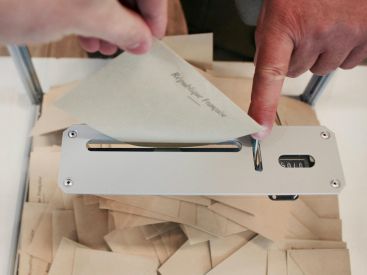
How does it work? Essentially, voters will need to vote twice: once for their local neighborhood councilors, and once for the city councilors of Paris. The two votes are cast on the same day, one after the other, in separate ballot boxes. Following the results, the elected neighborhood councilors will choose their respective district mayors, while the Paris city councilors will elect the mayor of the city.

Another significant change concerns the distribution of seats within the Paris City Council, now allocated based on the entire city rather than by individual districts through local councils. The Paris Council still consists of 163 members, but their seats are now assigned according to the overall citywide vote. As with other major cities, the candidate list that comes in first receives a 25% bonus of the seats, with the remaining seats distributed proportionally among all lists that have secured at least 5% of the vote.
Regarding the Metropolis of Greater Paris, the community councilors are elected simultaneously with the Paris city councilors, during the same voting process. Their names appear separately on the ballot papers, but there is no dedicated election or separate ballot box for their selection.
There you have it — everything you need to know as the next elections approach. See you in March!