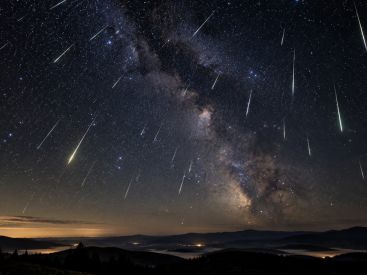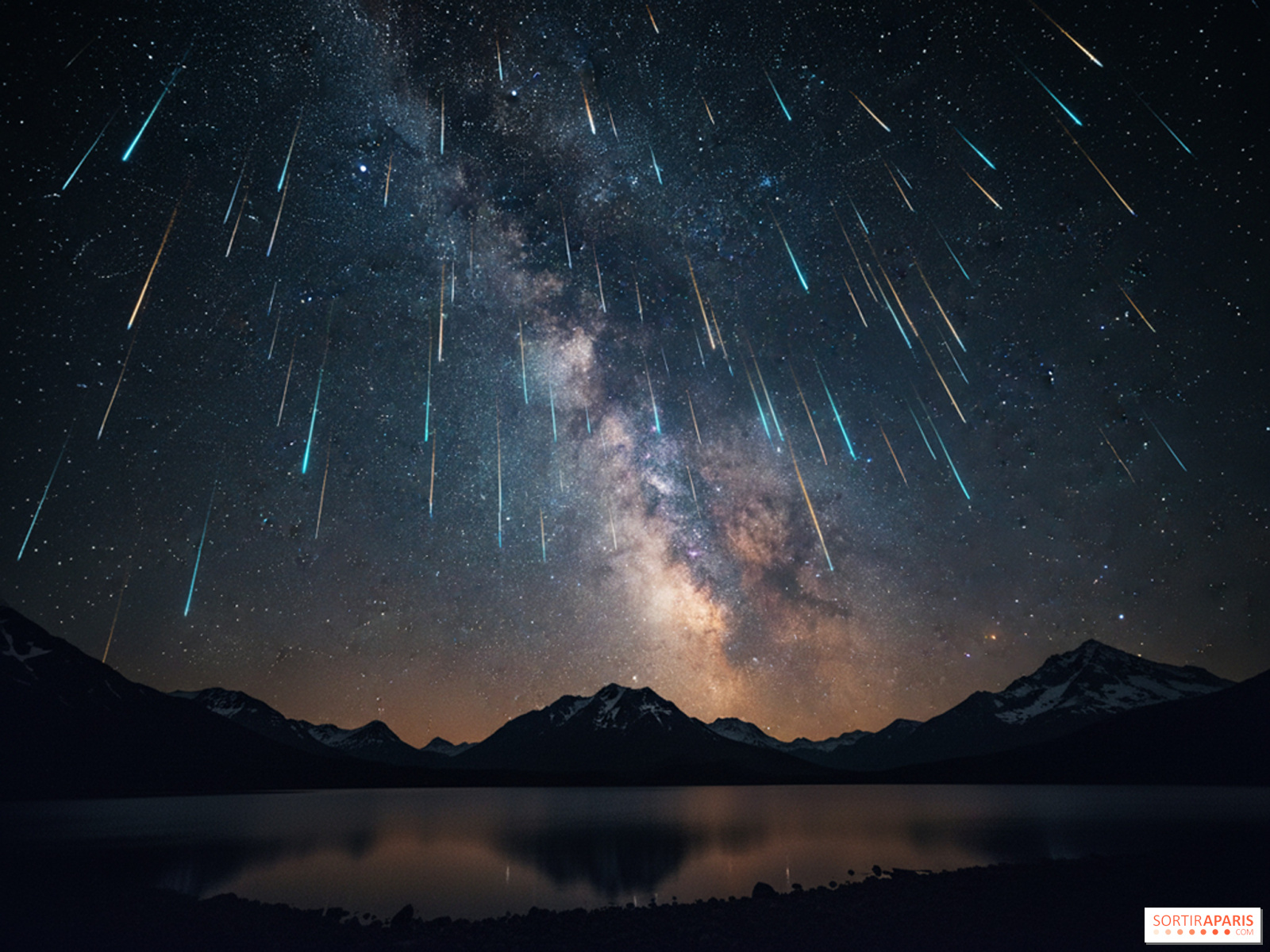
Something’s happening in the sky this month, and few people know it. From May 22 to July 3, 2026, a rare-intensity meteor shower is streaking across the sky above us: the Arietids, active at up to 60 meteors per hour and peaking around June 10. The only snag for watching them: they occur in broad daylight. But with a bit of organization, they can indeed be seen with the naked eye, just before dawn.
Everyone knows the Perséides of August. The Arietids, by contrast, were discovered in 1947 thanks to the Jodrell Bank radio telescope in England, not with the naked eye but via the radar echoes they produced. Their low profile is due to a key detail: their radiant, the patch of sky from which the meteors appear to originate, lies in the constellation Aries, only 30 degrees from the Sun. When viewing conditions are ideal, it’s broad daylight. And when night falls, their source is already below the horizon.
That's about all you need to know to understand why this phenomenon remains largely off the public radar, despite radar readings brushing up to 200 meteors per hour under optimal conditions. The figure of 60 per hour remains theoretical, but it's enough to make you want to get up early.
The window is narrow but real. On the French mainland, the sweet spot is between 3:30 a.m. and 4:00 a.m., in the hour before astronomical dawn, when the Sun sits about 12 to 18 degrees below the horizon. Meteors will skim the eastern horizon from their radiant, so you’ll want a clear view in that direction, away from artificial lights.
The best observing zones are the areas least affected by light pollution: the Black Triangle of Quercy in Lot, the Millevaches Regional Natural Park in Limousin, or the Cévennes, Mont Lozère, the Alpes du Sud and the Pyrénées. These are places where the air is thin and clear, ideal for catching meteor flashes before sunrise. The Sky Tonight calendar lets you visualize the radiant's position from your region and follow peak dates.
A small drawback this year: on June 10, the Moon will be in its waning crescent phase, and its brightness could wash out the faint meteor trails. The fix is to position yourself so that a natural obstacle—a tree, a ridge, or a wall—covers the Moon without blocking the view toward the east.
Getting up at 3:30 a.m. takes a bit of motivation, that’s true. But lying on a yoga mat, a light layer of warmth if the night is chilly, eyes fixed on the horizon, is a very different experience from a hour spent with your gaze fixed on the zenith. For those who prefer to wait for the usual nocturnal conditions, the Perseids will be there in August. But the Arietids have something the others don’t: they reward those who make the effort.
Note: observing conditions depend on local weather. Check the forecast for your area before you head out.
This page may contain AI-assisted elements, more information here.
Dates and Opening Time
From May 22, 2026 to July 3, 2026
Prices
Free
Recommended age
For all