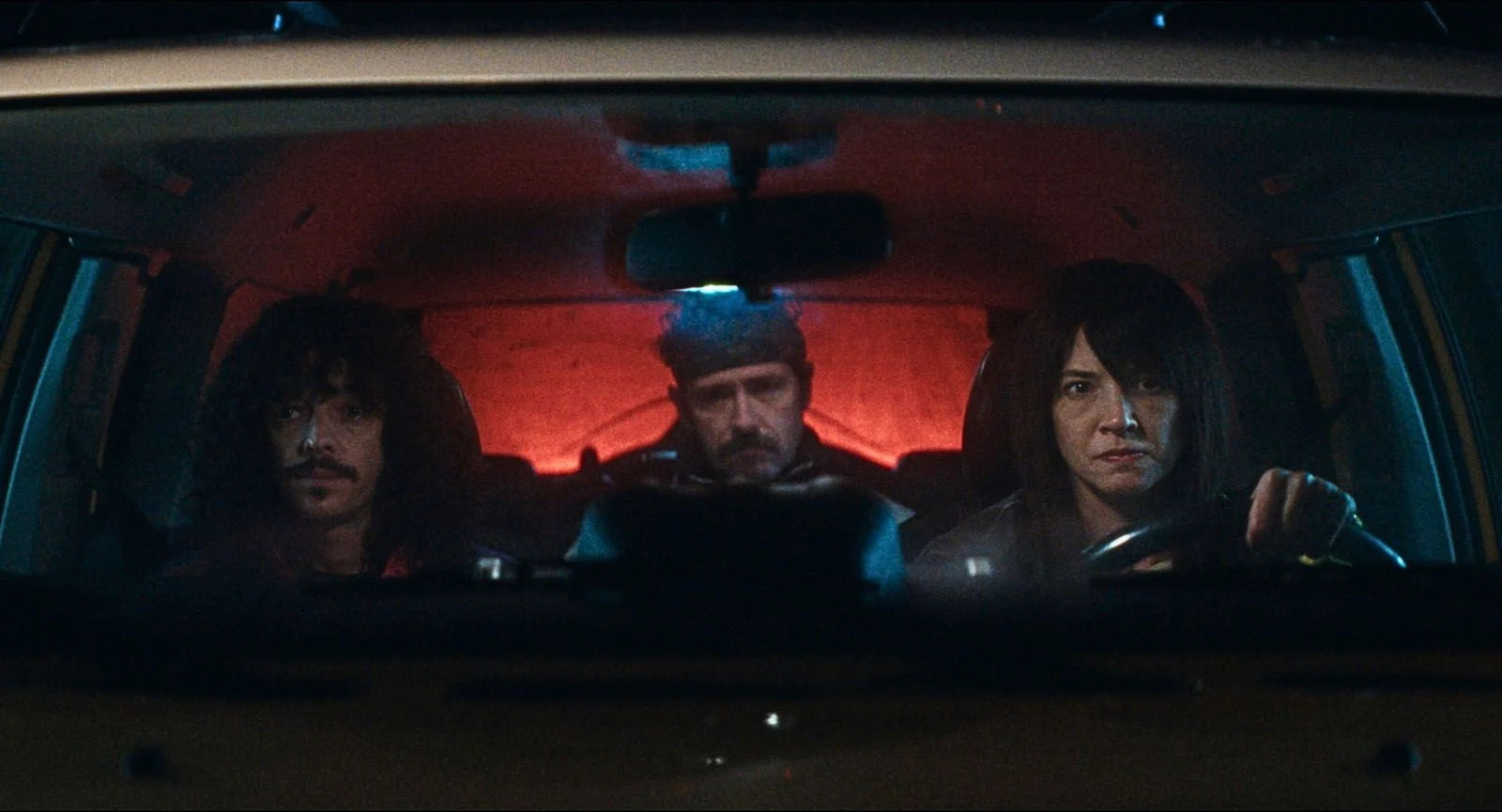
Stronger Than the Devil hits theaters on March 25, 2026. This film, rated for audiences 12 and up with a warning, marks Graham Guit’s return to feature-length fiction after seventeen years, since Hello Goodbye. The director reunites Melvil Poupaud, Asia Argento, and Marine Vacth in a thriller-comedy centered around an absent father who suddenly reenters the life of his adult son, with immediate repercussions for everyone around him.
Valentin, a man lost and broke, reconnects with Joseph after twenty years apart, dragging him—and his wife Alice—into a spiraling chaos. Alongside them, JP, Mila, and Gigi drift through a tale woven with tension, family upheaval, and dark humor, set against the backdrop of a fractured father-son relationship.
The film premiered at the Montreal New Cinema Festival in 2025 and was later chosen for the Angers First Plans Festival in 2026. It also signifies a reunion between Graham Guit and Melvil Poupaud, who previously worked together on The Sky Is Ours and The Kidnappers. This new collaboration is part of a more personal project, exploring themes of fatherhood and featuring an openly autobiographical touch in its writing.
Stronger Than the Devil continues Graham Guit’s signature cinematic style, with a penchant for unstable characters, fractured journeys, and family dramas under strain. Its tight, one-week timeline promises a tense, fast-paced film that focuses on the ripple effects triggered by this unexpected return.
Our Verdict on Stronger Than the Devil
Stronger Than the Devil, directed by Graham Guit, positions itself as a intentionally offbeat dark comedy, straddling the line between absurd thriller and dysfunctional family drama. Led by Melvil Poupaud, Asia Argento, Marine Vacth, and notably a highly invested Nahuel Perez Biscayart, the film boldly champions chaos, tonal shifts, and a storytelling style that favors instability over classic rigor. The result stands out as quite atypical in the French cinematic landscape: a piece that feels less like a finely-tuned narrative and more like a collision of battered characters, conflicting impulses, and a deliberate taste for discomfort.
The film’s primary strength lies precisely in this free approach to tone. Graham Guit refuses to smooth out his universe or reassure the audience. He portrays a ragtag group of misfits—marginal, quirky characters often unable to save themselves, let alone others. This battered humanity injects the film with its most distinctive energy. There’s a genuine pleasure in watching the situations derail, relationships push to breaking points, and the absurd gradually distort reality.
Through its affinity for the absurd, its marginal characters, and its deliberately unstable narration, Stronger Than the Devil calls to mind both the gritty cinema of Bertrand Blier, particularly Buffet Froid, and some contemporary absurd comedies by Quentin Dupieux, while occasionally flirting with the dark irony characteristic of the Coen brothers.
In this organized chaos, Nahuel Perez Biscayart emerges as the true revelation of the film. Amazingly intense as JP, he injects a nervous energy, vulnerability, and an oddity that immediately draw the viewer in. Where the film risks losing itself in its chaos, his presence manages to anchor the scenes. His performance perfectly embodies the film’s essence: unpredictable, unstable, teetering on the edge. It’s he who provides a deeper emotional resonance beyond mere provocative style.
The rest of the cast also fully embrace this unstable tone. Melvil Poupaud, Asia Argento, and Marine Vacth contribute to this delicate balance between irony, unease, and emotional disarray. All seem to understand that the film only works if it never fully settles into comfort. The problem is that this daring risks backfiring: by favoring a succession of chaotic situations and colliding behaviors, the story can come across as disjointed, sometimes feeling more spontaneous than intentionally crafted.
This might divide audiences. Its dark, absurd humor doesn’t always hit the mark, and the blend of biting comedy with thriller tension remains uneven. Some scenes are edgy and daring, while others seem more like improvisations risking to dilute their impact. This fragmentation isn’t inherently a flaw but requires viewers to accept a piece that never seeks a clear line or straightforward narrative.
The film primarily targets a discerning audience, open to experimental auteur cinema, characters teetering on the edge, stories that zigzag, and European black comedies that favor discomfort over immediate allure. Those who prefer solid structure, linear storytelling, or sharper humor may find themselves on the sidelines. Here, the appeal isn’t in craftsmanship but in a sense of drifting, sliding, and constant relational chaos.
Stronger Than the Devil isn’t a film in the traditional sense of likability, nor always successful in execution. But its identity, roughness, and distinctive approach to portraying its disturbed characters make it compelling. Quirky, chaotic, and sometimes uneven, it derives strength from what it refuses to tame. A crooked black comedy, not always convincing but filled with enough personality to leave a lasting impression on those willing to accept its jolts.
Stronger Than the Devil
Upcoming Film | 2026
In theaters from: March 25, 2026
Comedy, Thriller | Runtime: 1h24
Directed by Graham Guit | Starring Melvil Poupaud, Asia Argento, Marine Vacth
Original title: Stronger Than the Devil
Country: France
Want to extend your movie night? Check out the March cinema releases, discover the must-see films of the moment, and explore our top thriller picks of the year.