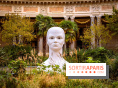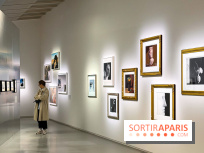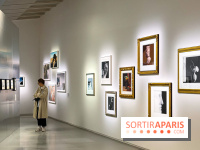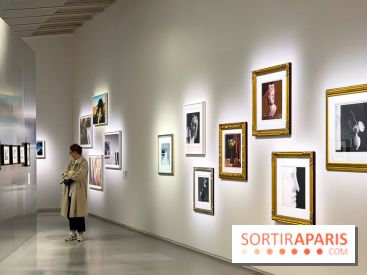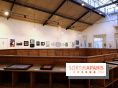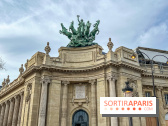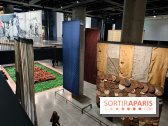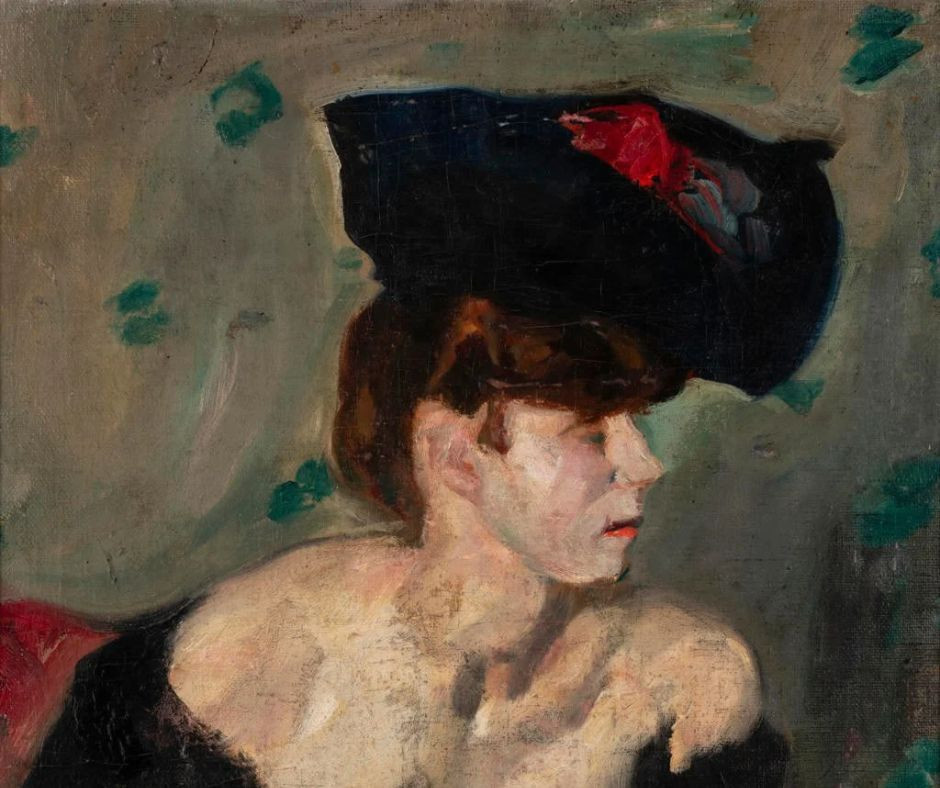
Thanks to extraordinary loans from the National Gallery Prague and fifteen other Czech institutions, le mahJ is presenting a major Paris-focused retrospective devoted to the Czech painter Georges Kars (1880-1945). The exhibition brings together more than 150 paintings, drawings and archival documents. It highlights a leading figure of the Paris School.
Born in Bohemia near Prague, into a German-speaking Jewish family, Georges Kars studied at the Munich Academy of Fine Arts, where he absorbed Expressionism and the satirical spirit of the magazine Simplicissimus. He notably befriended Jules Pascin, Rudolf Levy, and Paul Klee. Between 1906 and 1907, in Madrid, he met Juan Gris and became fascinated by the paintings of Velázquez and Goya.
Having settled in Paris in 1908, he marries his fellow countrywoman Nora Berta Braun and forges links with Marc Chagall, Guillaume Apollinaire and Max Jacob. Initially shaped by Cubism, he sheds the influence to develop a style built on the solidity of his constructions and the fullness of his forms.
Mobilized in the Austrian army, Kars heads to Prague during the First World War. Returning to France in 1919, he moves in the circles of Maurice Utrillo and Suzanne Valadon—portraits of whom he paints in abundance—before meeting Chana Orloff. He exhibits in salons and at the Berthe Weill Gallery, which dedicates two solo shows to him, helping place his works in national collections.
From 1933 until the outbreak of the Spanish Civil War, Kars spends every summer in Tossa de Mar, Catalonia, where he paints numerous village scenes, portraits, and daily-life vignettes. In 1937, following the success of a major retrospective in Prague, Nora and Georges Kars return to live in Prague, the Czech capital. But in February 1939, facing the threat of invasion of Czechoslovakia, they hastily head back to Paris, leaving behind a portion of their works that would largely be sold or destroyed by the Nazis. In June 1940, the couple takes refuge in Lyon, where Kars continues to paint and draw. In November 1942, after the occupation of the southern zone, Georges Kars crosses into Switzerland clandestinely with Chana Orloff and her son, where they are arrested. Kars is interned in various camps. Released in early 1945, he ends his life in Geneva on February 5, a few days before returning to Paris.
Dates and Opening Time
From April 16, 2026 to August 30, 2026
Location
Museum of Jewish Art and History
71 Rue du Temple
75003 Paris 3
Route planner
Access
Metro line 11 "Rambuteau" station
Prices
Tarif enfant -18ans: Free
Tarif jeune -26ans: €5.5
Tarif réduit: €7.5
Tarif plein: €10.5
Official website
www.mahj.org
Instagram page
@mahjparis
Booking
www.mahj.org
More information
Certainly! Please upload the text you'd like me to translate.