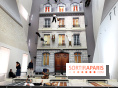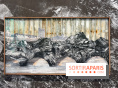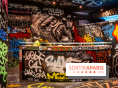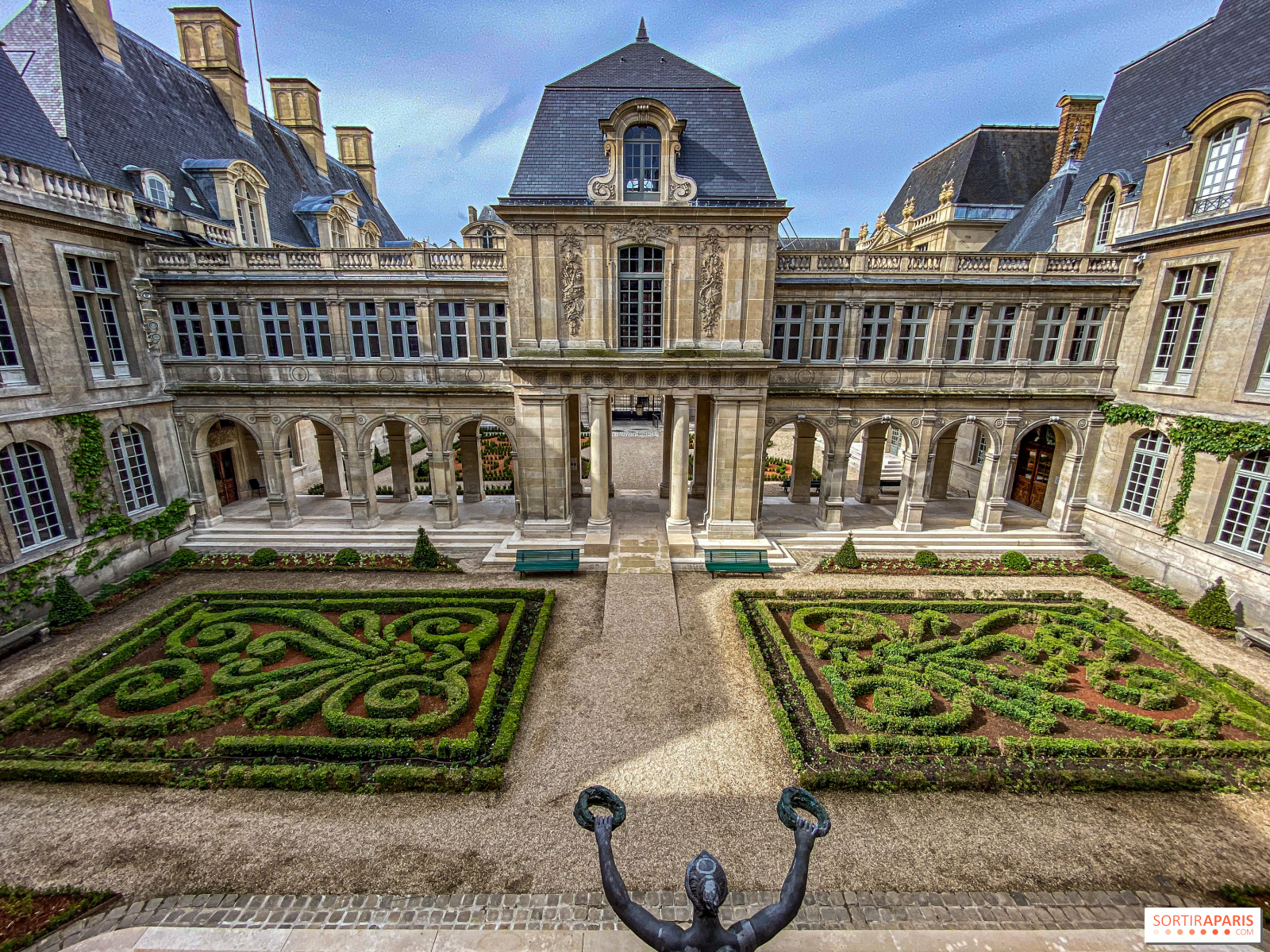
Rarely has the Musée Carnavalet, tucked on rue de Sévigné in the 3e arrondissement de Paris, offered such an unexpected angle on the capital’s history. From October 14, 2026, to February 14, 2027, the museum will devote a full exhibition to Jacques Villeglé and his singular approach to l'art urbain parisien, viewed through the lens of affiches lacérées. The occasion: the centenary of the artist’s birth, born on March 27, 1926 in Quimper and who passed away in June 2022 in Paris.
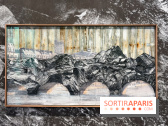
Jacques Villeglé, born Jacques Mahé de la Villeglé, settled in the capital in 1950. What others might dismiss as mere vandalism, he sees as a fully fledged artistic material: torn posters, scratched and ripped by anonymous passers-by on the walls of Paris. For nearly fifty years, he roams the streets, plucks these fragments of collective memory, and exhibits them as standalone works. Each piece is titled with the street name and the date of extraction. A simple, almost militant gesture that turns the city into an open-air workshop. Villeglé himself said: tearing is “this primal act,” a “guerrilla of images and signs.”
His approach to collage and his use of urban materials make him a founding member of the Nouveau Réalisme movement in 1960, alongside Yves Klein and Arman. He is also regarded as the leading figure among poster artists. While his contemporaries painted, he pilfered. Where François Truffaut did as a child with cinema photos, Villeglé theorized it: in 1959 he created the entity of the "Lacéré Anonyme" — the idea that the true artist is the anonymous tearer, and that he himself is content to collect. A showy humility that actually masks a highly crafted artistic vision.
The museum’s proposed itinerary invites visitors to follow Villeglé as he wanders through Paris, neighborhood by neighborhood and decade by decade. There, one discovers how the layering of posters—revealed by the tears and cuts made by anonymous passersby—forms a kind of visual archaeology of the city, layer after layer. The exhibition also traces Villeglé’s connections to the scene of contemporary urban art, a bridge spanning between 1950s Paris and today’s street art. Another notable point: many of the documents and works on display are being shown for the first time.
As for the museum, note that Carnavalet’s permanent collection is free to the public. Open Tuesday through Sunday from 10 a.m. to 6 p.m. (closed Mondays, January 1, May 1, and December 25). The museum is accessible from Saint-Paul (line 1) or Chemin Vert (line 8) stations. Tickets for the temporary exhibition will be available soon at carnavalet.paris.fr.
This exhibition speaks to both fans of contemporary art and curious minds interested in Paris’s history. Street art enthusiasts will discover an unexpected genealogy of their practice, while Marais regulars can seize the moment to (re)discover one of the most beautiful museums in the 3rd arrondissement, just steps from Place des Vosges and the Picasso Museum.
Dates and Opening Time
From October 14, 2026 to February 14, 2027
Location
Carnavalet Museum
23 Rue de Sévigné
75003 Paris 3
Official website
www.carnavalet.paris.fr