You are probably familiar with this anecdote: despite its name, the Pont-Neuf is the oldest existing bridge in Paris. But do you know its history? The Pont-Neuf connects the right bank to the left bank, passing through the western end ofthe Ile de la Cité. Construction began in 1578 under Henry III but was halted between 1588 and 1598 due to the Wars of Religion, and was completed in 1604.
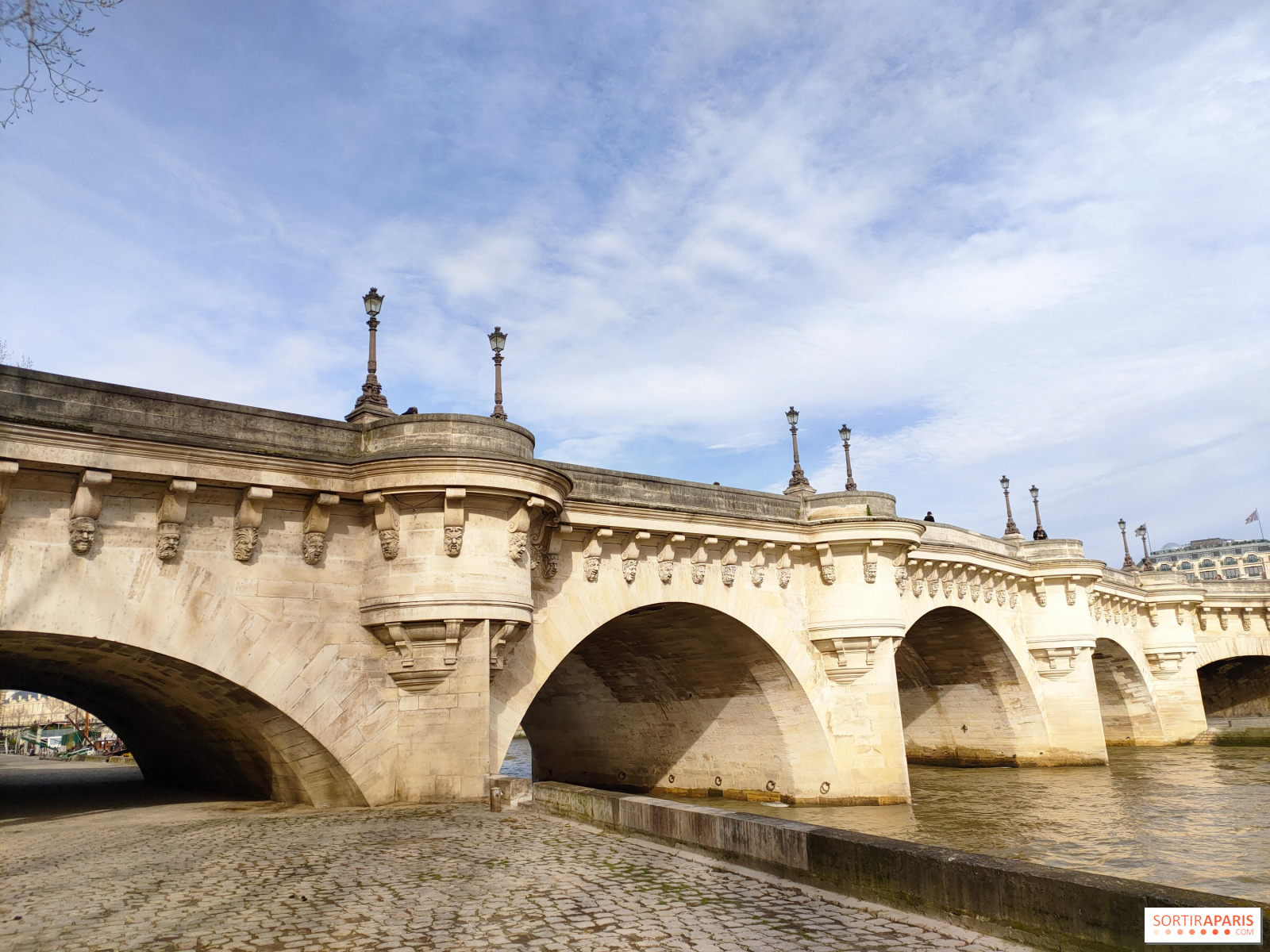
It was Henry IV, who was responsible for inaugurating it, who gave the Pont-Neuf its name , in contrast to the old bridges of Paris. The Pont-Neuf was indeed different from the other bridges in the capital at the time. In addition to being the first stone bridge to span the entire Seine, the Pont-Neuf was also the first bridge to be equipped with sidewalks to protect Parisians from mud and horse-drawn carriages. It should also be noted that the Pont-Neuf was the first bridge in Paris not to be covered—meaning that no dwellings were built on it, unlike the other bridges in Paris. Only a few shops were located on its half-moon turrets until 1854.
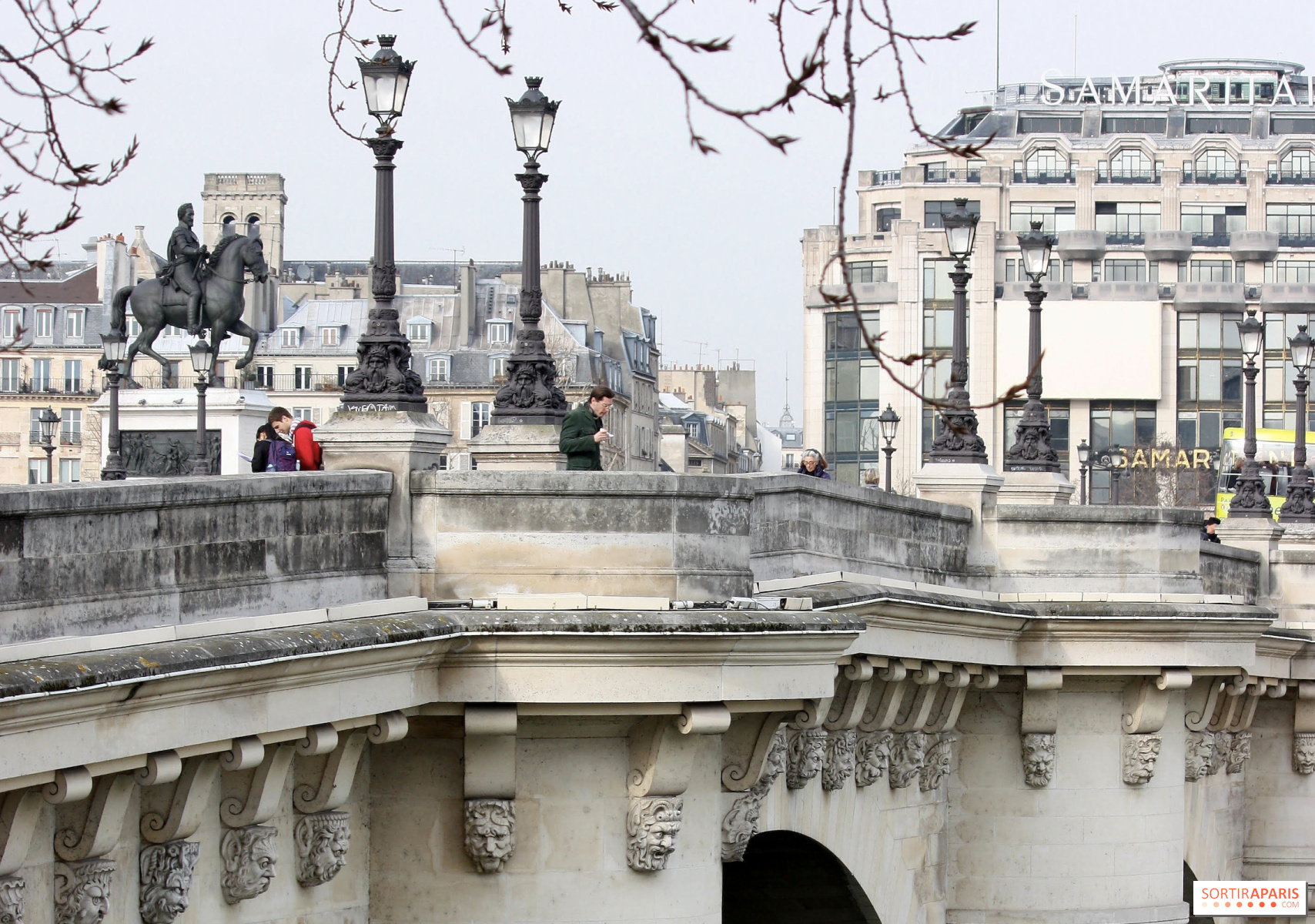
In 1604, Henry IV had the Samaritaine pump built on the Pont-Neuf to supply water to the Louvre Palace and the Tuileries Palace and its gardens. It was destroyed under Louis XVI, but still gave its name to the famous department store located nearby.
In 1614, four years after the assassination of Henry IV, Marie de Medici commissioned Jean de Bologna to create an equestrian statue of Henry IV. The statue, placed on the Île de la Cité at the end of the Pont-Neuf, was melted down during the French Revolutionto make cannons. The statue you can see today is not this one, but another equestrian statue of Henry IV, created by Lemot based on Bologne's model and unveiled in 1818.
Listed as a historic monument in 1889, the Pont-Neuf is recognizable by its 12 arches and its numerous grimacing masks, carved in stone, known as mascarons, of which there are 384!