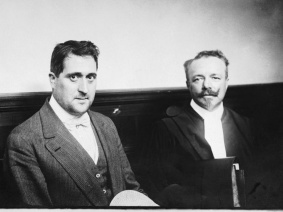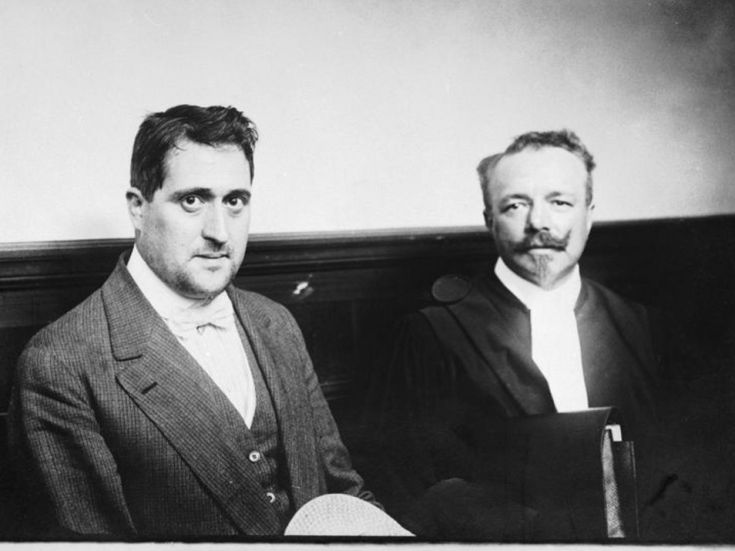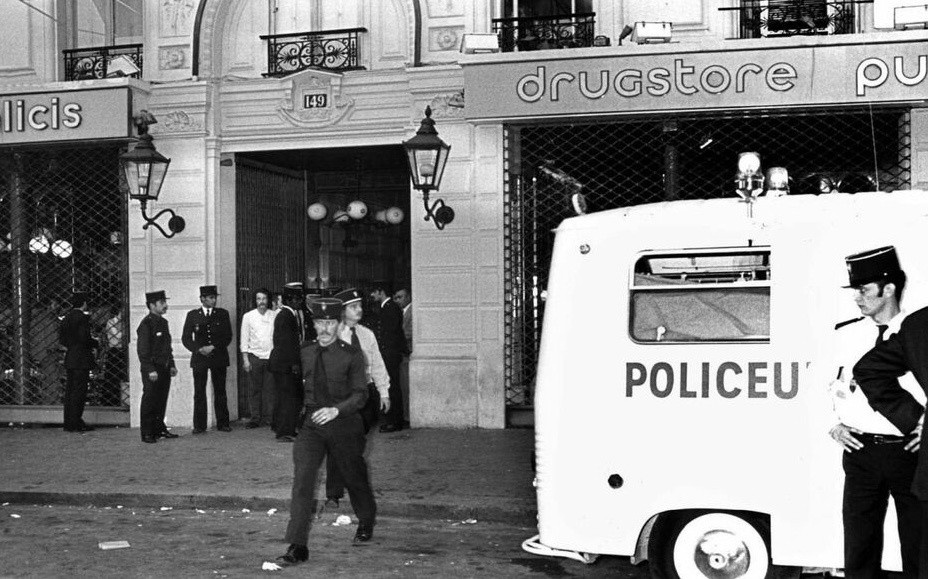
On Sunday, September 15, 1974, a grenade exploded in the Publicis drugstore on Boulevard Saint-Germain. Behind this attack, which left two dead and over thirty wounded, was the Venezuelan Carlos, a figure of anti-imperialist terrorism in the 1970s and 80s.
At the corner of Rue de Rennes and Boulevard Saint-Germain, the drugstore Saint-Germain opens its doors on October 19, 1965, smack in the heart of the Saint-Germain-des-Prés district, seven years after its successful inauguration and amid the growing triumph of Publicis’ first drugstore on the Champs-Elysées.
On the site of the Royal Saint-Germain, just a stone’s throw from the Deux Magots, the Saint-Germain drugstore quickly becomes a favorite haunt for Parisians, including Jacques Dutronc and Serge Gainsbourg, about whom it is whispered that he rarely left the drugstore without slipping a 500-franc bill to the saleswomen, after first kissing them on the cheek.

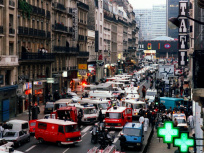
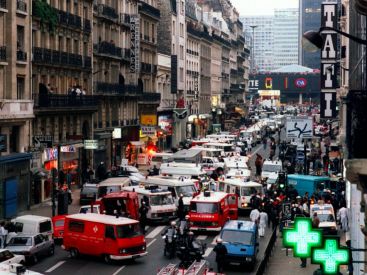
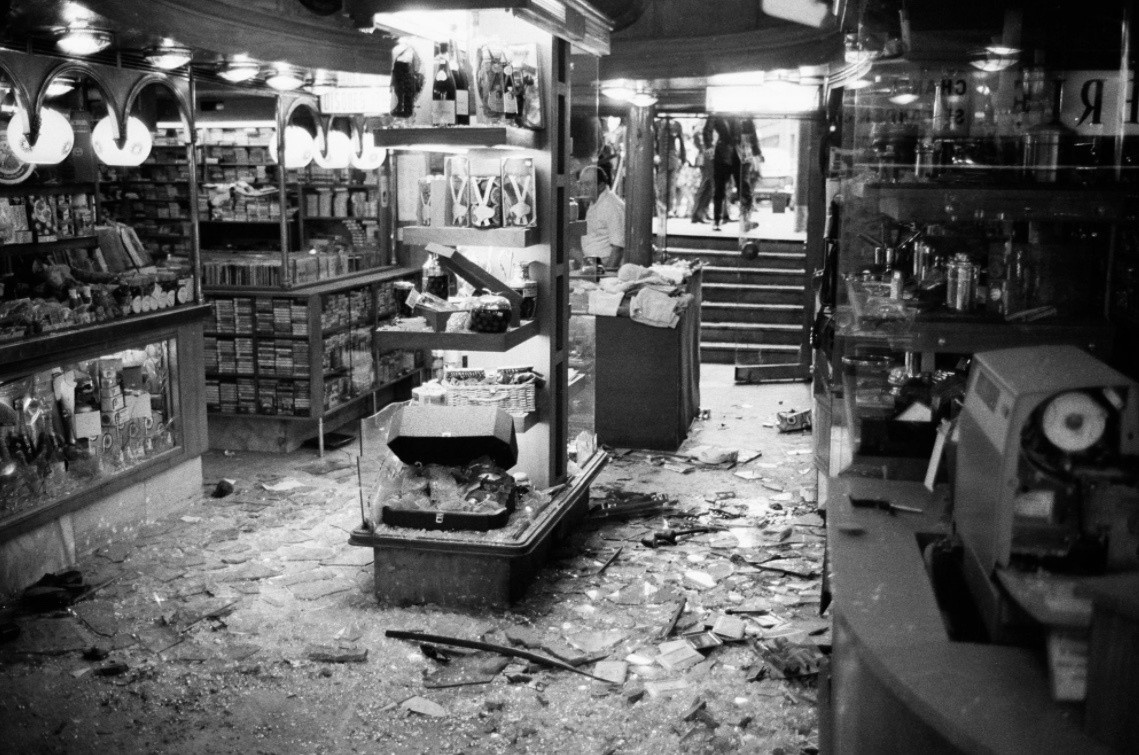
On Sunday, September 15, 1974, at 5:10 p.m., a grenade was hurled by a man from the mezzanine restaurant of the drugstore and detonated in the shopping arcade below. The blast gouged a 15-centimeter crater in the floor. Panic swept through the drugstore, packed on that sunny day; 34 Parisians were injured, including four children, and two people lost their lives.
Sent to the scene, investigators recover from the rubble a lever used to trigger a defensive grenade and collect witnesses' statements describing the terrorist: a man aged 25 to 30, tall and athletic, with a square jaw. The suspect, who has meanwhile taken to his heels, is being sought but has not yet been found.
Soon, the investigation established that the grenade came from a batch of fragmentation grenades stolen in 1972 from a U.S. base in Germany and later used in other attacks and armed robberies by the Baader-Meinhoff gang, the Red Army Faction, and the Revolutionary Cells. Many activists were questioned with no results.
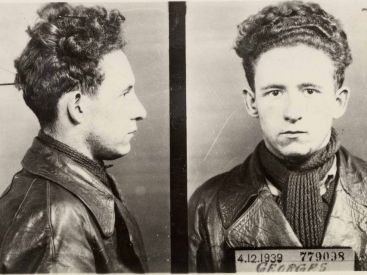
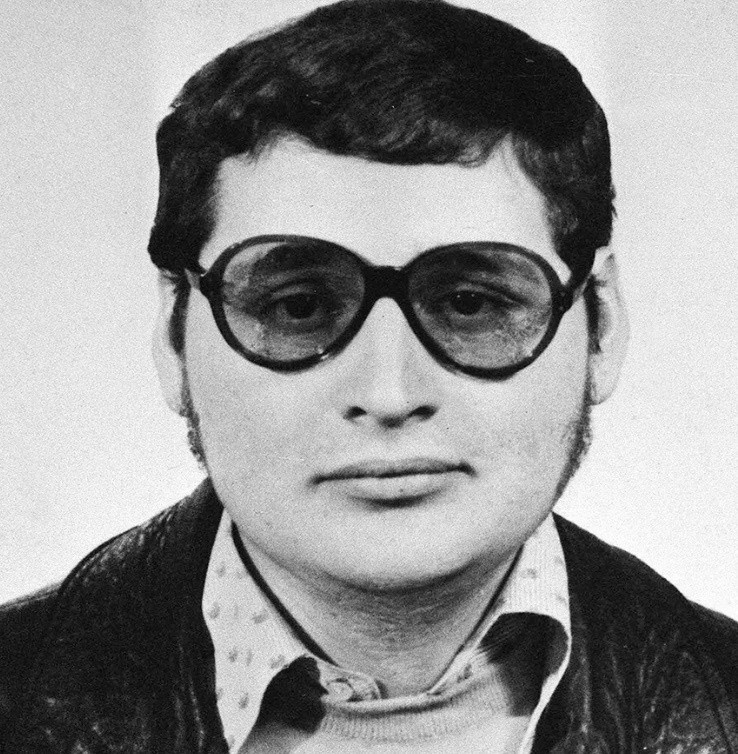
Five years later, on December 13, 1979, as the investigation stalls, Ilich Ramirez Sanchez, known as Carlos, emerges as a leading figure in internationalist revolutionary terrorism and pro-Palestinian activism in the 1970s and 1980s, claiming responsibility for the attack in the name of the Japanese Red Army to a journalist friend who later reveals his confidences in the pages of the Lebanese newspaper Al Watan Al-Arabi. The interview is then picked up a few days later by Le Figaro.
The history takes us back to the era of far-left terrorist attacks and to the early days of Carlos's career, a year before the attacks on El Al planes at Orly Airport and the hostage-taking by the Organization of the Petroleum Exporting Countries in Vienna.
In 1974, at the time of the Saint-Germain drugstore bombing, Ilich Ramirez Sanchez was the head of the armed wing of the Popular Front for the Liberation of Palestine (PFLP), which carried out several bombing attacks in London and Paris.
On July 26, 1974, just days before the Saint-Germain attack, the revolutionary Yoshiaki Yamada, a member of the Japanese Red Army (JRA), a group linked to a faction of the PFLP, is arrested at Orly and incarcerated in Paris. Carlos and Michel Moukharbal then decide to orchestrate a hostage-taking at the French Embassy in The Hague, Netherlands, to secure his release. The operation is carried out, on September 13, 1974, by the Japanese members of the JRA.
But French authorities do not bow to the ransom. To pressure Paris and speed up the release of the Japanese revolutionary and his accomplices, Carlos carried out, two days later, the Saint-Germain drugstore raid. Fearing further action of this kind, the government ultimately agrees to send the Boeing 707 demanded by the hostage-takers to flee to Holland, along with a sum of 300,000 dollars; Yoshiaki Yamada is released on September 17, 1974.
After years on the run, Carlos was spectacularly captured on August 15, 1994, in Sudan, where he had taken refuge undercover, armed with a forged diplomatic passport. He was jailed at La Santé prison and later at the Poissy central prison. The Venezuelan terrorist was sentenced three times to life imprisonment for numerous attacks carried out on French soil, even though he has continued to deny involvement in the Saint-Germain drugstore attack. The Saint-Germain drugstore, for its part, closed its doors in 1996, making way for a ready-to-wear shop.
To explore further:
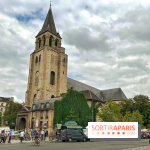
What to do in the Saint-Germain-des-Prés and Odéon district: ideas for outings and top addresses
Are you setting out to conquer Saint-Germain-des-Prés and the Odéon district and planning to hop between the 6th and 7th arrondissements of Paris? Gear up for your expedition by checking out these Parisian hotspots that will help you make the most of your wander. [Read more]
Dates and Opening Time
On September 15, 2026
Location
Saint-Germain-des-Prés
Quartier Saint-Germain-des-Prés
75006 Paris 6
Route planner
Accessibility info
Booking
View the prices of this ticketing service
More information
Iconography: © AFP - STF















 What to do in the Saint-Germain-des-Prés and Odéon district: ideas for outings and top addresses