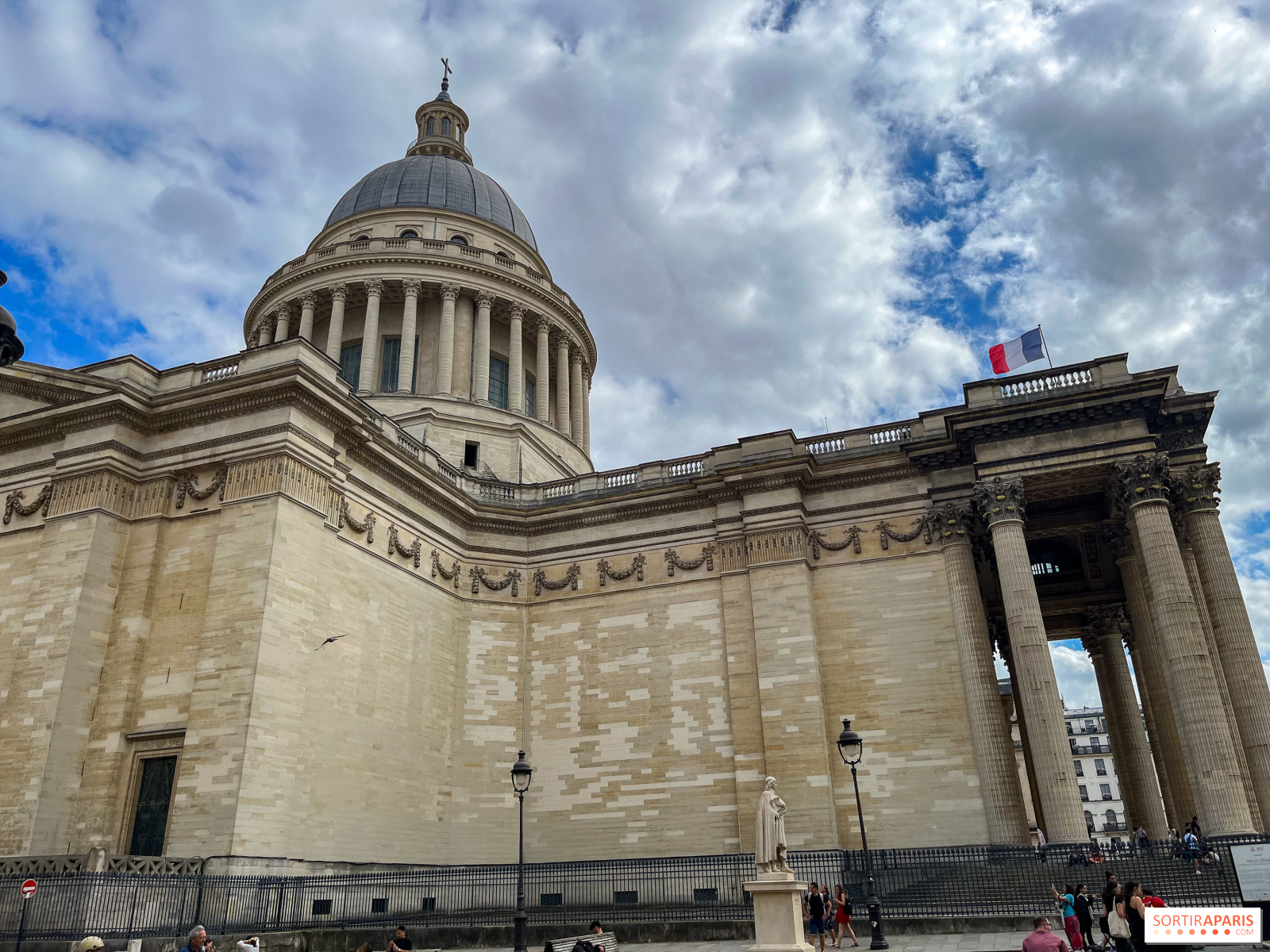
What if we told you that the capital was saved from invasion by the Huns by a woman named Geneviève, without even fighting? Less well known than Joan of Arc, but just as charismatic, the patron saint of Paris richly deserves her place in the pantheon of great historical figures - literally, since the Pantheon today stands on the Montagne Sainte-Geneviève, on the site of the former abbey dedicated to her.
Imagine Paris in the 5th century. In 451, Lutetia saw Attila the Hun arrive from afar, a veritable scourge who destroyed everything and sowed terror everywhere in his path. When rumors spread that he was approaching, Parisians took fright and wanted to flee to Orleans, but Geneviève, a pious young woman barely in her thirties, urged the crowd to pray and not abandon the city, certain that the city, which was not yet the capital, would be spared. Finally, whether by miracle or coincidence, Attila changed direction and bypassed Lutetia, heading for Orleans.
Geneviève thus became a true heroine and spiritual figure of the capital, organizing food convoys during famines and interceding with the Frankish kings to help the poorest, notably the first Christian rulers of the Frankish kingdom, Clovis and Clothilde. When she died in 502, she was buried on the hill that would later bear her name: Montagne Sainte-Geneviève.
Today, the soul of Sainte-Geneniève lives on in many parts of the capital, but her traces can be found mainly in the 5th arrondissement, notably in thechurch of Saint-Étienne-du-Mont, where her sarcophagus can still be seen, even though her relics disappeared during the French Revolution. Although her cult is no longer as popular as it once was, the diocese still organizes an annual procession in her honor, between Nanterre, where she was born, and Paris.
An unassuming figure, and yet it's partly thanks to her that the City of Light didn't sink into darkness at that time. Who knows what the city would have become otherwise?