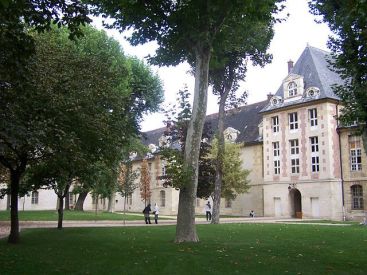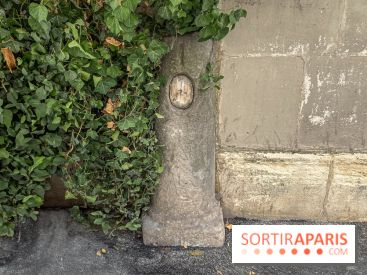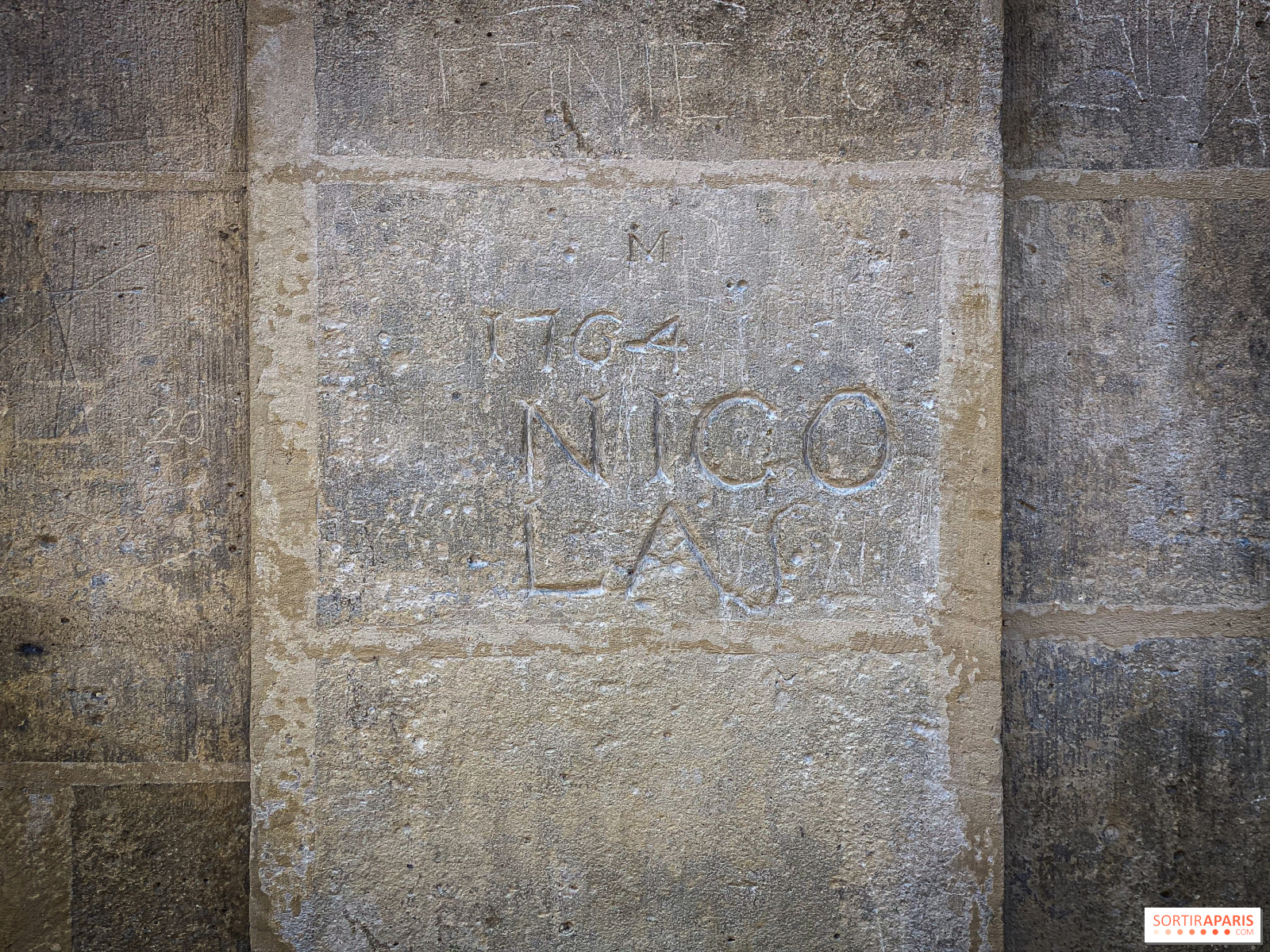
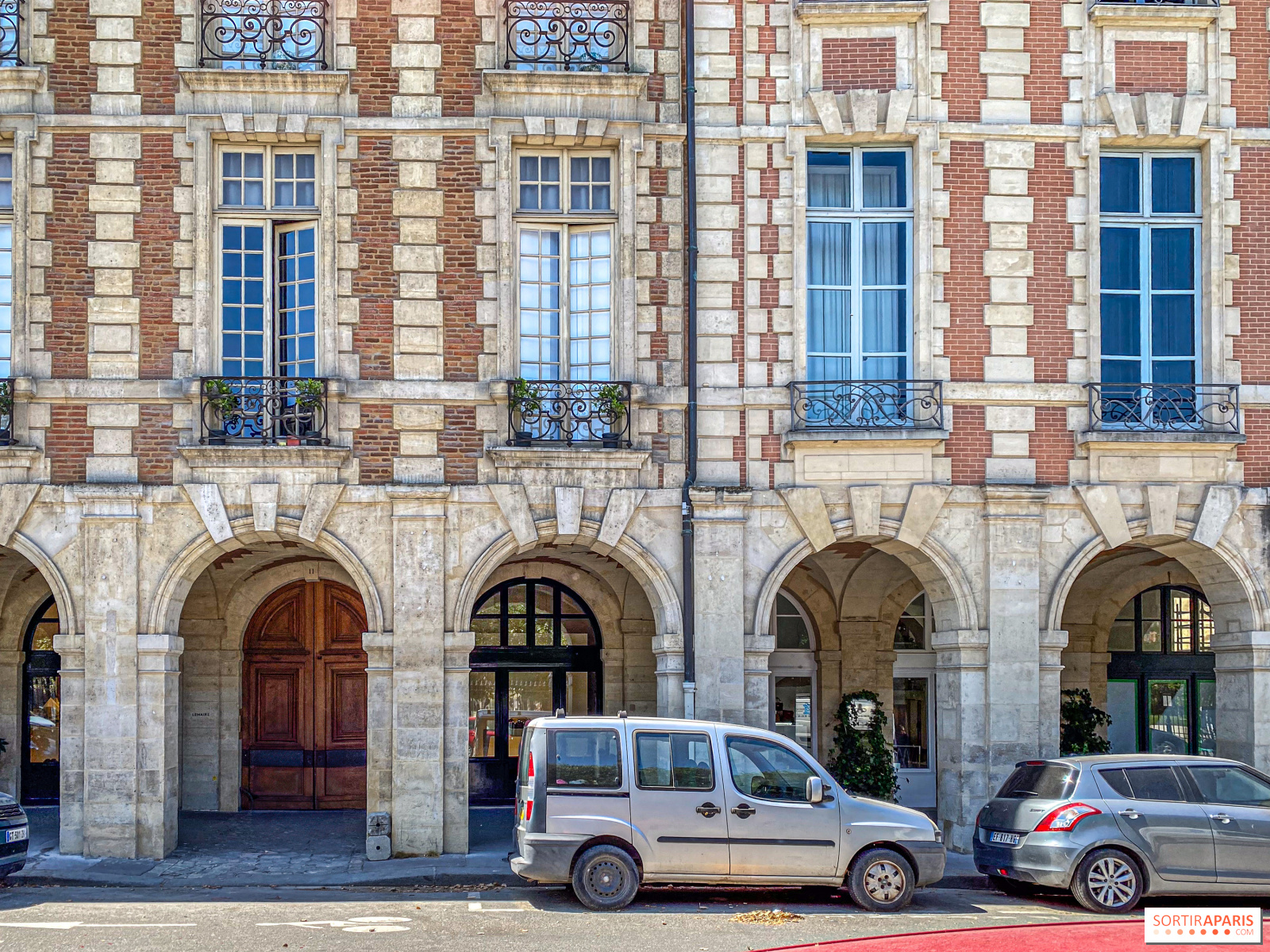
A name, a date, a stone... and a whole chapter of forgotten history! The oldest known graffiti in Paris can be found between nos. 11 and 13 Place des Vosges, in the 4th arrondissement. It reads " 1764 NICOLAS ", carved into the stone on the outer arcade of a pillar. Hand-engraved in the 18th century, this epigraph is attributed to the writer Nicolas-Edme Restif de la Bretonne, typographer and notorious flâneur, author of Les Nuits de Paris.
This unusual testimony dates back to the time when the Place des Vosges was still known as the Place Royale. Built in 1605, it is now one of the oldest squares in Paris, known for its regular arcades, red-brick facades and shaded galleries. The discreet inscription easily goes unnoticed among the ancient stones, although hundreds of people pass it every day.
Born in 1734 into a peasant family from the Yonne region, Restif de la Bretonne moved to Paris at the age of 25 to work as a typographer at theImprimerie Royale. Alongside his writing - often inspired by his own experiences - he developed a singular practice: engraving personal messages in the stone of Parisian streets. He used keys and irons to do this, discreetly tracing dates or thoughts on the city's walls.
In his diary Mes inscriptions, written in the 1780s and found in the Archives de la Bastille, he evokes his motivations, notably when he writes:"I made it with this idea in mind: will I see this mark next year? It seems to me that, if I saw it again, I would feel a sense of pleasure, and pleasure is so rare, towards the autumn of life, that it is quite permissible to seek out opportunities for it". The inscription on the Place des Vosges is the only one of his many engravings still visible today.
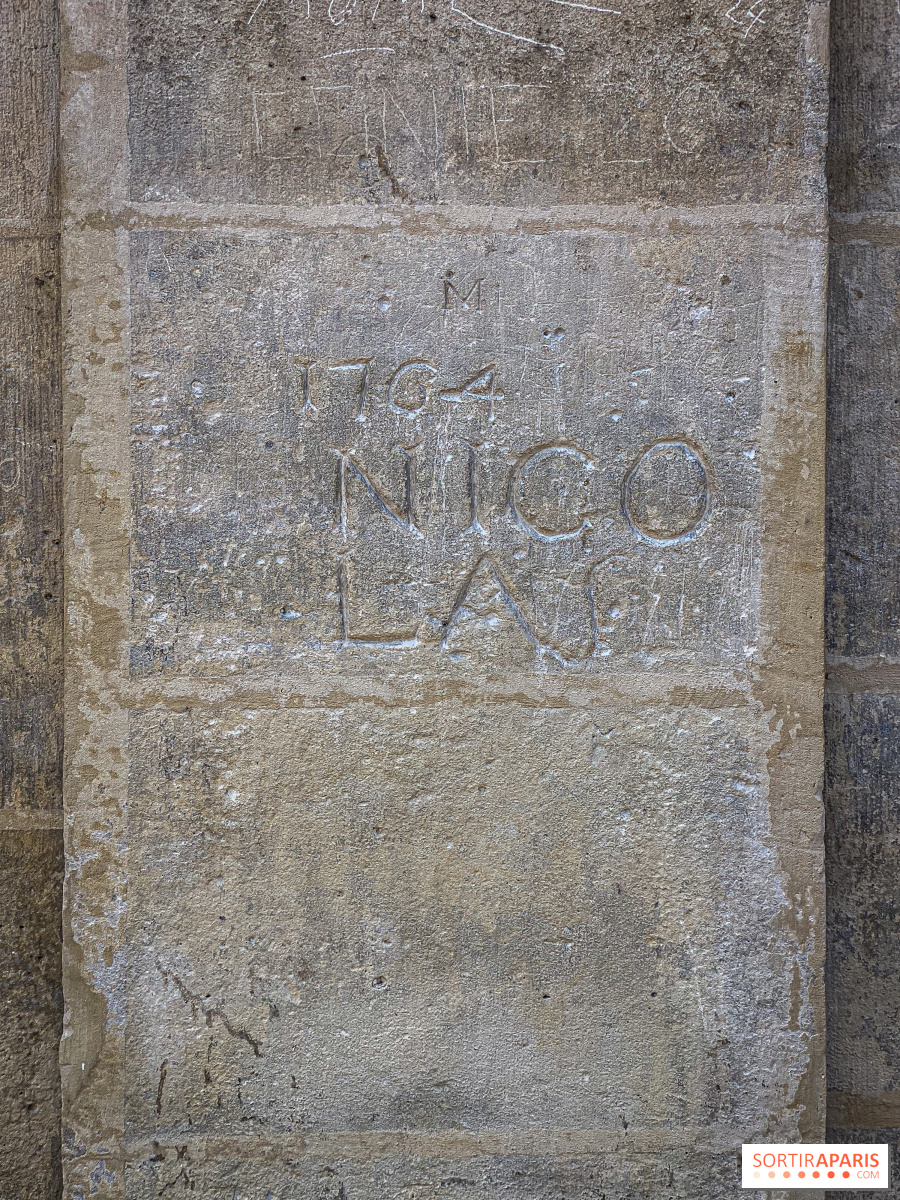
The inscription acts as a direct trace of the past, engraved by a man who wished to leave his mark on the city. Curious visitors to the Marais district, lovers of the unusual or weekend strollers will also be able to stop for a few moments to observe this modest engraving. There is no signage to highlight it, making it a discreet discovery reserved for those who know where to look.
Restif de la Bretonne is also known for his erotic stories and social chronicles. His nocturnal strolls inspired one of his major works, Les Nuits de Paris, published in 1788. In it, he paints a picturesque picture of the capital, then in the throes of transformation on the eve of the French Revolution. This context lends a broader scope to his entries, which are part intimate act, part urban chronicle.
Although the inscription " 1764 NICOLAS " is a unique testimony, it is part of a larger group of inscriptions that have now been erased. Other similar inscriptions can be seen at Les Halles, on the Île de la Cité and on the Île Saint-Louis, forming a network of personal messages scattered throughout Paris.