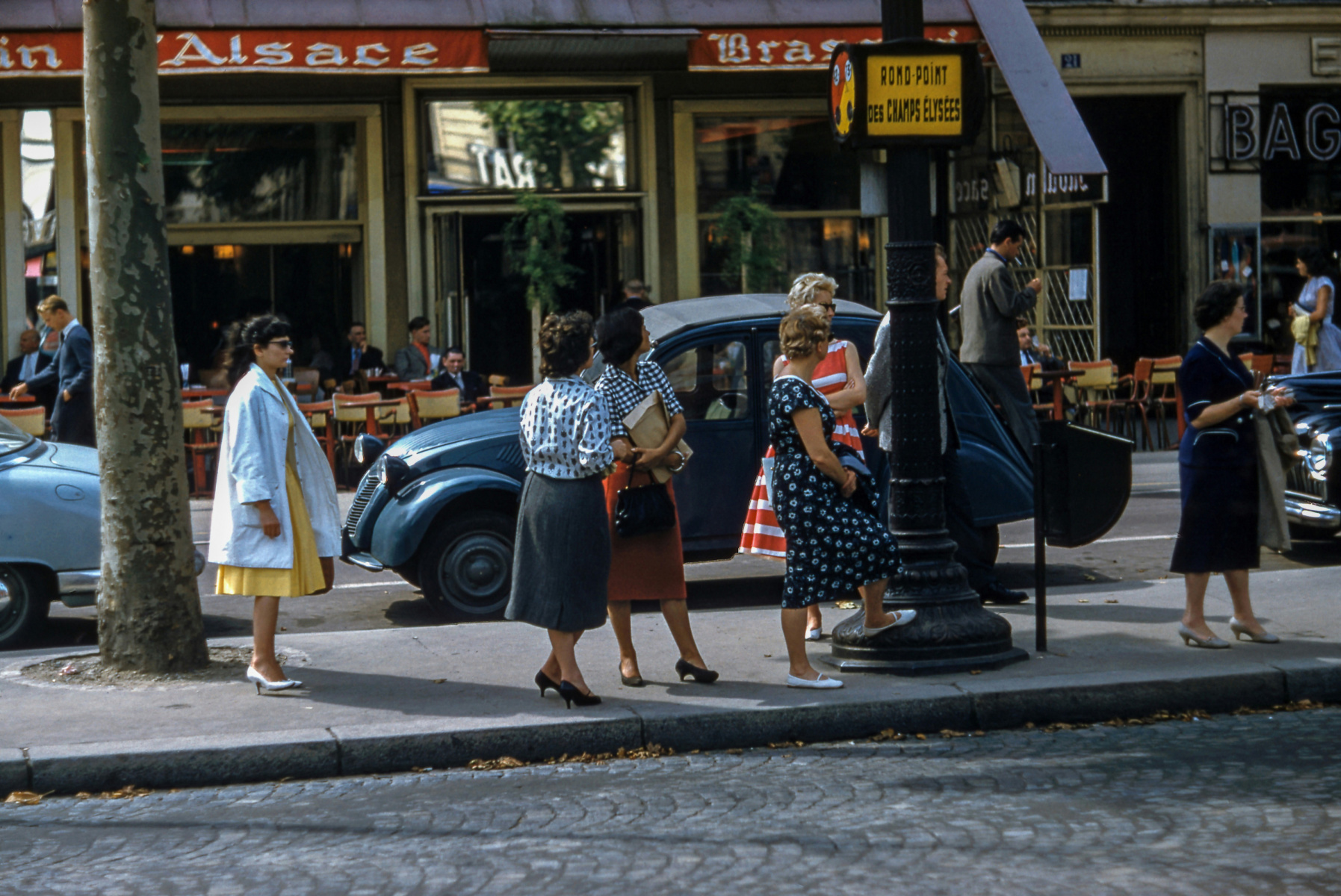
Flashback to the Paris of the Belle Époque. The clock strikes noon, and a swarm of elegant young women in a hurry emerge from their sewing workshops, brushing their hair and carrying their lunch boxes - their little homemade dinettes - bound for the public benches of the Tuileries or the sunny sidewalks of the neighborhood. It was here that a Parisian journalist, inspired by the scene, stuck them with a nickname as cute as it is piquant: a word-valise hand-stitched from "midi" + "dinette".
Around 1890, these hard-working women from Le Sentier and elsewhere toiled in workshops as narrow and ventilated as a shoebox. There's no way they're going to have lunch there and risk perfuming the fabrics with the smell of their meal, so off they go to eat outside. A small sandwich, a few sweets and a bit of gossip between girlfriends, all swallowed in a hurry before getting back to threading the needles.
But as the 20th century progressed,the word went off on a tangent. From "seamstress in a hurry at lunchtime", it becomes "young girl with a touch of cucul-la-praline" - a little naïve, a fan of two-bit romances and mushy refrains. The suffix "-ette" twirls between tenderness and irony.
And yet! Behind these airs of light poetry, the midinettes had nerves of steel. In 1917, 20,000 of them took to the streets of Paris to demand a paid Saturday afternoon. A historic law was passed in June of the same year.
In 1902, Clémence Jusselin, a seamstress and trade unionist before her time, opened a cooperative restaurant called... Les Midinettes ! The idea was to enable working-class women to eat hot food without breaking the bank or shivering on the benches.
From a cute little name invented on a Parisian sidewalk,"Midinette" has become a two-faced symbol: hard-working youth at lunchtime, romantic fantasy at night. And behind the sweet image, a real, hand-sewn social force.