In Paris, Jean-Paul Sartre is always there, invisible but present, in the peaceful bustle of Saint-Germain, in the silent sculptures of the BnF, in the name of a square engraved for eternity.
To follow in his footsteps is to reconnect with a literary, critical Paris on the move. It's to sit in Le Flore and imagine what he would have thought of today's world. It's to pass his statue in the rain and wonder, "Am I really free? But it's also, quite simply, rediscovering the capital through one of its most brilliant minds.
With each place, a memory; with each memory, an idea; with each idea, a new way of looking at the city. In the final analysis, Sartre has not disappeared: he has melted into Paris. He inhabits it as a constant thought, accompanying it to every street corner.
Between statues, mythical cafés and a destiny linked to that of his companion, Simone de Beauvoir, explore Paris in search of the emblematic places linked to Jean-Paul Sartre, and discover why his thought still shines out today.
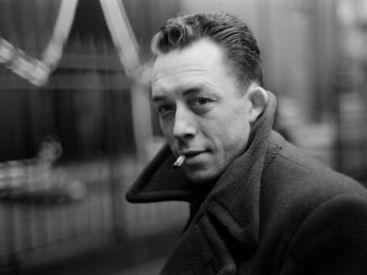
An existentialistphilosopher, intellectual, novelist, playwright and journalist, Jean-Paul Sartre (1905-1980) had a profound influence on the 20th century. His central work, L'Être et le Néant (1943), explores freedom, anguish and responsibility.
But he was also a practical writer, involved in the struggles of his time: he refused the Nobel Prize in 1964, denounced the Algerian war and supported May 68. His intellectual life was constantly combined with action, which explains the lasting impact of his thought.
Rue Le Goff (5ᵉ arr.). It was in this neighborhood near the Sorbonne that Sartre spent his childhood between 1905 and 1917.
Hotel Mistral (14ᵉ arr.). After his years in Le Havre, Sartre stayed with Simone de Beauvoir in a room in this hotel, rue de Cels, on his return to Paris between 1937 and 1939, then on various occasions during the war. A commemorative plaque commemorates his residence there today.
Hôtel La Louisiane (6ᵉ arr.). : From around 1943 to 1950, the couple stayed here, making the hotel the heart of the existentialist movement, hosting figures such as Albert Camus and Boris Vian. Bullet holes from the days of the Liberation can still be seen on the façade.
42 rue Bonaparte (6ᵉ arr.). Between 1945 and 1962, Sartre lived on the 4th floor of this building with his mother. His apartment, a hotbed of writing and intellectual discussion with Simone de Beauvoir and other thinkers, was the scene of a bomb attack in 1961.
222 boulevard Raspail (14ᵉ arr.). Because of this attack, he then moved to a discreet studio under a pseudonym. It was here that he completed Les Mots.
29 boulevard Edgar-Quinet (14ᵉ arr.). Sartre ended his life in this modest building, which he described as self-effacing and charmless, a reflection of his rejection of worldly alignments.
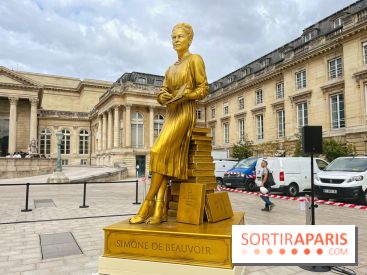
A walk in the footsteps of Simone de Beauvoir in Paris, between feminism, emancipation and free thought
Explore the major sites linked to Simone de Beauvoir in Paris, from her writings to urban tributes, and discover how this philosopher and novelist became an enduring icon of feminism and free thought. [Read more]
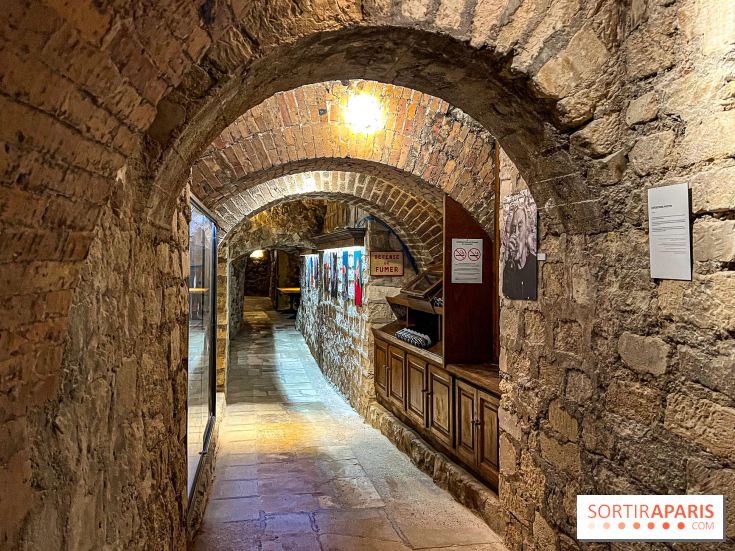
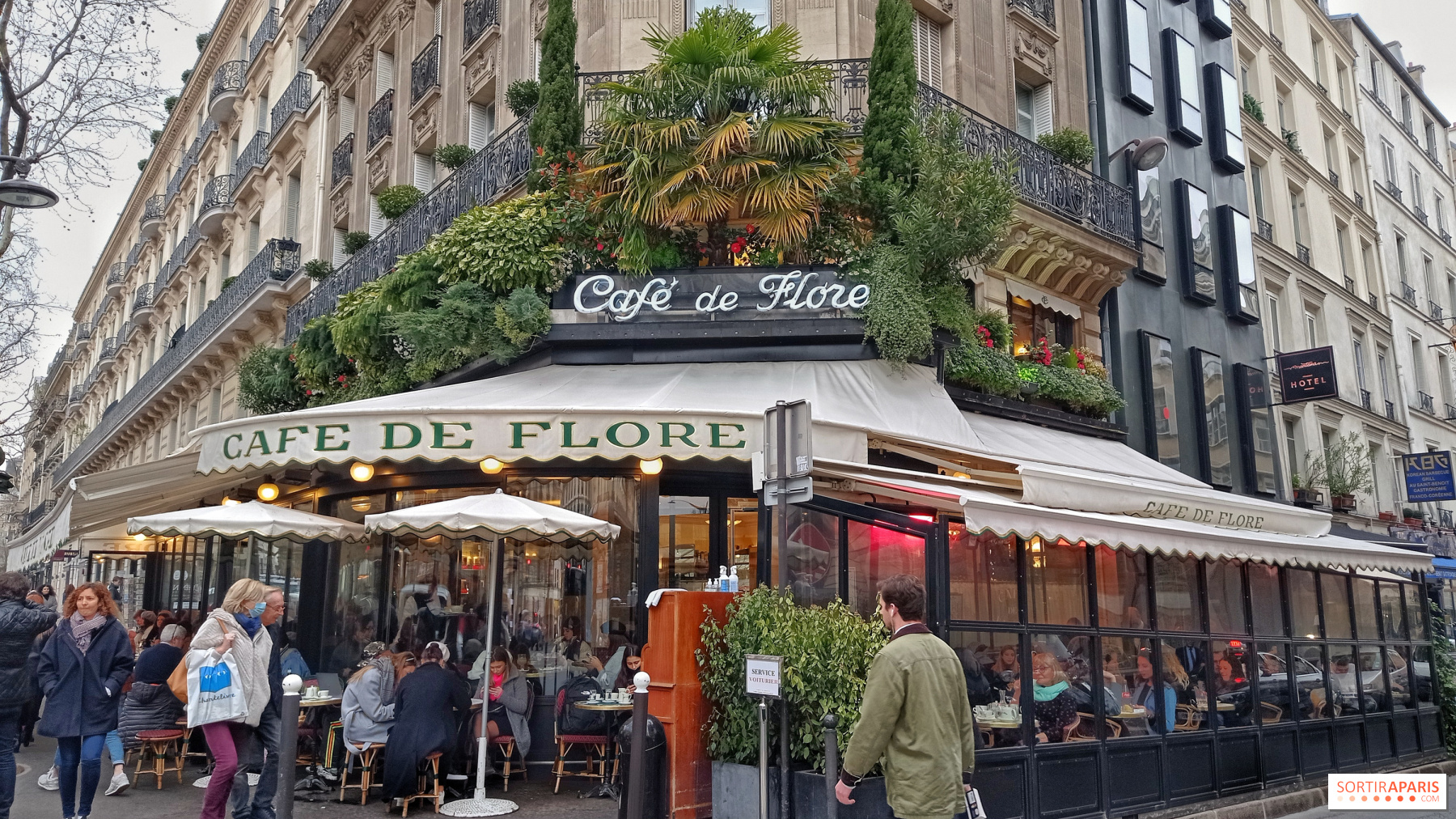
Le Café de Flore and Les Deux Magots. It's hard to think of Sartre without mentioning the Café de Flore and Les Deux Magots, where he set up his "office". With Simone de Beauvoir, he spent his days there writing, debating, observing and feeding his philosophical debates from the 1930s until the Liberation. Saint-Germain-des-Prés became the epicenter of existentialism, attracting philosophers, writers, artists and the curious.
Place Jean-Paul-Sartre-et-Simone-de-Beauvoir (6ᵉ arr.). Opposite Les Deux Magots, this square inaugurated in 2000 pays lasting tribute to the emblematic couple. Even without a statue, it celebrates a living memory: that of two committed consciences who left their mark on France and the world.
The two statues at the Bibliothèque nationale de France - site Richelieu (2ᵉ arr.). In the Vivienne garden, a sculpture by Roseline Granet, entitled Jean-Paul Sartre marchant sous la pluie in 1987, depicts the philosopher in motion... although this has strangely disappeared since the work on the BnF Richelieu. Another statue of Sartre by the same artist, dated 1986, can be found in the inner courtyard of the BnF. Two discreet but powerful works that embody the intellect on the move.
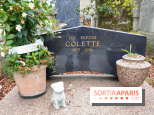
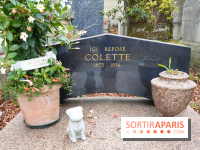
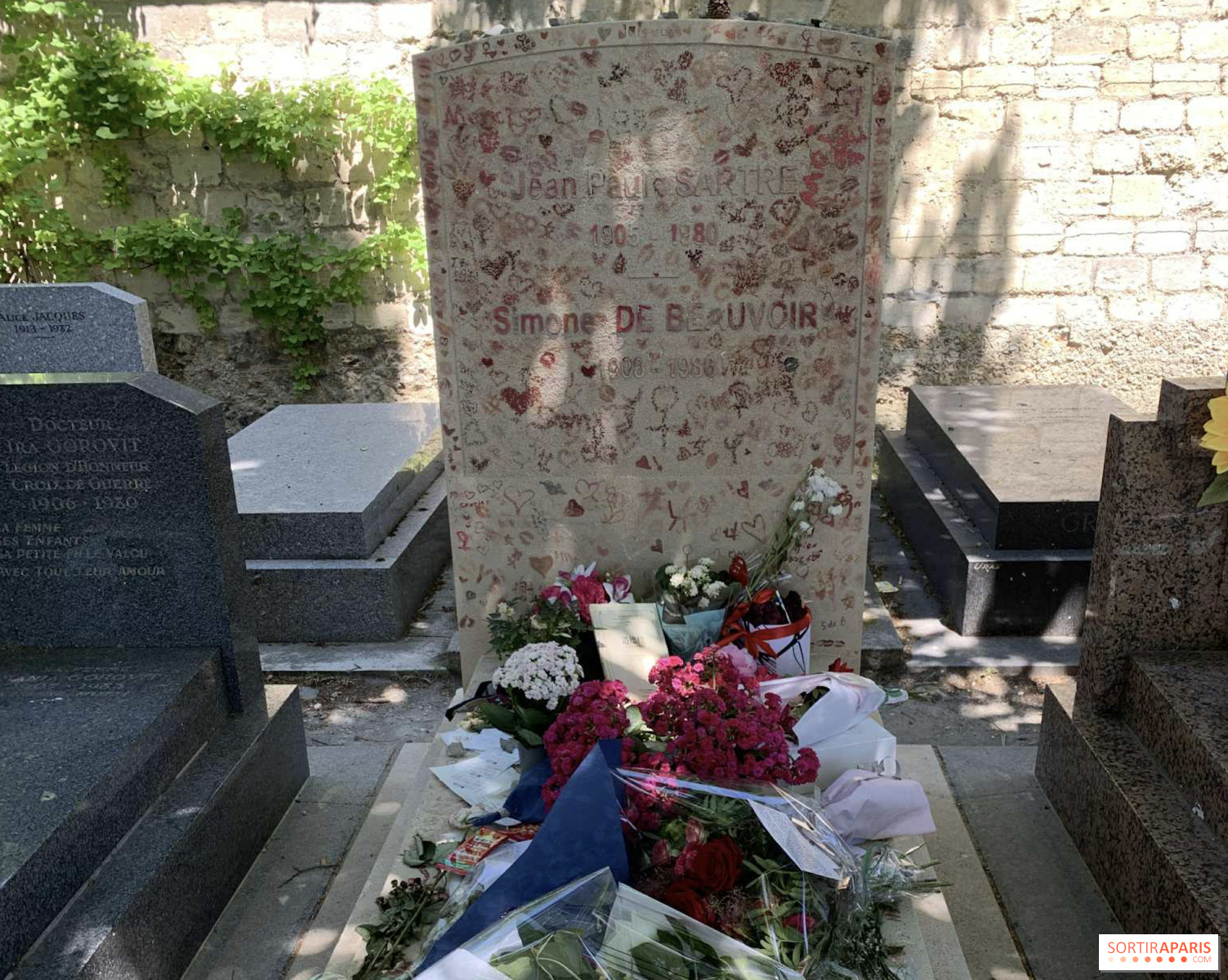
The Montparnasse cemetery. Jean-Paul Sartre is buried in the Montparnasse cemetery, in a grave he shares with his companion Simone de Beauvoir. On his death on April 15, 1980, he was cremated at Père-Lachaise, before his ashes were interred in a permanent vault in the Montparnasse cemetery. Sartre was given a memorable funeral: several thousand people accompanied his funeral procession to the cemetery. Entering through the cemetery's main gate (Boulevard Edgar-Quinet), turn right onto Avenue du "Boulevart"; count about eight graves on the right to find the shared burial ground of Sartre and Beauvoir (division 20).
Immerse yourself in the Paris of yesteryear, discovering the mythical and historic restaurants, bistros and cafés where artists, authors and intellectuals met. [Read more]
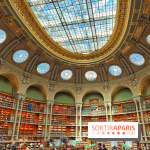
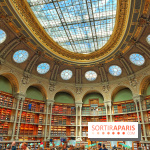
The Richelieu site, located in the 2nd arrondissement of Paris, is the historic birthplace of the Bibliothèque nationale de France, which has housed collections of royal documents since 1721. A historic site, recently modernized, accessible to all! [Read more]
The Montparnasse cemetery is the final resting place of many famous personalities, and a stroll through it is a free and instructive pleasure. [Read more]
Location
Café de Flore
172, Boulevard Saint-Germain
75006 Paris 6





 A walk in the footsteps of Simone de Beauvoir in Paris, between feminism, emancipation and free thought


 The legendary restaurants and cafés of artistic and literary Paris, historic addresses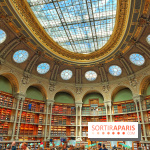
 BnF Richelieu, the historic home of the Bibliothèque nationale de France and its museum


 A little tour of the Montparnasse Cemetery