Albert Camus experienced Paris as one would a new world. Arriving in 1940, he made Montmartre the place where his novel L'Étranger was born, in a simple hotel room far from the literary limelight. His move to theHotel Madison, his dinners in the cafés of Saint-Germain-des-Prés, his clandestine commitments and his work at Gallimard provide an intimate cartography of Paris, like an extension of his thought and rebellion.
These places are more than mere addresses; they are literary and human milestones where you can feel the awakening of an author confronted with the absurd, yet in love with human dignity. In his fragility and lucidity, Camus questioned the human condition with a rare moral rigor. Paris, the city of exile, provided him with a contrasting backdrop, where every café, every room, every street gave him the opportunity to think, write and resist.
To follow in the footsteps of Albert Camus in Paris is to survey a city that is both light and shadow, and to rediscover a capital that became the setting for a universal work.
A majornovelist, playwright, philosopher and journalist of the 20ᵉ century, Albert Camus (1913-1960) was born in Algeria. In 1957, he won the Nobel Prize for Literature for "the brilliance of his writings". His iconic works - L'Étranger, La Peste, Le Mythe de Sisyphe - explore the absurd, revolt and humanity.
His political commitment, notably in the Resistance and then as director of Combat, and his commitment to justice explain the lasting impact of his literary and moral thought, even today.
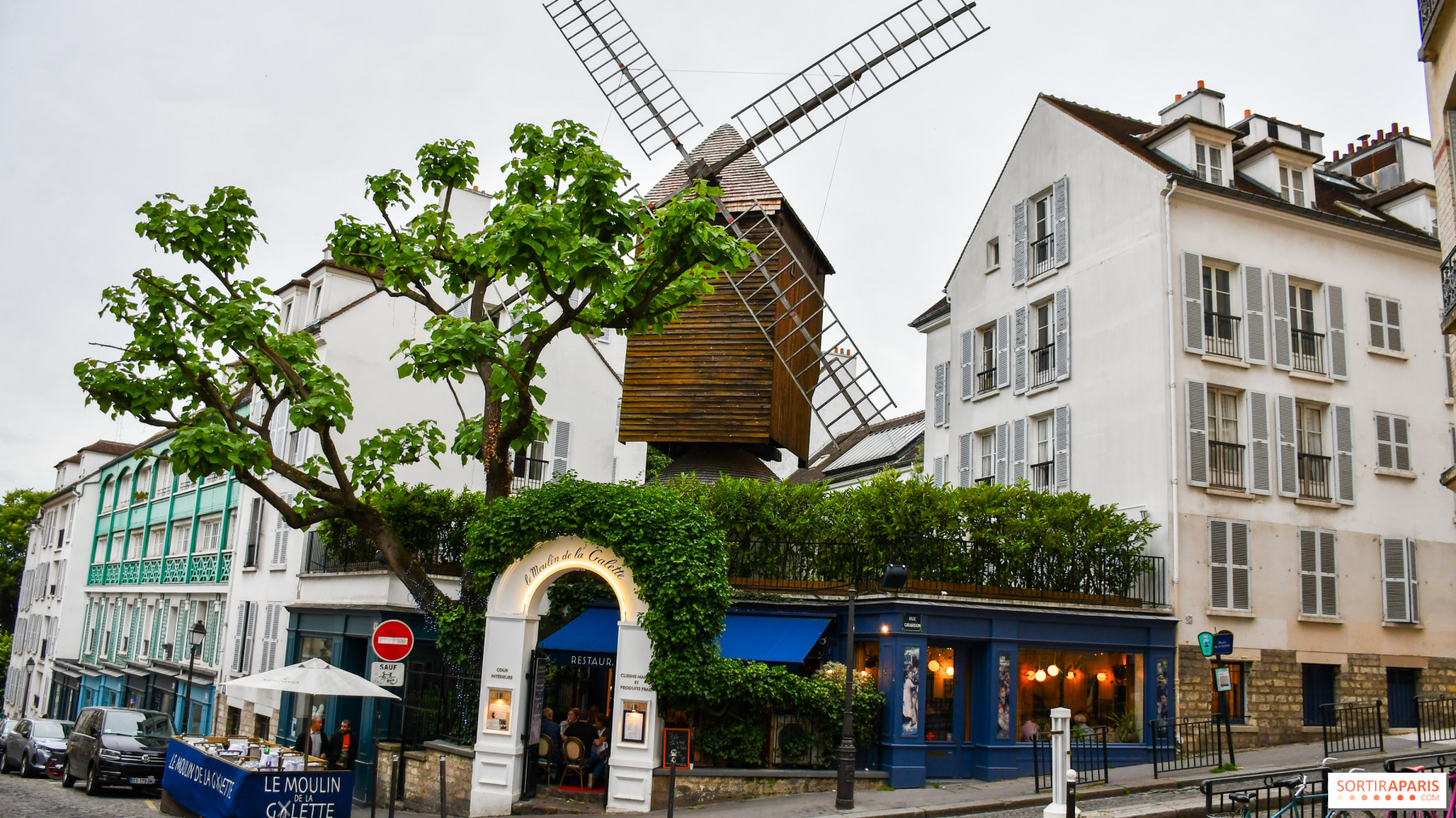
L'Hôtel du Poirier in Montmartre (16, rue Ravignan, 18ᵉ arr.). It was in this hotel on the Butte Montmartre, now no longer in existence, that Albert Camus, arriving in March 1940, completed the first draft of L'Étranger, laying the foundations here for his most famous work.
L'Hôtel Madison in Saint-Germain-des-Prés (6ᵉ arr.). In June 1940, he moves into room 65 and finally completes L'Étranger.
Marguerite Duras's home (5 rue Saint-Benoît, 6ᵉ arr.). Camus joins the Resistance and serves as lookout for a clandestine network that meets at the French writer's home. This commitment leads to his central role in the clandestine journal Combat.
Editions Gallimard (5, rue Sébastien-Bottin, 7ᵉ arr.). The site of his editorial work, he held the position of collection director, publishing his major works from 1943 onwards.
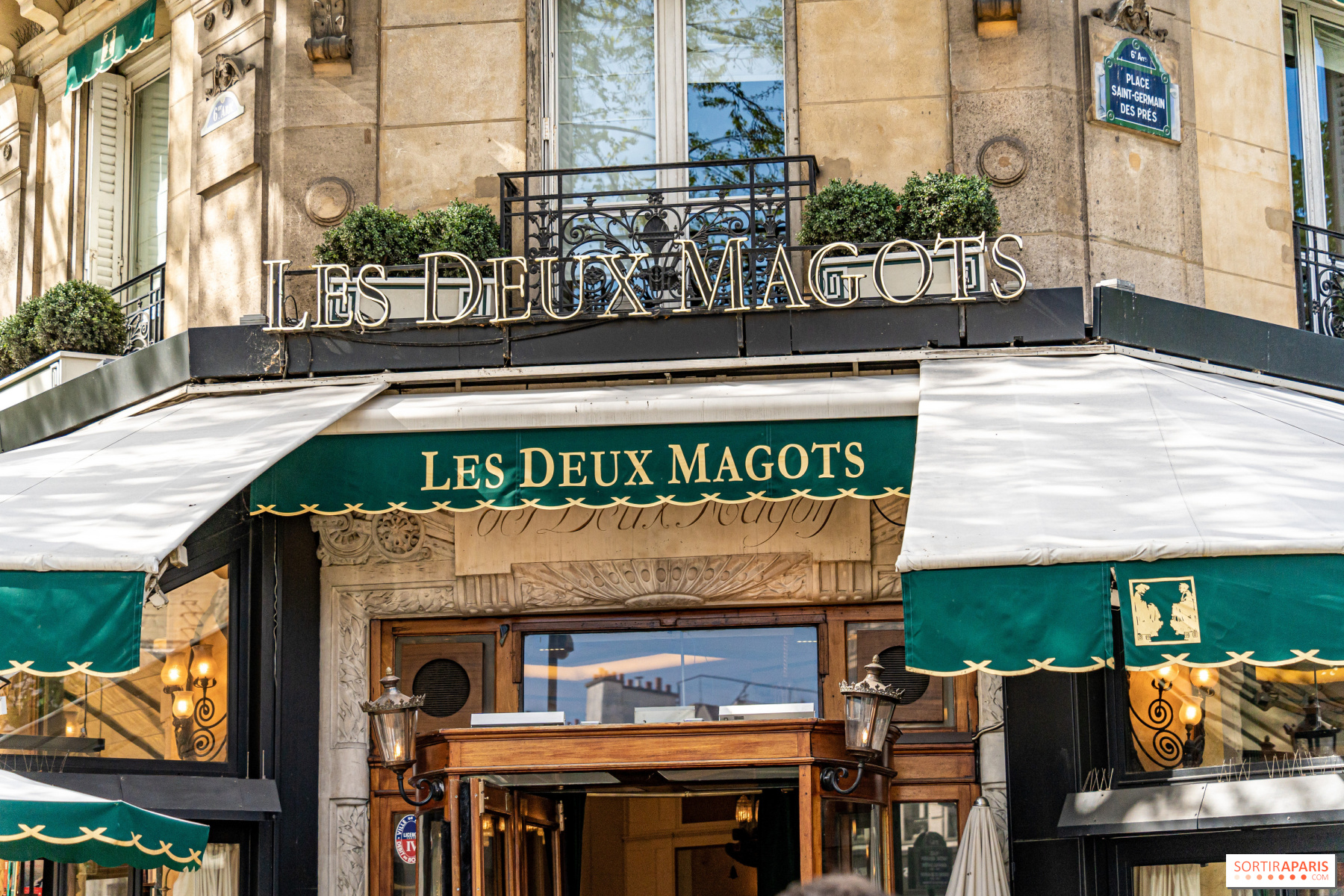
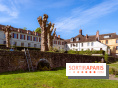
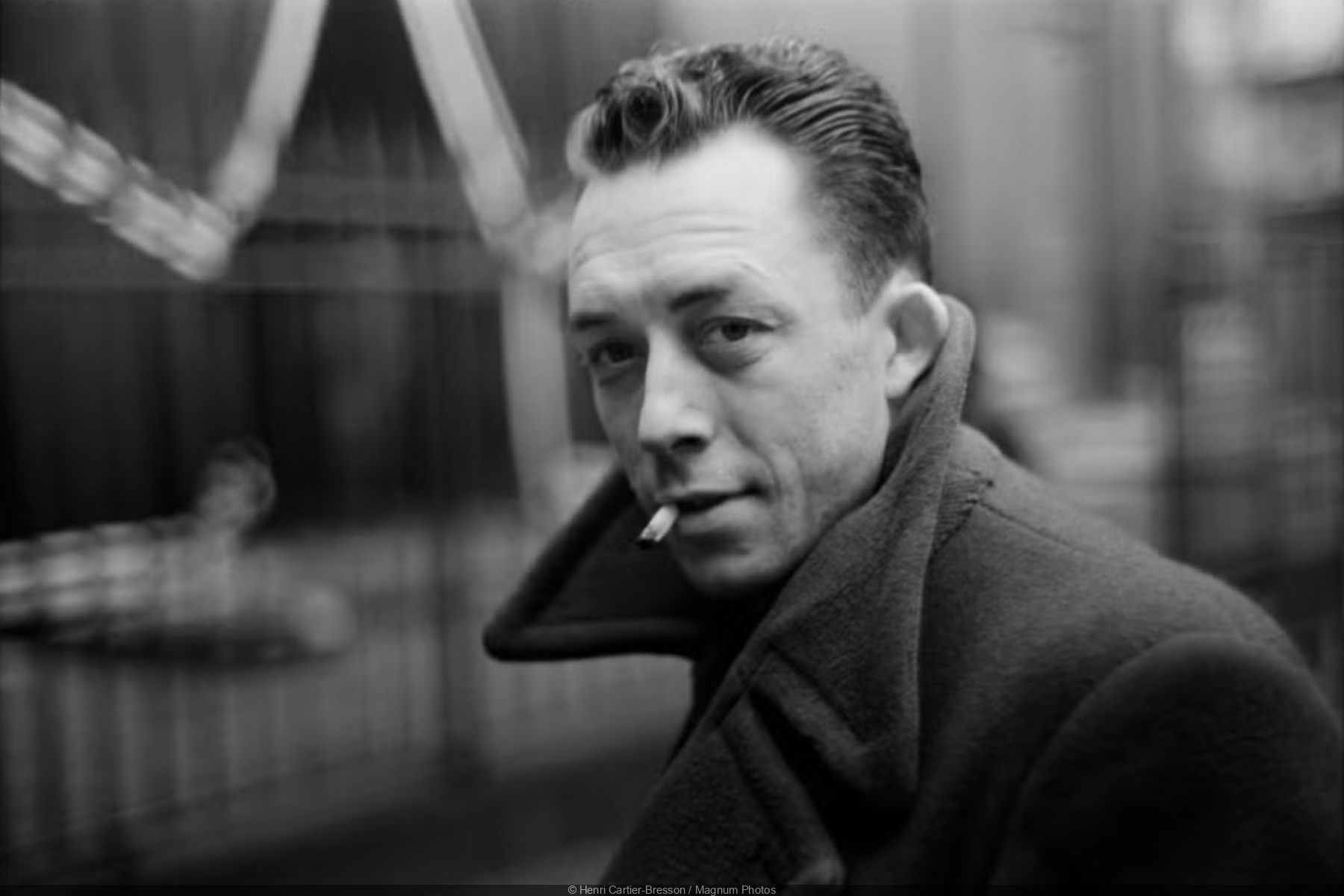
Rue Albert-Camus (10ᵉ arr.). Created in 1978 and inaugurated in 1984, this street proudly bears his name. There's a street sign and a sculpture by Michel Poix at the entrance.
The cafés of Saint-Germain-des-Prés (6ᵉ arr.). Brasserie Lipp, Café de Flore, La Palette... These establishments, at the heart of German-Pratin intellectual life, hosted debates by Camus, Sartre, Beauvoir and René Char.
A stroll in the footsteps of Jean-Paul Sartre in Paris, from Café de Flore to Montparnasse
What if Jean-Paul Sartre had never really left the streets of Paris? Between statues, mythical cafés and squares bearing his name, explore the City of Light through the emblematic places linked to the philosopher. [Read more]
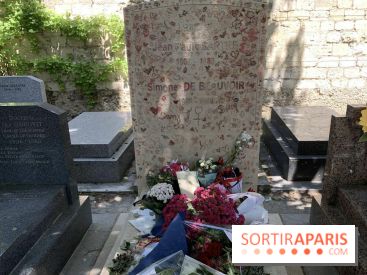
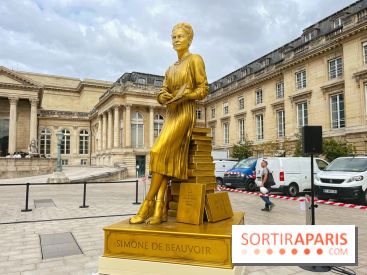
Explore the major sites linked to Simone de Beauvoir in Paris, from her writings to urban tributes, and discover how this philosopher and novelist became an enduring icon of feminism and free thought. [Read more]
Location
Montmartre
Montmartre
75018 Paris 18




 A stroll in the footsteps of Jean-Paul Sartre in Paris, from Café de Flore to Montparnasse

 A walk in the footsteps of Simone de Beauvoir in Paris, between feminism, emancipation and free thought