Did you know? The Prix Goncourt, France's most prestigious literary award, only pays the winner €10. Yes, since 1903, a symbolic check for €10 has been presented to the winner. Laurent Mauvignier has just won the 2025 edition with La maison vide, in the first round with six votes. But then, why do all French-speaking writers dream of this distinction if the financial reward is so derisory? We tell you the fascinating story of this legendary prize and its little secrets.
It all began with two slightly pretentious brothers. Jules and Edmond de Goncourt were two famous 19th-century writers, but not famous enough to hope to go down in history. They decided to create a literary society, rival to the Académie Française, which would bear their name and award a prize each year to a great French novel. It was another way for them to leave their mark on history and culture. Portrayed as two unsavory characters, misogynistic, elitist, and full of themselves, the two brothers were determined to put literature on a pedestal.
Anecdotal evidence suggests that it was during a literary meeting they were hosting that the Goncourt brothers imagined an academy bearing their name. While Pierre Loti jokingly suggested joiningthe Académie Française, the two brothers came up with the extravagant idea of creating their own academy. Nothing more, nothing less. Edmond de Goncourt wrote his last wishes in his will: to create an Academy of Men of Letters that would reward each year the best novel, the best collection of short stories, and the best volume of imaginative prose, and exclusively prose, published during the year.
Except that the family did not agree. And that's where it gets interesting. Two writers who were not related to his family inherited his property and funds to create the Academy: Alphonse Daudet and Léon Hennique. Goncourt's second cousins were furious and asked the courts to overturn the will. A real legal battle ensued. The family denounced the idea that one could bequeath a project, a responsibility, an institution that did not yet exist, when this deprived the heirs of material and tangible assets. But their case was dismissed. It was not until the judgment was confirmed on March 1, 1900, and then another three years for the Council of State to validate the court decisions, that the society dreamed up by Edmond de Goncourt was able to award its first prize.
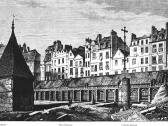
The Academy awarded its first prize on December 21, 1903, to John-Antoine Nau for his novel Force ennemie. The first award ceremony was not a grand affair. It took place discreetly at Champeaux, an address that no longer exists today, but which was located on the Place de la Bourse in Paris. Interestingly, one of the jury members, Rosny Jeune, was absent. He therefore passed his vote on to Joris-Karl Huysmans, the president of the Académie Goncourt at the time.
But why only €10? Initially, this was not the case. Edmond de Goncourt made sure to sell all his possessions in order to provide an annual annuity in perpetuity to the ten members of the jury, as well as a prize of 5,000 francs to the winner of the year. However, due to inflation, the amount of the check is now only a symbolic prize of €10. The amusing anecdote is that the check is traditionally framed because of its symbolic rather than monetary value, with the exception of Jacques Chessex, who decided to cash it. We love this pragmatic side to it.
The real jackpot is fame. Because frankly, the fame promised to the winner, who will see their work reach the bestseller lists, is a much more coveted reward. To give you an idea of the figures, the 2023 winner, Veiller sur elle by Jean-Baptiste Andrea, sold nearly 630,000 copies. Thanks to the famous red Prix Goncourt banner on the cover, sales are multiplied and can exceed 500,000 copies sold. That's worth much more than €10, isn't it?
Here'sa little anecdote about the only refusal in the award's history. Julien Gracq knew that his work, Le Rivage des Syrtes, was tipped to win. Anticipating his future victory, the author, who wrote under the pseudonym Louis Poirier, announced that he would refuse the award. At the time, this was a first. Gracq denounced the prejudices of critics who, in his opinion, were more interested in the author than in the books. Despite this warning, the academy proclaimed him the winner a few days later. Raymond Queneau added a touch of humor when announcing the results: "The prize is awarded to Ravage de Sartre, by Julien Green! Sorry: to Le Rivage des Syrtes, by Julien Gracq!"
How does it work in practice? Since 1914, the ten members ofthe Académie Goncourt, elected by co-optation, have met every first Tuesday of the month in the Goncourt room on the first floor of the Drouant restaurant, near the Opera in Paris's 2nd arrondissement, to discuss literary news. An initial selection is made in September, followed by a second and third selection in October, with the prize being awarded in early November. Since May 2024, the Academy has been chaired by Philippe Claudel and includes Pascal Bruckner, Tahar Ben Jelloun, Camille Laurens, Pierre Assouline, Éric-Emmanuel Schmitt, Françoise Chandernagor, and Christine Angot.
The Goncourt has spawned others. Edmond de Goncourt's initiative paved the way for other prizes: the Prix Femina (1904), the Prix Renaudot (1926), the Prix Interallié (1930), and the Prix Médicis (1958), all dedicated to novels. The academy also awards the Goncourt prizes for poetry, short stories, biography, and first novels. There is even a Goncourt prize for high school students, which allows nearly 2,000 students to vote for their favorite book from the selection.
In short, if you're looking for an anecdote to share in society, you now know why the Prix Goncourt is worth its weight in gold even though it only pays out €10. It's the paradox of this award that has inspired writers for over a century and continues to shape the French literary landscape.