If you're used to walking with your eyes glued to your phone or staring at the Haussmannian facades, you’ve probably missed them. Yet, there are 135 of these. Subtle, round, cast in bronze, the Arago medallions mark the city from north to south, from Porte de Montmartre to Cité Universitaire. But what are they doing there?
Everything begins in 1994. To commemorate the bicentennial of François Arago’s birth—an astronomer, physicist, and active political figure—the Dutch artist Jan Dibbets envisions a monument… turned upside down. Instead of erecting yet another statue on a pedestal, he chooses to place small treasures directly on the ground, along a well-known imaginary line that stretches 9 kilometers across the city.
This line is known as the Paris Meridian. Before Greenwich Mean Time was adopted as the global standard in 1911, it was this meridian that served as the reference point for French sailors and scientists to determine longitudes.
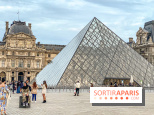
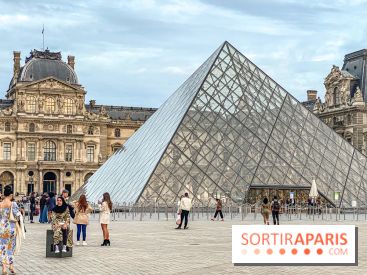
Each medallion measures 12 centimeters in diameter and bears the name "ARAGO" along with North and South markers. The charm of this marker lies in its randomness: you can find them scattered throughout the city—hidden in the middle of Rivoli Street, along the sidewalks of the Latin Quarter, or even inside the Louvre Museum.
For example, you can see them in the Richelieu wing of the museum, at the Palais-Royal, on rue Lepic, in the Luxembourg Garden, or along the Avenue de l'Observatoire — which even features a statue in front of the park dedicated to the physicist. There's also one in Montsouris Park. Just find two of these spots, and you'll be able to trace a route across the entire city!
Out of the original 135 medallions, many have been stolen or removed during roadworks. This rarity makes the exploration even more intriguing. It's the perfect walk for those wanting to traverse Paris in a straight line, far from the usual tourist routes. Did you know? These medallions play a crucial role in Dan Brown’s novel The Da Vinci Code, where they are known as the "Rose Line."