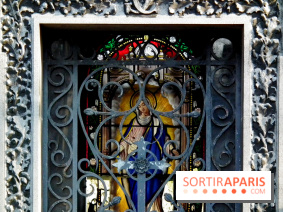
In the heart of medieval Paris, a flame is said to have watched over the dead in the very center of the Halles. Long before the Baltard pavilions, the Forum and the Canopy, the district housed the Cemetery of the Innocents, a vast Parisian necropolis where for centuries residents from many parishes on the Right Bank were laid to rest. And in this now-vanished setting stood a rarity in Paris: a lantern of the dead.
A lantern of the dead is a small funeral monument, often shaped like a column or an openwork tower, in which a lamp could be placed. Its exact function remains debated. It may have signaled the presence of a cemetery, symbolically accompanied the souls of the departed, or recalled the Christian light in the face of death. They are found mainly in certain regions of the central-west of France, notably Poitou, Saintonge, or Limousin. In Paris, by contrast, this type of monument appears to have been very rarely encountered.
This is what makes the Cemetery of the Innocents so intriguing. The site itself already carried a heavy reputation: in use since the early Middle Ages, it became one of Paris's largest cemeteries. The first removals of bones to the former Tombe-Issoire quarries, from 1785 to 1787, concerned precisely the Cemetery of the Innocents, then regarded as the capital's most important burial ground.
The Cemetery of the Innocents was anything but a quiet little enclave. It was ringed by charnel houses, received the dead from many parishes, and the ground had long since reached capacity. It also housed a famous Danse macabre, painted in 1424, regarded as the starting point of this iconic tradition in France.
In this funeral landscape, the Lantern of the Dead would have looked like a Gothic beacon. Some ancient sources and historical accounts mention a flickering flame, visible at night, right in the space where Parisians daily crossed paths with death.
According to legend, this lantern was built over the grave of a man who, in life, boasted that dogs would never soil his tomb. The ancient, blunt phrase put it more directly: they would not “piss on his grave.” Out of vanity, he challenged the most trivial posthumous humiliation. As is common in folk tales, death answered with irony. To protect his grave—or to mock his swagger—something was erected above it: the famous lantern of the dead. The wager, it seems, was kept: no dog would soil his grave, now sheltered beneath a funeral beacon. Yet history remembers more the fallen man's pride, transformed into a macabre anecdote at the heart of old Paris.
This lantern of the dead likely vanished when the Cemetery of the Innocents was closed at the end of the 18th century. After the cemetery shut its gates, the remains were moved to the Catacombs, officially designated the “municipal ossuary of Paris” on 7 April 1786.
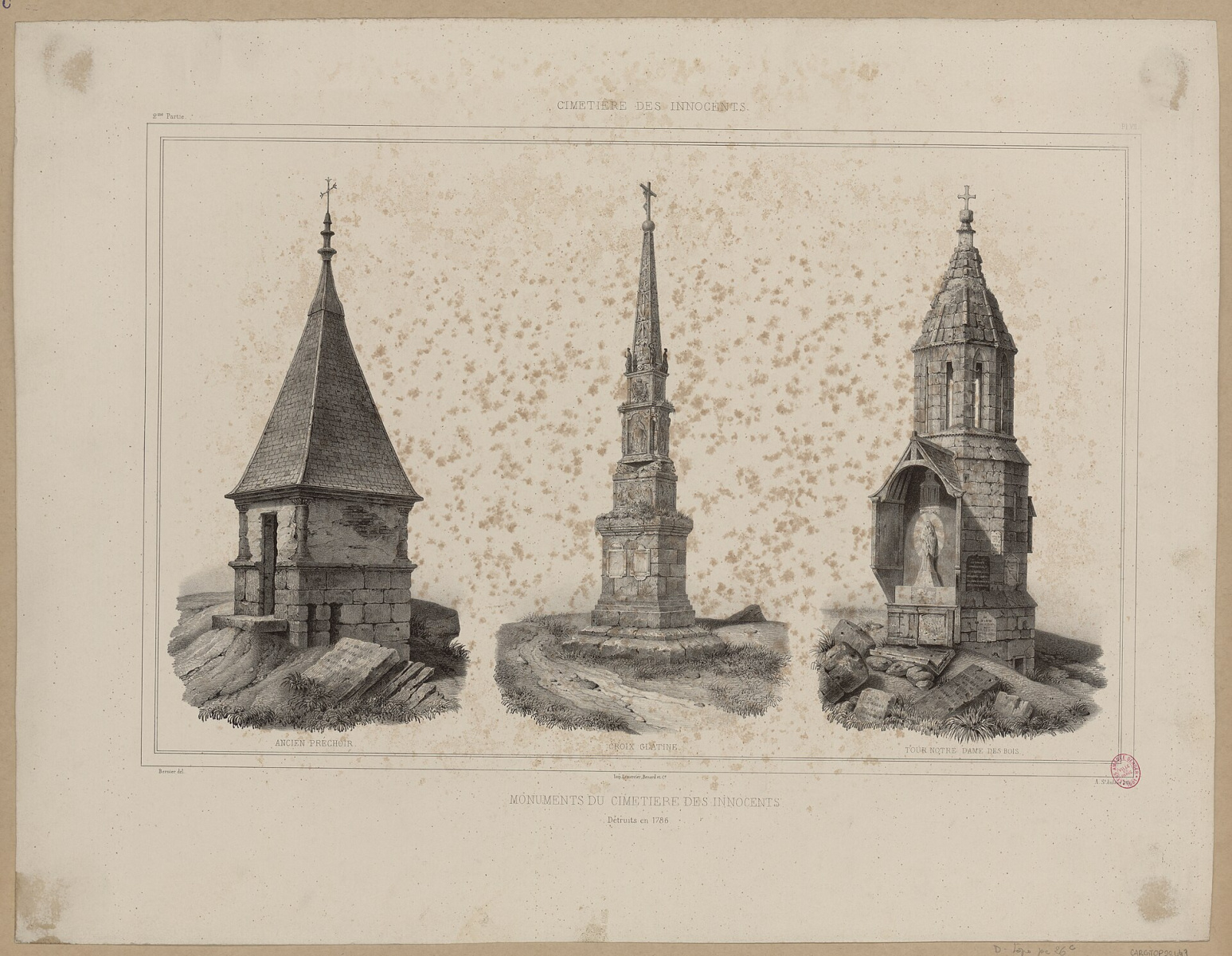
The cemetery's buildings, mass graves and monuments were subsequently demolished or scattered. The Carnavalet Museum preserves several drawings from around this period, including views of the Innocents' monuments destroyed in 1786, precious testimony to a funeral district erased by urban redevelopment.
Today, there is no longer a visible lantern of the dead at the Halles. The neighborhood has taken on a new face, the Fontaine des Innocents has been moved and redesigned, the bones lie sleeping beneath Paris, and that small funeral light has been snuffed out with the old cemetery.
History of Paris: the Cemetery of the Innocents and what remains of it today
Did you know? In the Halles district of Paris, there was once a well-known cemetery in the capital: the Cimetière des Innocents (or Saint Innocents' Cemetery). Discover its fascinating history and the few remaining vestiges. [Read more]
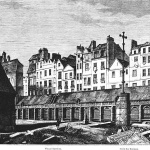
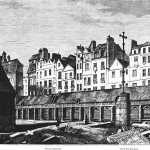
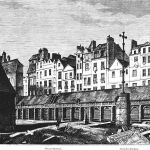
Lead image: Saint Aulaire, A., lithographer-engraver Bernier, Claude-Louis (1755–1830), designer Lemercier, Bénard & Cie, printer-lithographer Other titles: Set of 6 plates illustrating the Cemetery of the Innocents. (Overall title), Cemetery of the Innocents; Church of the Innocents. / B (Series title) Type(s) of object(s): Print, Graphic arts Designation(s): Print Materials and techniques: Lithography Dimensions - Work: Height 44.9 cm, Width 58.8 cm Dimensions - Mounting: Height 50.8 cm, Width 65.3 cm Description: Mounted. Institution: Musée Carnavalet, Histoire de Paris IIIF
This page may contain AI-assisted elements, more information here.













 History of Paris: the Cemetery of the Innocents and what remains of it today