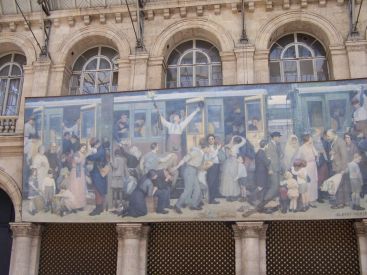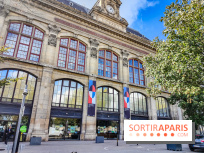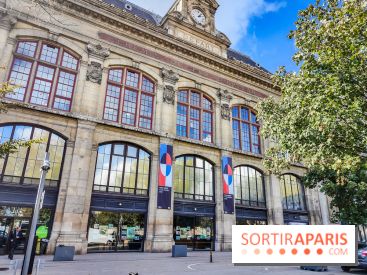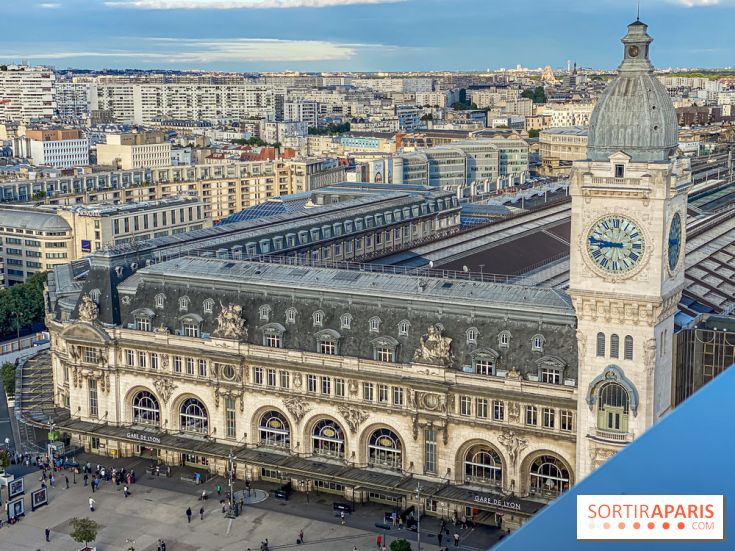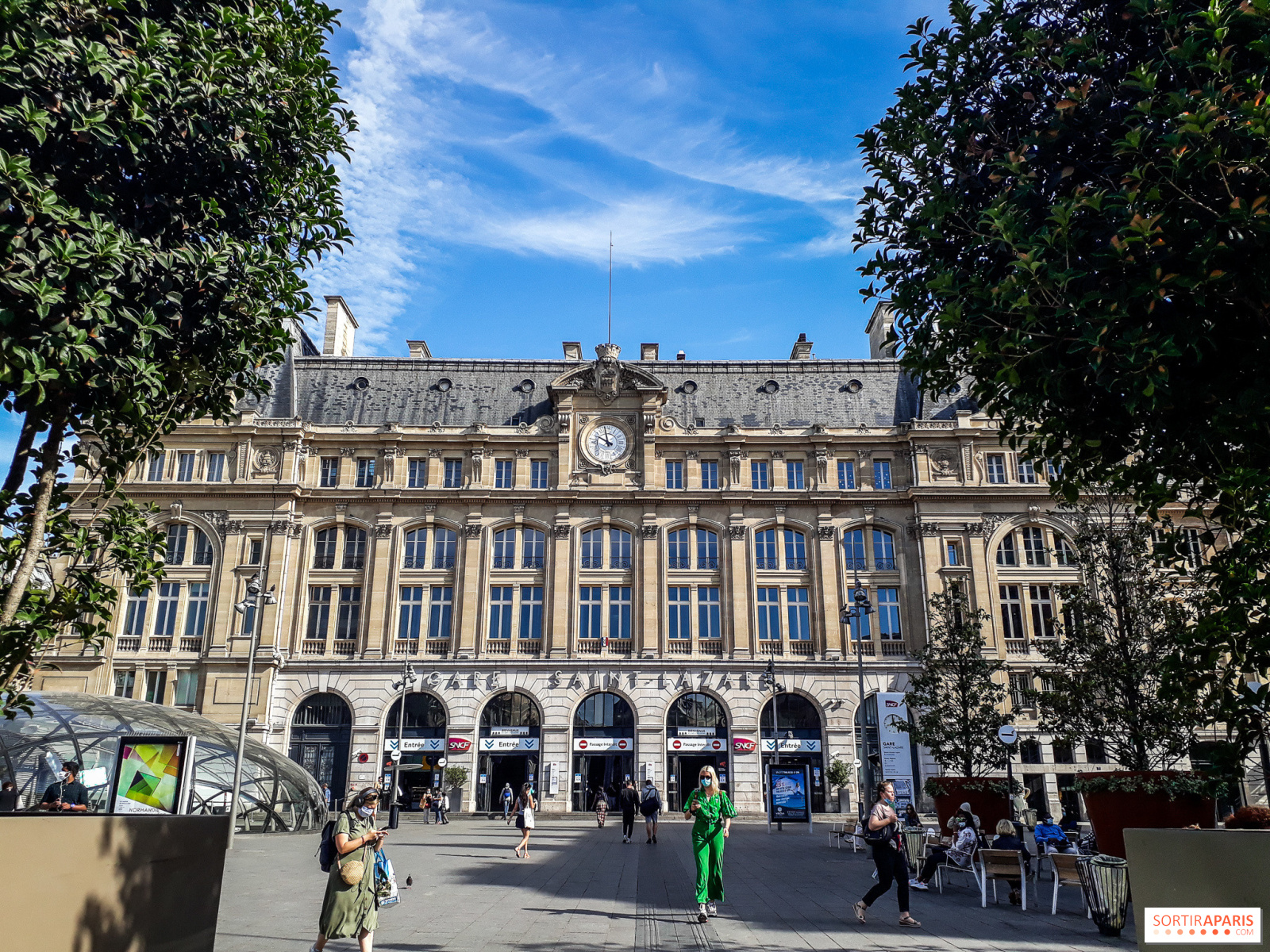
Before the arrival of high-speed trains, before holidays to the Mediterranean, and even before the capital’s grand, monumental stations, there was Saint-Lazare. Its history begins in 1837 with the inauguration of the line connecting Paris to Saint-Germain-en-Laye.
The Paris terminus was then a modest ferry terminal tucked into a neighborhood still undergoing major transformation. No one at the time could imagine that this humble departure point would become one of the busiest stations in Europe.
The first station was soon overtaken by the success of the railway. Over the 19th century, the Saint-Lazare station underwent a series of progressive enlargements. Each new line to Normandy or the western regions of France drew in its own influx of passengers.
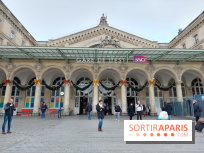
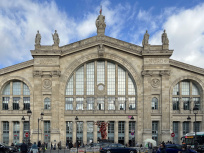
The building we know today owes much to transformations carried out between the years 1850 and 1880 under the impetus of the Compagnie des chemins de fer de l'Ouest. The architecte Juste Lisch helped shape, notably, the grande façade monumentale that still gives the station its identity. With its verrières métalliques and its vast halls, Saint-Lazare has become a symbol of the modernité industrielle du 19ᵉ siècle.
If we had to distill Saint-Lazare's historical significance into one idea, it would likely be this: it helped give rise to the modern suburb. Thanks to railway lines serving Asnières, Argenteuil, Colombes, Versailles, Maisons-Laffitte and Saint-Germain-en-Laye, thousands of Parisians can now live farther from the center while continuing to work in the capital.
The phenomenon is revolutionary. For the first time in history, where you live is no longer necessarily where you work. Daily train commutes become a habit and permanently reshape the organization of the Paris region.
Among the many visitors at the station, one will propel him to global fame: Claude Monet. In 1877, the master of Impressionism wins permission to paint right inside the station itself. Intrigued by the locomotives, the light streaming through the glass roofs, and the billowing steam, he creates a series of twelve paintings that would become famous the world over.
For Monet, the station isn't merely a transit hub. It's a living spectacle where light, movement, and the innovations of its era mingle. Today, these works stand as one of the artistic testimonies of industrial Paris.
For more than a century, Saint-Lazare has been the great gateway to Normandy. It is from here that trains depart for Rouen, Le Havre, Deauville, Trouville, Caen, and even Cherbourg. In the early 20th century, affluent Parisians rode the line to reach the Norman seaside resorts.
Later, it also becomes the gare des week-ends à la mer for millions of Île-de-France residents. This privileged relationship with Normandy remains today one of Saint-Lazare's defining features.
Saint-Lazare railway station has accompanied all the major transformations of the quartier. When baron Haussmann redesigned Paris under the Second Empire, the station became one of the nerve centers of the new capital.
The grands boulevards, the Haussmann-era buildings and the new traffic routes are organized in part around this strategic railway hub. The district then drew in shops, hotels, cafés and offices, making Saint-Lazare one of the most vibrant corners of Paris.
Today, Saint-Lazare station draws more daily passengers than any other French railway hub. A large portion of its activity hinges on the suburban trains that serve the west of Île-de-France. Every day, hundreds of thousands of people pass through it to reach their home or their workplace.
This everyday commuter station gives it a distinctive identity: less oriented toward long-distance travel than other Parisian stations, but essential to the life of the metropolis. As the capital's first major station, muse des impressionnistes, the engine of the expansion des banlieues and the gateway to Normandy, it has profoundly transformed the way Parisians and Île-de-France residents live, work and travel.
Restaurants near Gare Saint-Lazare in Paris: our top picks
Catching a train at Gare Saint-Lazare in Paris and feeling ravenous? Here are our top picks and recommendations for restaurants in the area! [Read more]
Location
Saint-Lazare station
13 Rue d'Amsterdam
75008 Paris 8
Official website
www.garesetconnexions.sncf






 Restaurants near Gare Saint-Lazare in Paris: our top picks