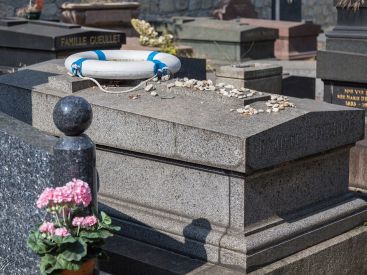
On November 2, 1979, at 3:15 p.m., a BMW pulls away from 35 rue Belliard in Paris’s 18th arrondissement. Behind the wheel is Jacques Mesrine, 42, flanked by his partner Sylvie Jeanjacquot. The pair looks like they’re headed for a weekend getaway. Yet for days, the police have known where the country’s most wanted man is hiding and are shadowing his every move. A few minutes later, at the Porte de Clignancourt, a truck and several unmarked cars seal the trap.
The operation involves around forty police officers from the Brigade of Research and Intervention (BRI), led by Commissioner Robert Broussard, alongside personnel from the Central Office for the Suppression of Banditry. The BMW is blocked in the middle of the intersection. Police officers hidden at the rear of a tarpaulin-covered truck open fire. Mesrine is fatally wounded; Sylvie Jeanjacquot, seriously injured, survives. Journalists arriving on the scene note numerous impact marks on the windshield and the car body.
When Jacques Mesrine was brought down in Clignancourt, his reputation had long since outgrown ordinary crime stories. Bank robberies, hostage-taking, spectacular escapes, and clandestine interviews made him one of the most high-profile criminals of the 1970s.
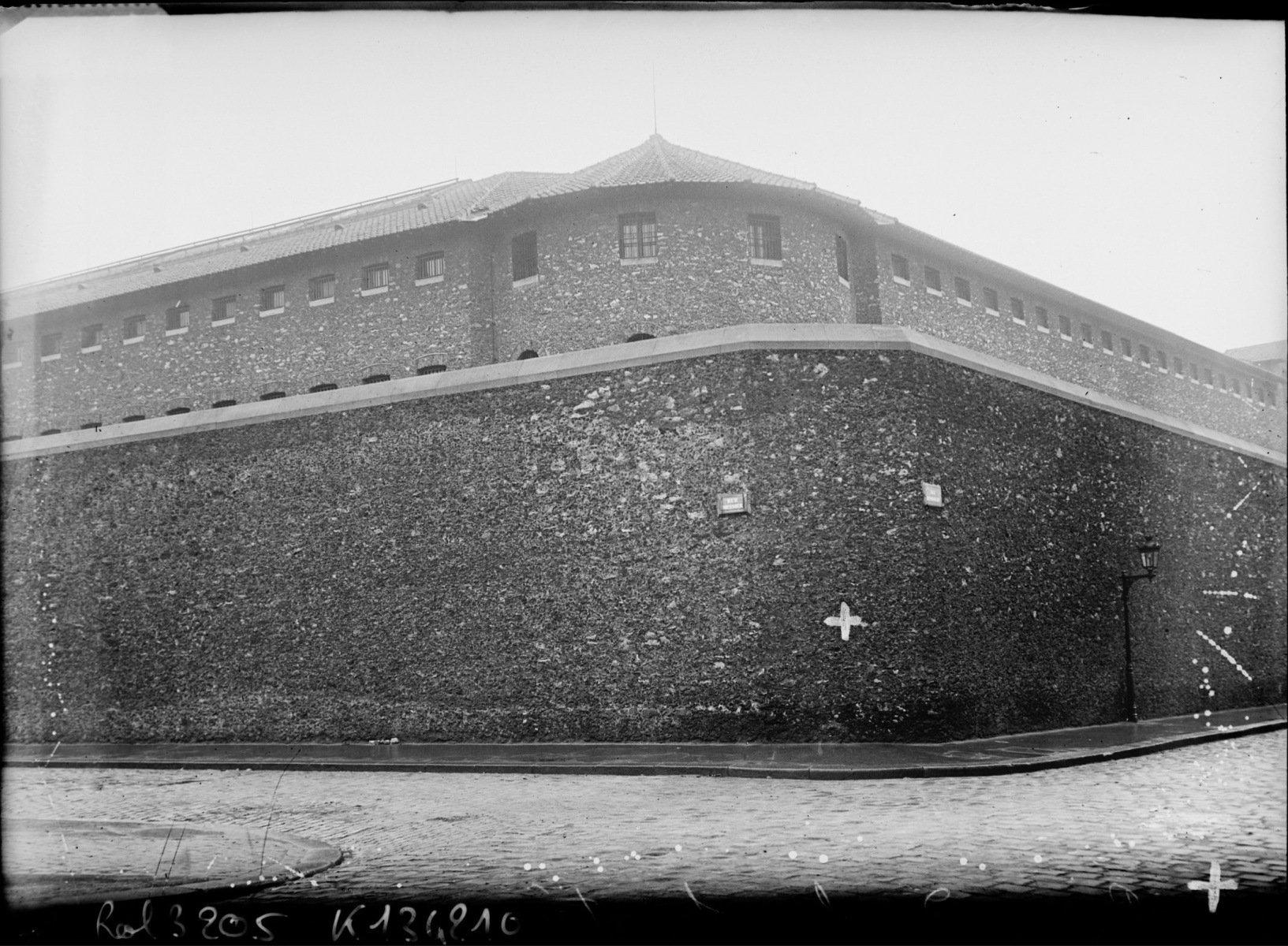
On May 8, 1978, he escaped from the La Santé prison, where he was serving a 20-year prison term. Armed with two fellow inmates, he breached the prison perimeter by using a ladder found in a construction yard. One of the three men, Carman Rive, was shot during the escape; Mesrine and François Besse managed to disappear.

What follows is a high-profile manhunt that the press tracked closely. Mesrine carries out several armed robberies, takes part in the Deauville casino raid, and grants clandestine interviews to journalists. In June 1979, he abducts businessman Henri Lelièvre, who is released after a ransom of 6 million francs is paid. A few weeks later, he abducts and seriously injures journalist Jacques Tillier, whom he accuses of having written against him.
Jacques Mesrine fuels this very media spotlight himself. While in prison, he published L’Instinct de mort, an autobiographical account in which he already shapes his own public persona. His talent for changing his appearance, publicly taunting the police, and telling his own crimes helps to forge the legend of “the man with a thousand faces.”

The exact conditions under which the police opened fire quickly became the main topic of controversy. By the evening of November 2, Maurice Bouvier, the director of the national Judicial Police, stated that his men could not risk allowing Mesrine to use the two grenades found in his car.
However, not all contemporaneous accounts line up. Le Monde reports that several witnesses saw the volley begin as soon as the BMW stopped. Police, for their part, say they yelled "Police!" before firing, after seeing Mesrine make a motion they interpreted as an attempt to reach for a weapon.

The fact that there were weapons in the vehicle is not disputed. Two grenades were found at the driver's feet. Accounts published over the course of the investigations diverge further on the exact position of his pistol and the gesture he made in the moments just before the shots. That split second would fuel decades of legal proceedings.
13 days after the incident, the family of Jacques Mesrine filed a complaint against X for murder, arguing he was deliberately executed rather than apprehended. The case has seen numerous twists and turns, passing through the hands of about a dozen judges. A formal inquiry finally opened in 2000, enabling prosecutors to hear police officers who were directly involved in the shooting.

In 2004, the examining magistrate ultimately ruled a non-lieu, finding that the police had acted in a state of légitime défense. The Paris Court of Appeal upheld this decision in December 2005, deeming that the law enforcement officers could reasonably believe they were facing imminent danger.
The death of Jacques Mesrine, however, remains inextricably linked to the legend that has grown up around him. Films, books and documentaries have since multiplied the portraits of the man who himself had perfectly understood the media power of his image.
For further reading:
On the trail of Paris's most notorious criminals and serial killers
Follow in the footsteps of Paris's most notorious criminals and serial killers, in our company. From Landru to Guy Georges, the "killer of Eastern Paris", not forgetting Doctor Petiot and the Cabard and Miquelon duo, discover the dark side of the capital over the centuries and along the streets. [Read more]
In the 14th arrondissement of Paris, the Santé prison, the last large intramural detention center, tells the story of more than 150 years of prison history. From its origins in the 19th century to its recent renovation, this establishment has seen many famous inmates pass through its doors. [Read more]
The Goutte d'Or and Chapelle neighborhoods, like Barbès-Rochechouart, suffer from a bad reputation. However, they are home to some great places and activities, so here are some tips for the 9th and 18th arrondissements of Paris! [Read more]
This page may contain AI-assisted elements, more information here.
Dates and Opening Time
On November 2, 2026
Location
Porte de Clignancourt
Porte de Clignancourt
75018 Paris 18
Route planner


















 On the trail of Paris's most notorious criminals and serial killers


 Did you know? La Santé Prison is the last prison within the city limits of Paris.
 Things to do in the Goutte d'Or, La Chapelle, and Barbès-Rochechouart neighborhoods: Ideas for outings and places to visit