What attire should you wear to the Opera when France is at war? The question may seem light, but it becomes highly political when the Palais Garnier reopens for an evening performance on 4 November 1916. Since the start of the conflict, the life of the prestigious Parisian institution has been deeply unsettled and its audience is urged to renounce fur, luxurious gowns and ceremonial dress. The order is clear: henceforth, city attire is required, under penalty of being refused entry!
Two years earlier, the mood was far graver. On July 31, 1914, on the eve of general mobilization, the government orders the closure of theatres subsidized by the state. While the Opéra-Comique and the Comédie-Française resume activity by December, the Palais Garnier remains shrouded in silence. Part of its staff has been mobilized, its finances are fragile, and the very idea of staging ballets and operas while soldiers fight in the trenches shocks a portion of public opinion.

At the helm of the institution, Jacques Rouché tirelessly champions the return of performances. For this patron and man of the theater, keeping Garnier closed would modify nothing about the course of the war, while its reopening would put nearly a thousand people back to work and sustain cultural activity in a capital hardened by the conflict.
After lengthy negotiations with the government, Jacques Rouché finally wins permission to reopen the Palais Garnier in December 1915, but under a very tightly controlled framework: the inaugural performances are held in the mornings, on Thursdays and Sundays. The programming itself reflects the patriotic context, prioritizing French works and pieces from allied nations. German and Austrian composers vanish from the lineup; Wagner, though once a cornerstone of Parisian repertoire before 1914, won’t return to Garnier until January 1921!
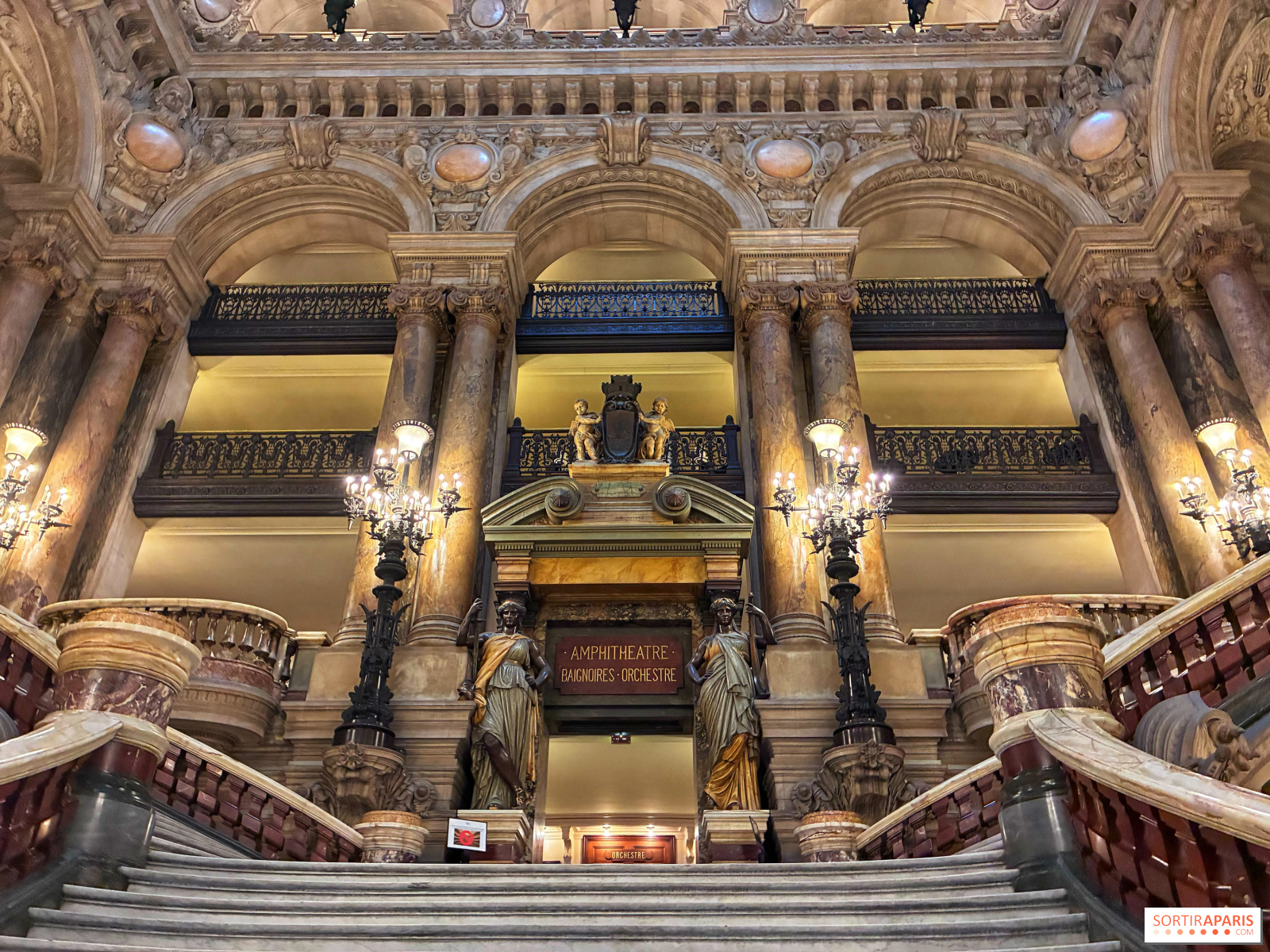
The audience turns out in force, and restrictions are gradually loosened. On 4 November 1916, the return of evening performances marks a significant step toward a more normal cultural life, even as the Battle of Verdun has just ended and the Battle of the Somme is still raging.
One problem Jacques Rouché may not have foreseen: the habitudes mondaines of high society die hard. As performances resume, management asks regular attendees to shed their evening gowns and the habits cérémoniels in favor of simple, more respectful attire given the circumstances. Yet the call meets with little response.

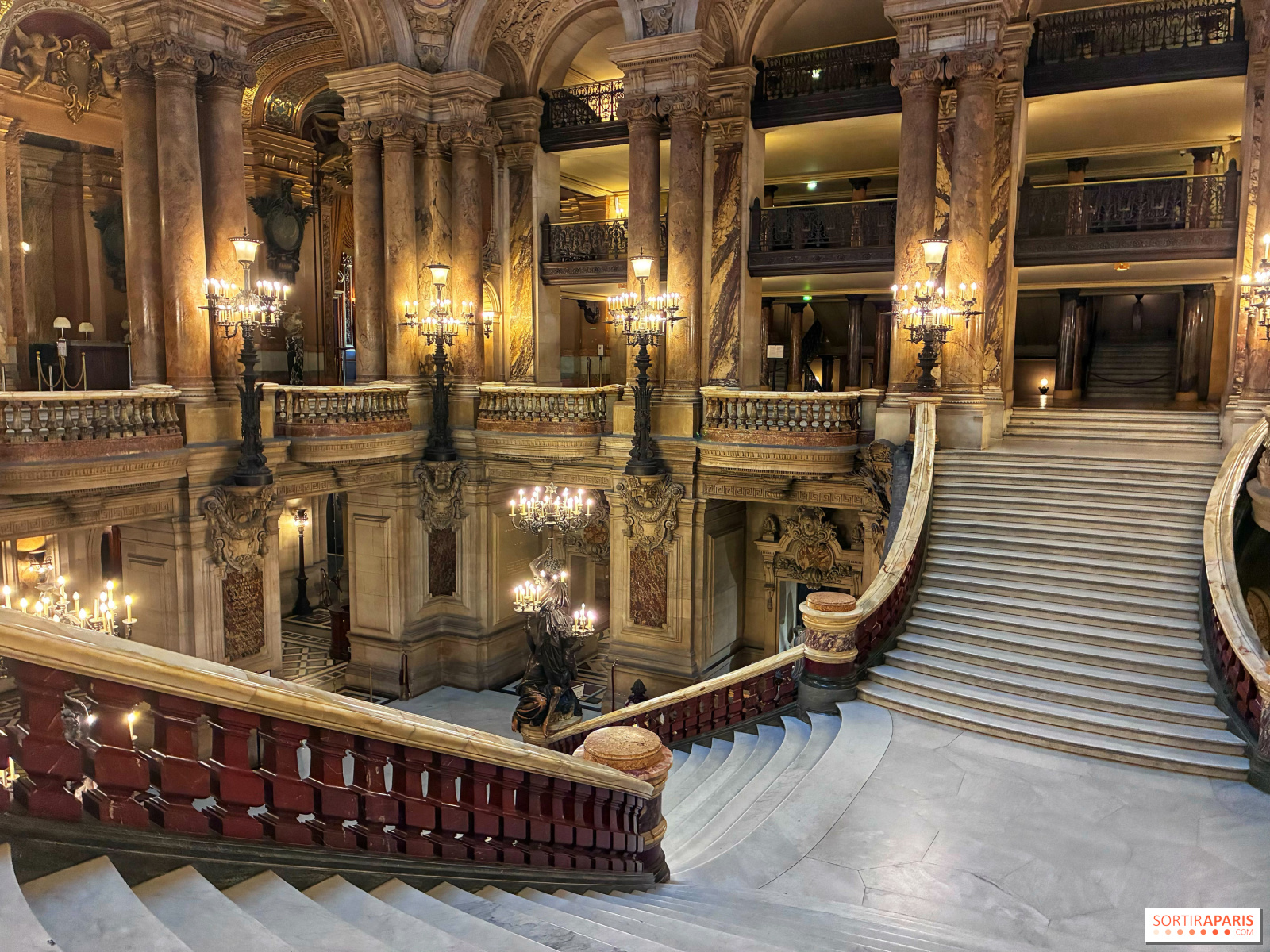
That evening, sequins, lamé fabrics and elegant gowns reappear on the grand staircase at Charles Garnier, almost as if the war had never happened. The stark contrast with the new arrivals from the front is enough to prompt Albert Dalimier, Under-Secretary of State for Fine Arts, to harden the tone: anyone presenting at the security check in anything other than the "tenue de ville" must now be turned away! For the men, it’s better to ditch the suit in favor of a jacket; for the women, sobriety must replace the spectacular outfits that had until then been an integral part of the ritual of an Opera night.
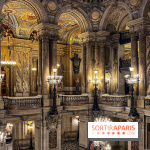
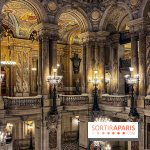
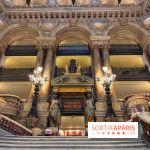
The measure reveals how central Garnier was to Parisian society in the early 20th century. Since its opening in 1875, the Opéra has been as much a theatre as a place to see and be seen. Its monumental staircase was even designed for this social staging: spectators themselves become part of the show, beneath the gilding, marble, and lights. Despite this ban, receipts rise as performances multiply, a sign that Parisians gladly return to Garnier despite the circumstances.
For further reading:
The Opéra Garnier in Paris, one of the capital's most beautiful monuments
The Opéra Garnier is one of Paris's must-see monuments. Designed by architect Charles Garnier, this eclectic palace attracts ballet fans and history buffs alike. [Read more]
Behind the gilded grandeur of the Opéra Garnier lies a genuine city devoted to show. Fascinating backstages (most of which remain closed to visitors) have fed, for more than a century, every imaginable fantasy. [Read more]
This famous French expression, which subtly alludes to a generous bosom put on display, has its roots in 19thᵉ century Paris, and more precisely in the refined ambience of the Opéra Garnier. A look back at a history where seduction and propriety mingled in the salons of high society. We tell you all about it. [Read more]
An artificial lake hidden in the underground passages of the Opéra Garnier in Paris? No, it's not an urban legend, but reality. So why is it there, and can you visit it? We tell you all about it. [Read more]
Proudly sitting in the Haussmann neighborhood, the Opéra Garnier opera house has been amazing Parisians and tourists. But what do you really know about this cultural monument? We unveil you three and uncommon little stories about it! [Read more]
Can you visit the Palais Garnier with a stroller? Do you have to climb a lot of stairs, is the auditorium still accessible, and what kid-friendly routes are offered? Before discovering the Paris Opera with the family, a few quirks of the monument are worth knowing. Stroller, accessibility, children's tickets, luggage, or a playful tour: here’s what to plan for with the little ones and the grown-ups. [Read more]
This page may contain AI-assisted elements, more information here.
Dates and Opening Time
On November 4, 2026
Location
Opéra de Paris - Palais Garnier
8 Rue Scribe
75009 Paris 9
Route planner
Access
Metro: Opéra station (lines 3, 7 or 8) Auber (RER A)
Official website
www.operadeparis.fr





















 The Opéra Garnier in Paris, one of the capital's most beautiful monuments
 Can you tour the backstage of the Opéra Garnier? The secrets that the audience never sees.


 Did you know? The expression "Il y a du monde au balcon" originated at the Opéra Garnier.


 Did you know? 3 uncommon little stories about the Opéra Garnier


 Visiting the Palais Garnier: everything you need to know to discover it with your family