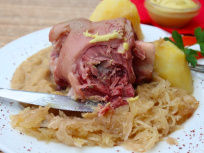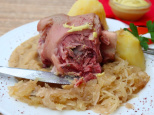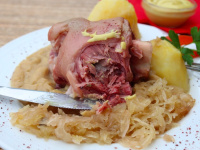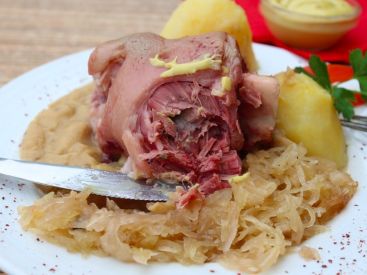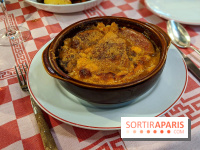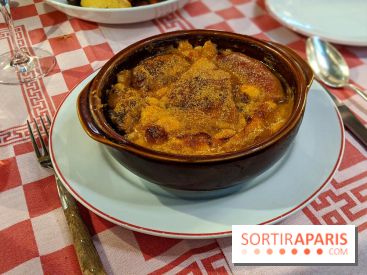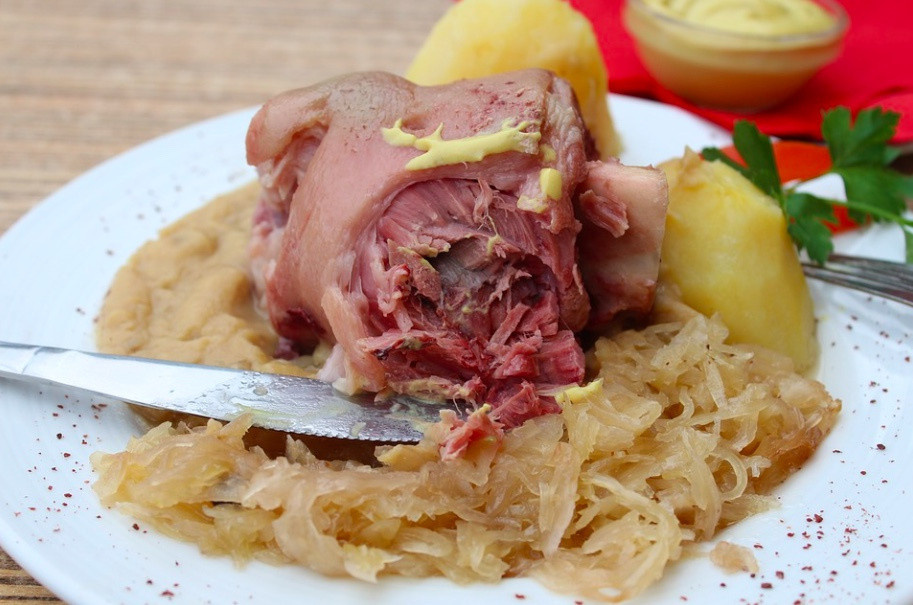
A traditional dishoriginating in Alsace, choucroute is one of the French people's favorite dishes. Made from fermented white cabbage and meat, the recipe for choucroute is fairly simple, although it takes a long time to prepare: the white cabbage is cut into thin strips and left to ferment in a mixture of salt and water, or brine, for several weeks. Once the cabbage has fermented, it is cooked with meats such as Strasbourg sausage and bacon, as well as potatoes, onions, and other winter vegetables. It's often in simplicity that we find delight, isn't it?
However, there are many variations on the sauerkraut recipe. Some people add carrots, turnips, or spices such as cumin to give the dish a little extra flavor. You can also replace traditional meats with fish (the famous seafood sauerkraut that scares many people!) or vegetables for a vegetarian version.
The ultimate convivial dish , often served in large quantities at festive meals or family gatherings such as end-of-year celebrations, choucroute is undeniably an authentic dish. In these gray and rainy days, if you're looking for a good sauerkraut in Paris, don't hesitate to try one of the Parisian restaurants mentioned below to be sure to check all the boxes: generosity, authenticity, and conviviality.
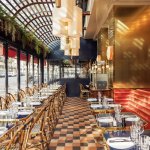
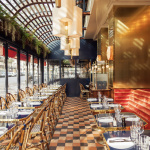

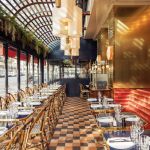 A brief history of Paris's great restaurants: Grand Café Capucines, in the heart of the boulevards
Founded in 1875 opposite the Opéra Garnier, Grand Café Capucines has embodied the soul of the great Parisian brasseries for a century and a half, with its Belle Époque splendor, seafood, French classics and continuous boulevard service. [Read more]
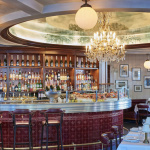
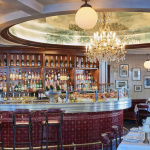
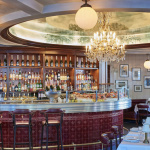
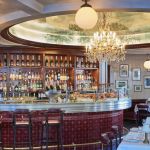 A brief history of Paris's top restaurants: L'Alsace, Alsatian tradition on the Champs-Elysées
Since 1968, brasserie L'Alsace has been bringing out the soul of the great Parisian houses on the Champs-Élysées, between generous sauerkraut, crispy flammekueches and seafood benches. [Read more]
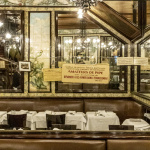
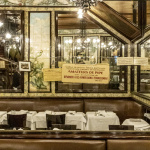
 A brief history of Paris's great restaurants: Brasserie Lipp, living memory of Saint-Germain
Since 1880, Brasserie Lipp has welcomed writers, politicians and sauerkraut lovers to its Belle Époque decor. A German-Pratin mainstay. [Read more]
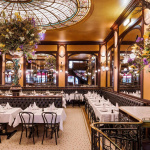
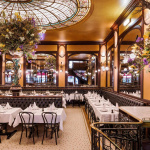
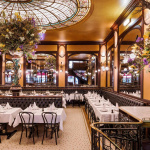
 A brief history of Paris's great restaurants: Bofinger, the Alsatian grande dame of Bastille
Opened in 1864 in Bastille, Bofinger is the oldest Alsatian brasserie in Paris. With its cupola, wood panelling and seafood, it embodies the elegance of Parisian brasseries. [Read more]
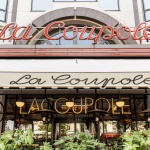

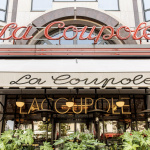
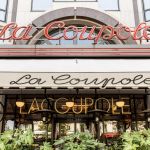 The history of Paris's great restaurants: La Coupole, symbol of the Roaring Twenties
An art deco institution in Montparnasse since 1927, La Coupole is a monumental brasserie that has seen the Parisian avant-garde come and go. A festive temple to popular Parisian gastronomy. [Read more]
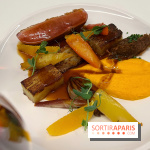
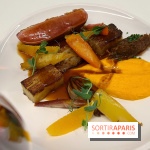
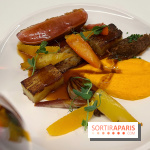
 Elsass, Alsace's bistronomic cuisine, far from preconceived ideas
The Elsass restaurant makes light of commonplaces and proves that Alsatian cuisine can (also) be bistronomic, built around the region's finest vintages. [Read more]
 Bouillon Chartier, the affordable address opposite Gare de l'Est station
Good news for your wallet: Bouillon Chartier has just opened opposite Gare de l'Est. On the menu, as usual, (very) affordable French bistro classics. [Read more]
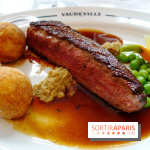
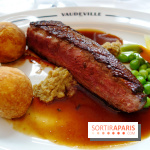

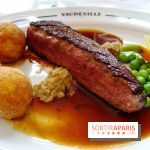 Le Vaudeville: traditional cuisine and seafood for the century-old Parisian brasserie
Few Parisian brasseries can boast of celebrating their 100 years. This is the case of the Brasserie Le Vaudeville, a true institution nestled in the 2nd arrondissement of Paris, just opposite the Bourse. With its classic Parisian brasserie dishes and its seafood, Le Vaudeville has not finished seducing the taste buds of Parisians. [Read more]
Find the location of all these addresses by clicking on the map at the bottom of the article.
So, how about some choucroute for lunch today?