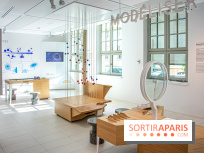
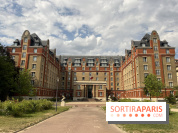
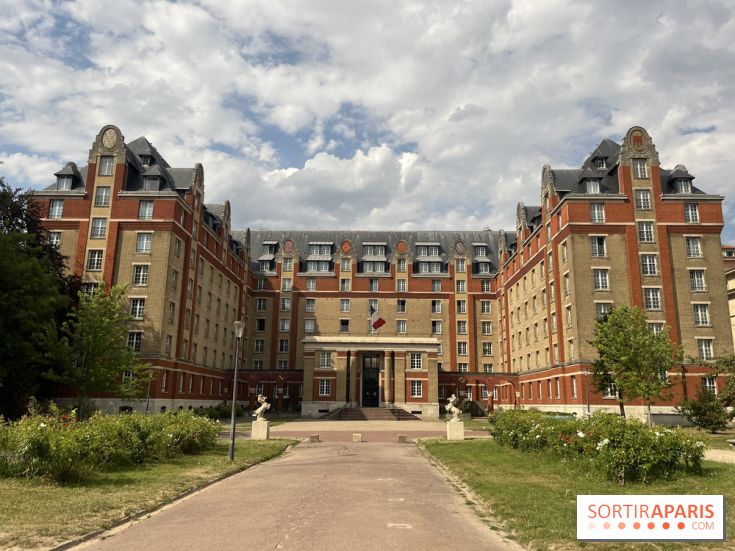
It's the long-awaited event for many budding scientists: the Fête de la Science! From October 3 to 13, 2025, the capital and its surrounding region will be opening the doors of its institutions, laboratories and museums to learn more about what shapes our world, through workshops, conferences, guided tours and a whole host offree events open to the whole family.
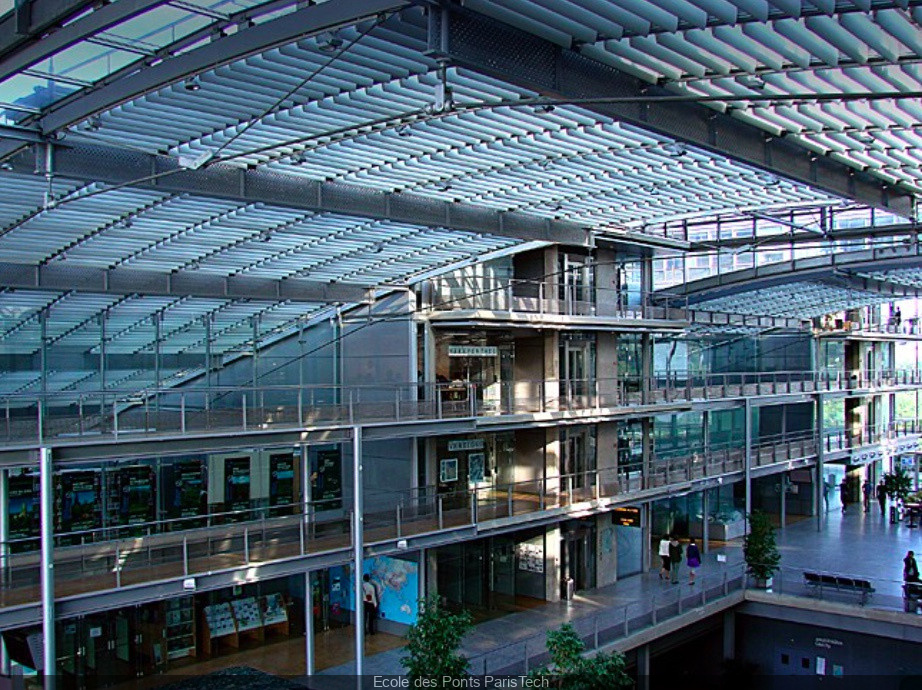
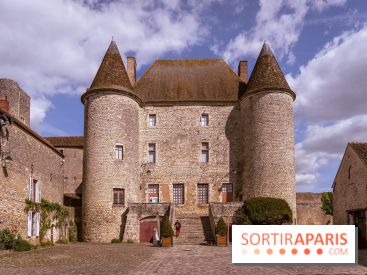
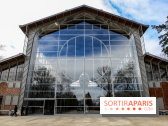
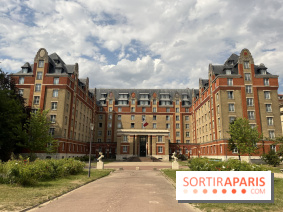
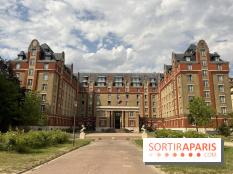
A major French engineering school founded in 1747 by royal decree of King Louis XV,Ecole des Ponts ParisTech, formerly known asÉcole Nationale des Ponts et Chaussées, has been training top-level engineers, researchers and future leaders ever since it was founded. In addition to societal challenges, civil engineering and regional planning, Ecole des Ponts ParisTech also focuses on the challenges of energy and ecological transition.
Fête de la Science 2025 in Paris and Ile-de-France: the program of free events
The Fête de la Science is back from October 3 to 13, 2025 for its 34th edition! The idea? A week dedicated to scientific culture, with numerous free events all over France. Experiments, shows, open houses, visits and a host of workshops, open to all and adapted to children, await you in the four corners of Paris and the Île-de-France region! [Read more]
This workshop will introduce you to a variety of intelligent encounters through theatrical improvisation, including a confrontation between an artificial intelligence and a human intelligence, in an "Impro & AI" format.
You'll gain a better understanding of the generative models behind tools like ChatGPT, and test their limits and ability to create novelty. The workshop also focuses on the emergence of a collective intelligence aggregating your individual intelligences through improvisation exercises highlighting collective decision-making mechanisms.
> Places are limited. On-site registration on 11/10 from 2 pm.
On average, every few thousand years, a drop of water evaporates from the ocean and becomes the rain that accompanies us on a daily basis. It is both an indispensable water resource and a hazard in the event of intense events. A better understanding and measurement of the latter is therefore a major challenge, particularly in cities. During this visit, you'll discover the measuring instruments used to take detailed measurements of rainfall, right down to drop size and speed. You'll see how these measurements help us to understand the complexity of the physical processes underlying rain and its extreme variability across space and time scales.
> Places are limited. On-site registration on 11/10 from 2 pm.
Discover one of our laboratories' flagship pieces of equipment: the microtomograph. This 3D imaging device works like a hospital scanner, and is used to see inside materials. After explaining how it works, the engineer will demonstrate it before your very eyes.
> Children under 5 years of age are not admitted, and must be accompanied by an adult.
> Places are limited. Registration on site on 11/10 from 2 pm.
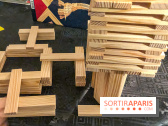
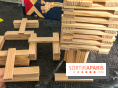
Come and imagine, build and test LEGO protections to stop the flow. Can you anticipate the water's reaction to your ideas? At this interactive stand, you'll be invited to take up an engineering challenge: how do you design an effective LEGO structure to slow down or divert flowing water? Come and discover how human intelligence defies the laws of physics through this captivating challenge, for young and old alike!
Based on field samples (macro > 5 mm and micro < 5 mm), as well as visual aids (photos, videos), the flows, sources and transport dynamics of plastic debris have been reconstructed. The aim is to help the audience understand the systemic nature of this pollution, its origins, and the hidden links with the other environmental issues of this century - a century that promises to be the one of all perils!
The OCAPI program, part of the Laboratoire Eau Environnement et Systèmes Urbains (Water, Environment and Urban Systems Laboratory), studies the transformation of our urine and faeces into agricultural fertilizers, using several disciplines: agronomy, anthropology, chemistry, design... Discover how we can reinvent our toilets to promote sustainable agriculture and protect our rivers.
> Visits to urine processing systems and urine collection systems. Registration on site on 11/10.
After a brief explanation of 3D printing techniques, the makerspace manager will show you how this type of equipment works. Young and old alike will have the pleasure of discovering the objects once the printing process is complete.
Take to the skies in a fun, interactive lecture and use mathematics to unlock the secrets of animals' collective intelligence - from migratory birds to packs of wolves.
And for the enjoyment of young and old alike, the lecturer will be accompanied by an illustrator, who will draw in real time.
Vibrations are often perceived as nuisances with more or less dramatic consequences, the most obvious example probably being earthquakes. To remedy this, researchers and engineers are developing systems to dampen vibrations and reduce their effects on structures. For several decades, the study of these vibrations has also enabled them to develop methods for detecting damage to structures.
Using demonstrations and videos of field tests, the speaker will present the various measurement techniques used, including motion capture, which is very common in the cinema.
Unlike conventional methods that read characters one by one, the method presented in this booth detects all characters at once, thanks to powerful, well-trained neural networks. Alongside the scientific team, you can learn more about how artificial intelligence works in general, and try your hand at deciphering ancient manuscripts!
Delays, whether in planes, trains or transport in general, are a real headache for transport companies and their users. But did you know that mathematics and artificial intelligence can help to better manage logistics, maintenance and unforeseen events? Come and discover how to solve these problems with games, demonstrations and discussions with our researchers! Will you outperform an AI?
Cooling in summer, heating in winter... these energy needs weigh heavily. But there's a solution to lower the bill: geothermal piles.
Anh Minh Tang, a researcher at the Navier laboratory, takes you on a life-size tour to understand the full potential of geothermal piles, a major ally in saving money all year round. These innovative foundations exchange energy with the building as the seasons go by, thanks to a heat pump. The result? Up to 4 to 6 times more energy returned, and real savings.
> Places are limited. Registration on site on 11/10 from 2 pm.
Increasingly present in the press, on the Internet and even on television news programs, datavisualization has the wind in its sails. This method, which consists of graphically representing numerical data to make them intelligible to everyone, is not new.
Charles-Joseph Minard (1781-1870), an engineer at the École nationale des ponts et chaussées, produced graphic visualizations that were far ahead of their time and undeniably contributed to modern datavisualization.
This workshop invites participants to explore his "figurative maps" from the École nationale des ponts et chaussées heritage collection, and to discuss the current use of data produced by research, particularly for public decision-makers. An opportunity to reflect on the importance of making figures "speak".
> Limited seating. On-site registration on 11/10 from 2 pm.
Come and discover how artificial intelligence enables scientists to model waves in real time, with the aim of better understanding this natural phenomenon and anticipating its impact on coastlines. Ready to take the plunge?
It's possible to study waves in the laboratory! To do so, scientists use a wave flume, which they invite the public to discover during this workshop. Thanks to this device, visitors will discover some of the characteristics of waves, how they are formed and how they lose energy before reaching the coast. By simulating the interaction of waves with various coastal structures, projects led by engineering students will visualize, in a wave channel, several solutions for combating wave-induced coastal erosion.
> Places are limited. Registration on site on 11/10 from 2 pm.
This workshop explores computer-generated, 3D-printed puzzles. Participants will be invited to manipulate and analyze these objects to discover their solutions, while reflecting on the links between AI, mathematical modeling and creativity.
> Places are limited. On-site registration on 11/10 from 2 pm.
How has scientific knowledge circulated through the ages? What role did images play in the construction of scientific knowledge? Based on illustrated scientific corpuses from the Middle Ages and the modern period, researchers are developing novel analysis tools based on artificial intelligence and vision techniques. At this stand, you can slip into the shoes of a researcher and have fun classifying and comparing scientific illustrations. You'll also discover how artificial intelligence can be an invaluable aid to historians of science.
How does data travel from one continent to another? What does the word "IP address" mean? In this booth, dive into the hidden face of the Internet with researcher Daphné Tuncer, who will answer all the questions we no longer ask ourselves. Through interactive manipulations and discussions, you'll discover how this network is designed, enabling billions of devices to communicate instantaneously with each other.
It's raining. A drop of water falls on the freshly painted façade of a building. It's the start of an unsuspected journey. As it slides down the wall, it takes with it invisible but very real residues: biocides, the toxic substances that protect our buildings... and threaten our environment. At this stand, hosted by Rim Saad, a doctoral student at the Laboratoire Eau, Environnement et Systèmes Urbains (LEESU), you can follow the journey of a small drop of contaminated water live, thanks to a colorful experiment that visualizes the invisible journey of contaminants from the walls of our buildings to the surrounding environments / to the environments that surround us.
Superconductivity is a fascinating phenomenon discovered over 100 years ago. Superconducting materials conduct electric current without losses, and float above magnets. Scientists study them to unravel their mysteries, and engineers use them to build medical imaging devices (MRI) and the world's fastest levitating trains (Maglev). This workshop will introduce you to a small levitating train and an (almost) perpetual motion balance, and take you into the fascinating world of quantum mechanics.
Dates and Opening Time
On October 11, 2025
Location
Ecole des Ponts Paristech
8 Avenue Blaise Pascal
77420 Champs sur Marne
Prices
Free
Official website
ecoledesponts.fr