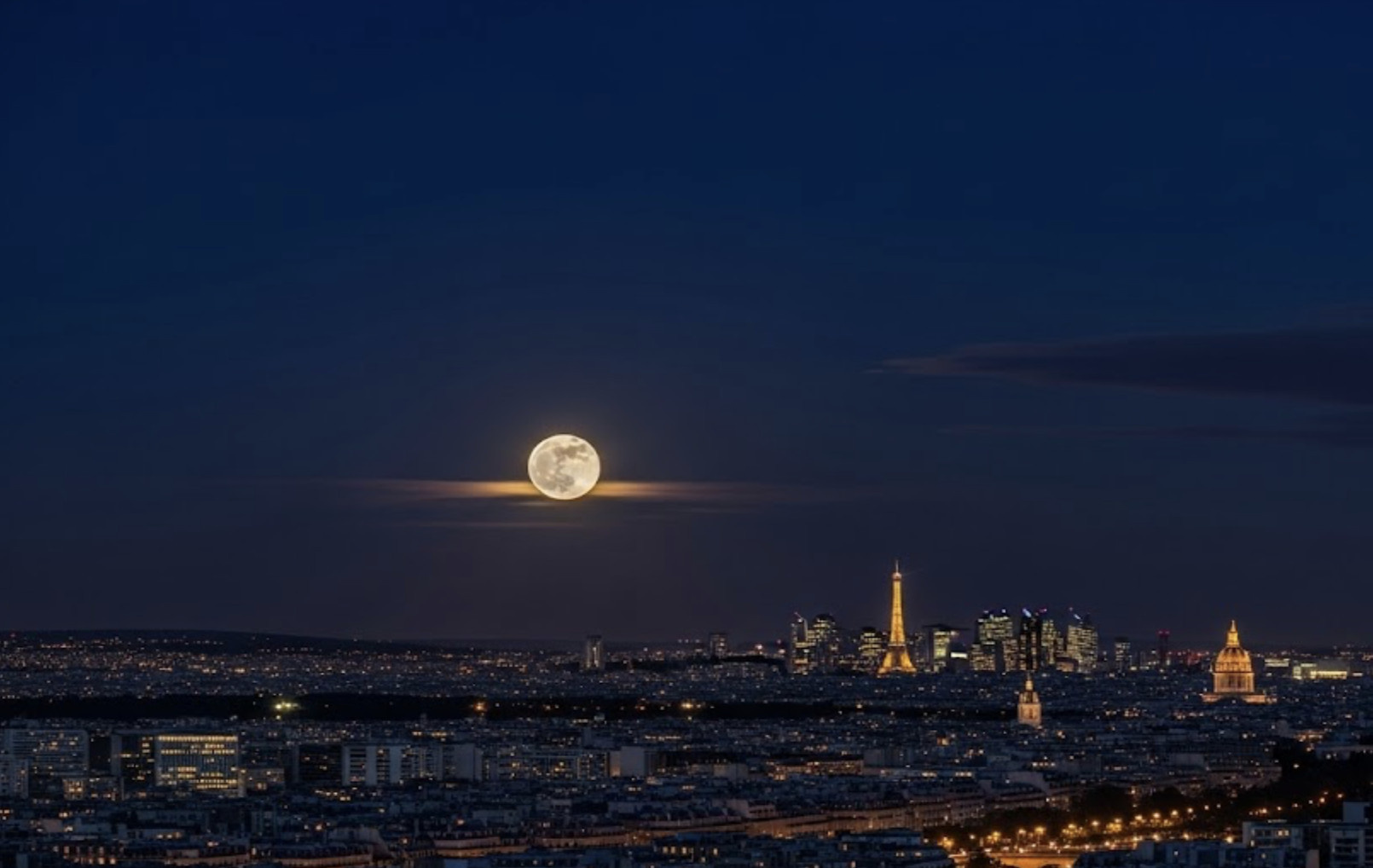
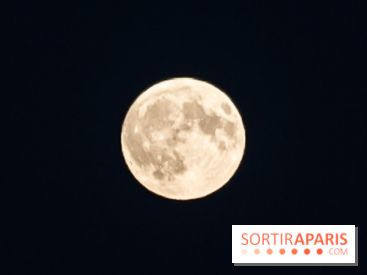
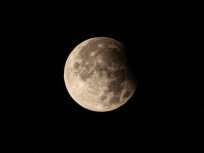
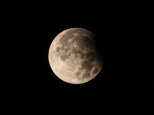
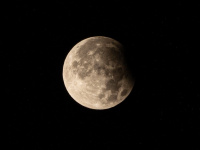
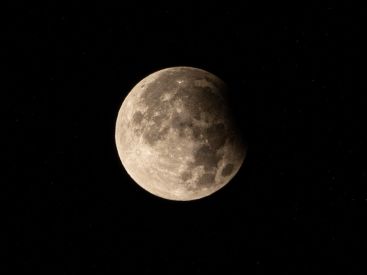
This year's Beaver Supermoon will take place on November 5, 2025, and will remain round for around three days. It will be the biggest and brightest supermoon of the year, appearing some 7.9% larger and 16% brighter than a classic full moon. The second of the year, after the Harvest Moon in early October, this astronomical phenomenon, known asa "Super Moon", occurs when the Moon is at perigee, i.e. closest to its orbit, the Earth, at a distance of around 356,500 kilometers.
Described as bigger and brighter, the Moon seems closer to us, but this is only an impression, as the change is not detectable with the naked eye. However, it really is a little brighter, which always makes for a dazzling sight to behold. The term"supermoon" dates back to 1979. That year, astrologer Richard Nolle decided to use the term to describe the phenomenon, which has since been adopted by NASA and the media.
It will bethe closest to Earth of any in 2025 and therefore the largest. But its timing is also quite rare! Its perigee will occur not at dusk but in the middle of the day, at 2:19 p.m. French time, something that hasn't happened since 1982, 43 years ago! This should allow us to see it clearly in broad daylight.
Astronomers and scientists prefer to call it a"perigee-syzygy". Nicknamed the beaver's full moon, it owes its nickname to Native American tribes and to the little animal, which prepares for the cold in November by building dams and stocking up on reserves. It's also the period when hunters set their beaver traps to collect their fur, according to The Old Farmer's Almanac.
At the beginning of November, the weather is likely to be less clement than during the summer and colder, with the end of the mild autumn weather. You will be able to observe it from sunset, as it takes place in the middle of the day, with night falling earlier and earlier. The Super Moon will be visible in the constellation of Aries beforedisappearing in the morning, providing optimal conditions for admiring the spectacle, with a light sweater over your shoulders.
Although easily seen with the naked eye, a telescope or binoculars are highly recommended for a more detailed view. And don't hesitate to take to the heights of the capital for a superb view!
 Super Cold Moon: the last big full moon of the year and the highest before 2042 tonight!
In 2025, three Super Moons marked the end of the year. On the evening of Thursday, December 4, 2025, the last one before November 2026 will be visible in the sky, nicknamed the "cold moon," particularly associated with the winter season, with a special feature this year! [Read more]