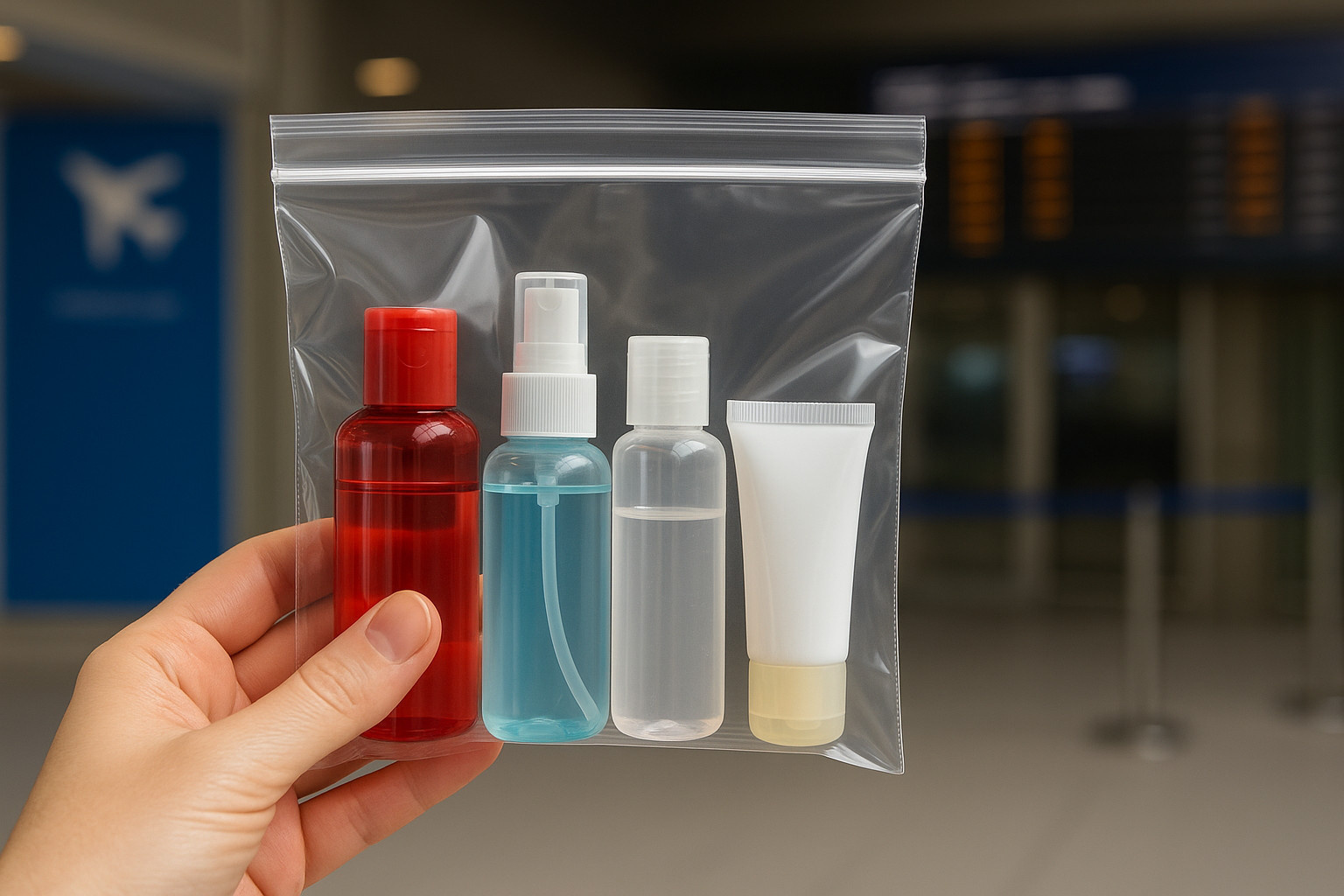
If you've ever flown, you're no doubt familiar with the famous 100 ml cabin rule. All travelers must pack their liquids (shampoo, toothpaste, perfume, cream, shower gel, etc.) in carry-on baggage in 100 ml bottles maximum, all grouped together in a one-liter transparent plastic bag. But why this constraint? The rule was introduced for security reasons, following a thwarted attempted attack.
The facts date back to August 2006, in London. British intelligence services foiled a terrorist plot on an unprecedented scale. An extremist group was planning to blow up simultaneously up to 10 planes flying from the UK to the USA. Their weapon? Liquid explosives concealed in soda bottles or toilet flasks, then assembled directly on board.
Faced with this invisible threat, the British authorities reacted immediately: a total ban on liquids in the cabin was introduced. However, to avoid paralyzing air traffic, the measure was soon relaxed and transformed into a standardized rule: 100 ml per container, all grouped together in a transparent plastic bag.
The 100 ml limit was not set at random. Safety experts determined that such a quantity would not carry enough chemicals to make a dangerous explosive on board. The transparent plastic bag, meanwhile, facilitates visual checks and speeds up the passage of passengers through security gates.
Since 2006, the no-liquid rule for air travel has been universal, although it is often considered restrictive. However, new 3D scanners at some airports already enable baggage contents to be analyzed directly, without having to restrict liquids. The UK plans to relax this rule in the coming years, and other countries may follow suit. But in the meantime, travelers should always have their 100 ml bottles and clear plastic bags ready before boarding.
This page may contain AI-assisted elements, more information here.