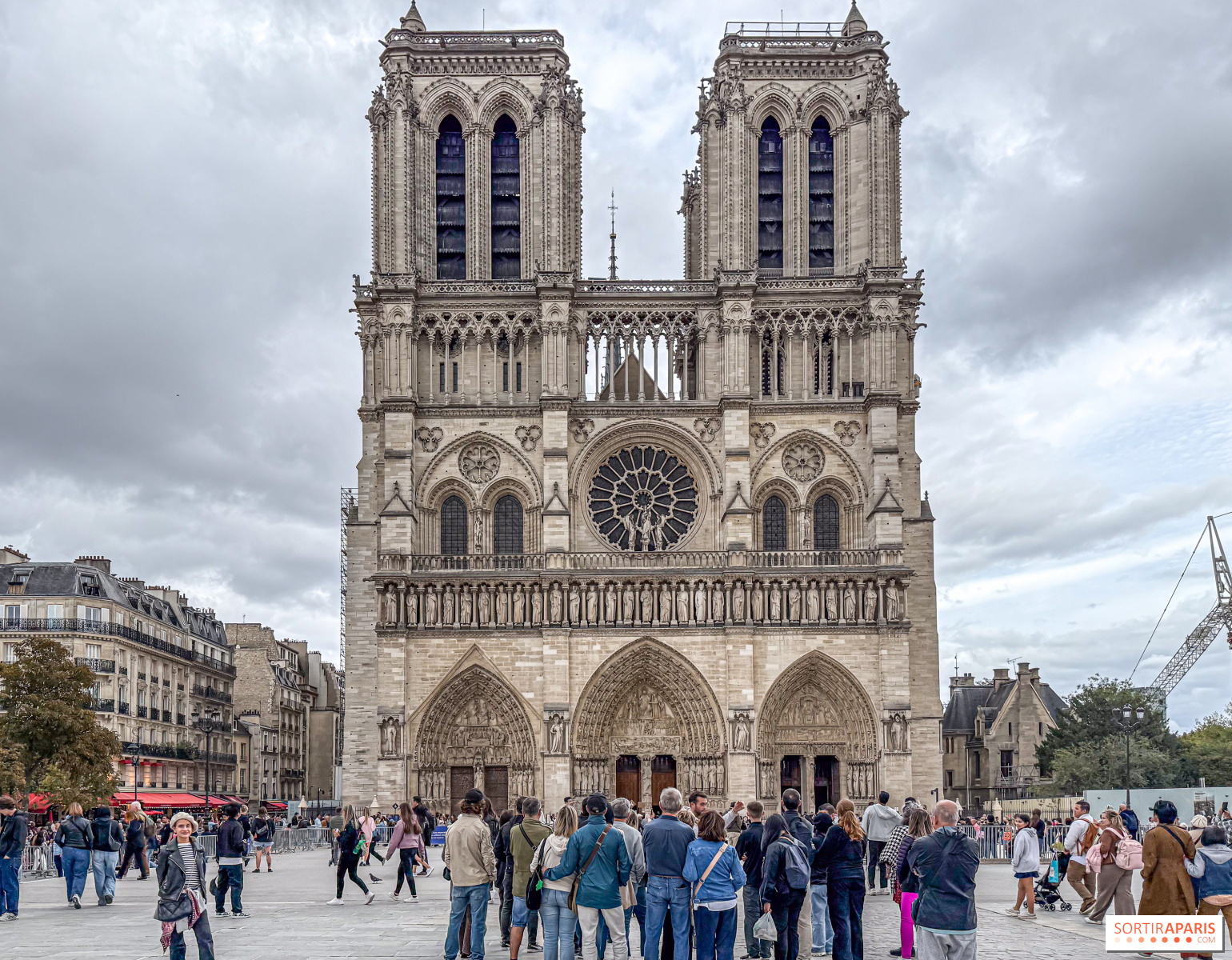
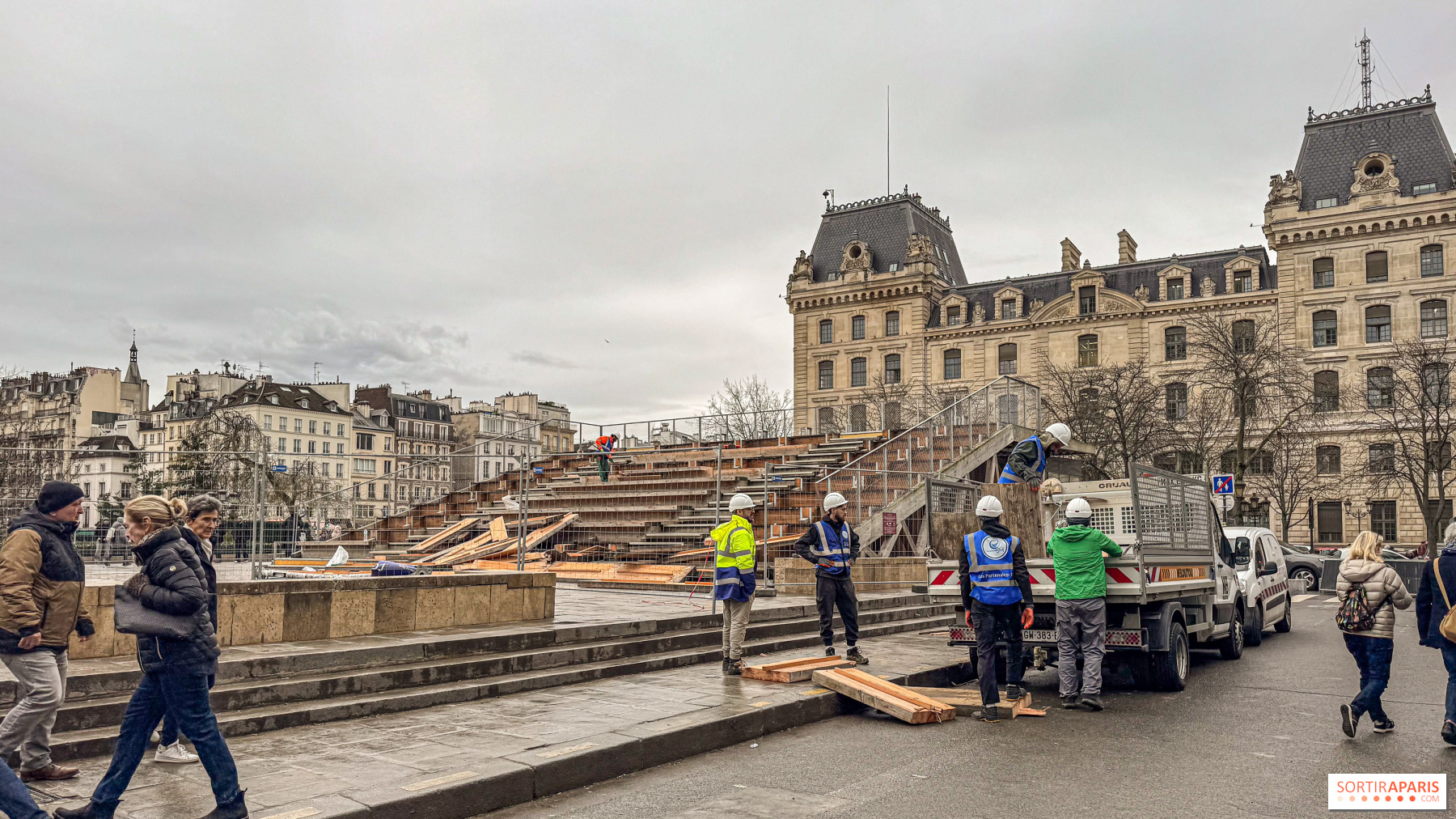
After several years of facing the cathedral, a discreet but heavily used installation is set to vanish from the landscape... Since this Monday, January 12th, the wooden bleachers placed on the Parvis Jean-Paul II, opposite the Notre-Dame de Paris cathedral, are being dismantled. Installed following the April 2019 fire, this temporary setup, dubbed Notre-Dame Éphémère, was intended to provide a space for visitors to gather and rest during the lengthy restoration process. Managed by the City of Paris, the operation will take nearly four weeks, until February 6th, marking a new step in the gradual transformation of the cathedral's surroundings, which are expected to reopen to the public and worshippers by late 2024.
Placed opposite the cathedral's façade, these wooden bleacher seats could host up to 300 spectators. Originally conceived as a temporary viewing platform, they offered a vantage point to oversee the square and the flow of visitors. However, since the start of the week, access has been completely restricted, and the site is now secured with barriers.
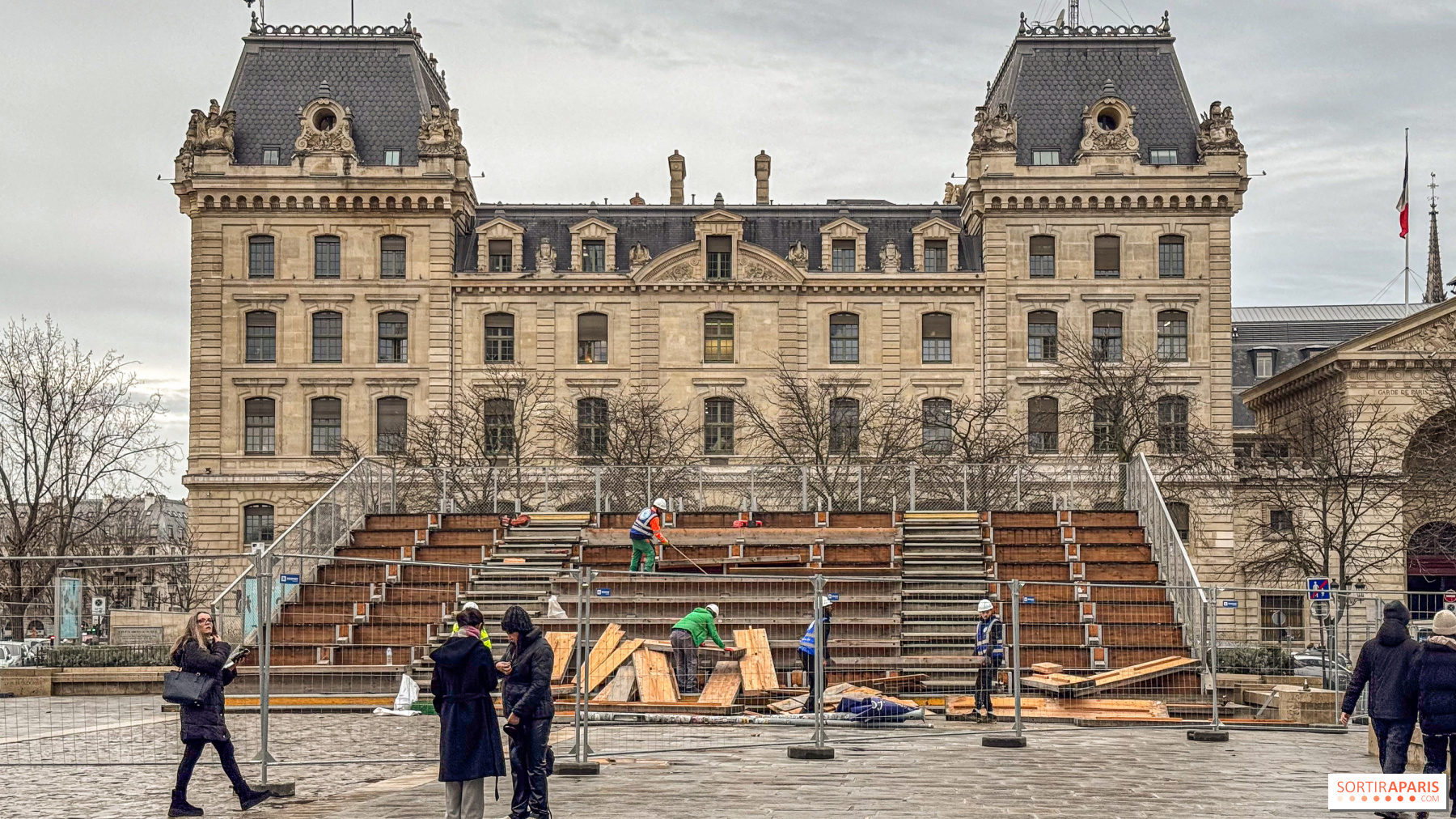
In an "work update" letter dated January 8, the Paris Centre Town Hall clarifies, as reported by our colleagues at Le Parisien, that the dismantling involves both the spectator stands and the associated exhibition buildings. The work, carried out with a crane positioned on the forecourt, requires temporary adjustments to traffic and parking arrangements. An order from the Prefecture of Police notably imposes restrictions in the alley parallel to Rue de la Cité to ensure the safety of the construction site.
Built above the archaeological crypt of Île de la Cité, this municipal museum showcases relics from Antiquity through the 19th century. It was created in response to a request made after the Notre-Dame fire by then-Archbishop Mgr Patrick Chauvet. At the time, the City of Paris agreed to allocate part of the square for this temporary use, pending the start of major redevelopment works.
Meanwhile, preventive archaeological excavations are underway on the square. Conducted by the Paris Archaeological Department, as reported by our colleagues at Le Parisien, they aim to identify any remains that could be affected by upcoming development work. City signage reminds that similar excavations in the 1970s uncovered traces of ancient and medieval neighborhoods, now visible in the crypt. Some of the artifacts discovered during this current excavation could, in the future, enhance the museum exhibit."
These initiatives are part of a larger project to overhaul the area surrounding Notre-Dame, entrusted to Belgian landscape architect Bas Smets. Budgeted at €50 million and funded by the City of Paris, the plan aims to restore and reshape the plaza, the Seine banks, the underground parking lot, as well as the Jean-XXIII Square and areas on Île-de-France. Following the completion of a small square for the December 2024 reopening and the development of Rue du Cloître Notre-Dame, the transformation of the Île de la Cité tip is scheduled for the first quarter of 2026.
With the removal of these temporary stands, a new chapter begins for the parvis of Notre-Dame. The area, long dominated by makeshift installations tied to ongoing construction work, is set to gradually reveal its true face in the coming months. As the city works to restore the cathedral’s surroundings, the challenge of welcoming millions of visitors each year remains a key priority.
This page may contain AI-assisted elements, more information here.