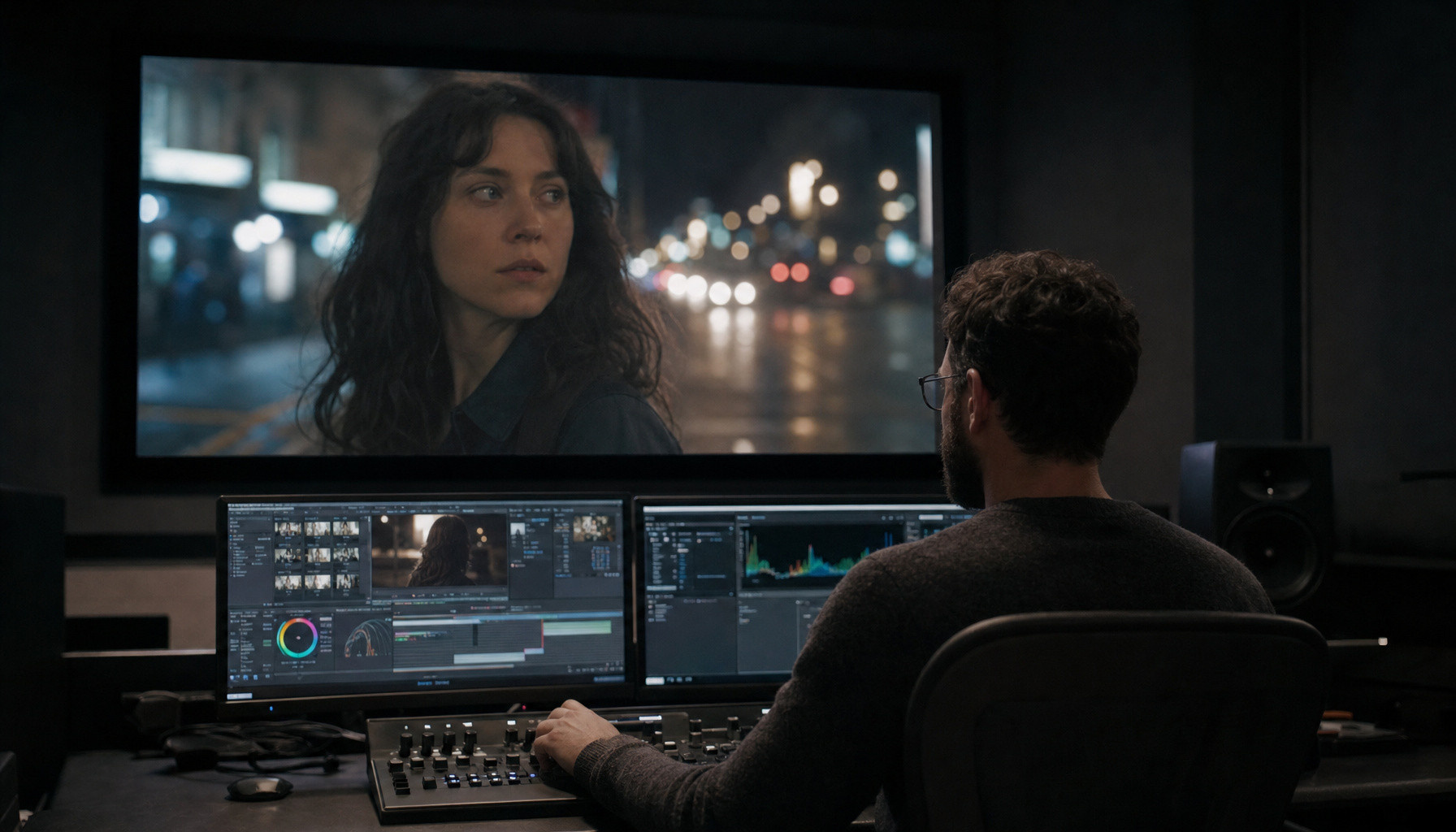
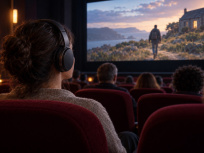
At 24 frames per second, one second of film consists of 24 successive frames. This number refers to the frame rate: the frequency at which the different stages of a movement follow one another. Having become a standard with the advent of sound cinema, it remains one of the requirements for digital projection.
Silent cinema did not rely on a single frame rate. The British Film Institute notes that frame rates varied, particularly in the era of hand-cranked cameras. With the arrival of synchronized sound in the late 1920s, a uniform speed became necessary to keep the image and soundtrack in sync.
Why settle on 24 in particular? In its educational documentation on frame rates, Adobe describes a compromise between satisfactory sound reproduction and the amount of film required. Increasing the frame rate uses more film for the same duration: at the same format, shooting at 48 frames per second requires twice as much film as shooting at 24. This material constraint helped establish a lasting convention.
However, the number of frames alone does not determine how motion looks. The exposure time for each frame also matters. In its technical paper on shutters, manufacturer ARRI explains that at 24 frames per second, with the shutter set to 180 degrees, each frame is exposed for 1/48 of a second. Fast movements then produce blur that helps visually link the frames. A shorter exposure reduces this blur and can make the motion appear more jerky.
The shift to digital preserved this benchmark without ruling out other frame rates. The May 2024 DCI specification requires support for 24 frames per second and also provides for 48 frames per second for 2K content. At the same duration, this higher frame rate provides twice as many motion steps.
So frame rate and resolution need to be distinguished: moving from 2K to 4K increases the number of pixels in an image; moving from 24 to 48 frames per second increases the number of images over time. A 4K film can still run perfectly well at 24 frames per second.
This page may contain AI-assisted elements, more information here.