On Friday, September 23, 1870, the first balloon to take flight crossed the German lines during the Siege of Paris. Named Le Neptune, this gas balloon, which would be followed by 65 more mail balloons until January 28, 1871, carried on board 125 kilograms of official dispatches, newspapers and letters to the Château de Cracouville, near Évreux. This marked the beginning of the airmail.
Paris has been under the German yoke for three days. After the overthrow of Queen Isabel II of Spain during La Gloriosa, the 1868 popular Spanish revolution, Prince Leopold of Hohenzollern-Sigmaringen—cousin of the King of Prussia—is floated as the candidate to replace the exiled sovereign in France, despite Napoleon III’s opposition. Accordingly, on July 19, 1870, France declares war on Prussia.
But the French armies, though only 300,000 men strong, were not prepared for such engagements and were routed time and again, with the nadir coming on 2 September 1870, when French troops at Sedan faced the Prussian forces and their allies, and Napoleon III was captured.
Two days later, the Third Republic was proclaimed in Paris by Léon Gambetta and a Government of National Defence was hastily formed, but the situation in France did not improve and enemy forces continued their rapid advance north of the Loire toward the capital, without meeting much opposition.
From September 17, 1870, Paris was encircled by the Germans and besieged on September 19; it marks the beginning of the Siege of Paris. Communications with the rest of the national territory were cut, and the government quickly had to devise a way to get civilian and military mail out of the capital. The solution was found: unable to pass overland, the couriers would be sent by the air route.
Aérostier experienced and French engineer, Claude Jules Dufour dit Duruof is charged by Germain Rampont, director-general of the Postes, with conceiving balloons destined for air-mail service, with the collaboration of Parisian photographer and engineer Félix Tournachon dit Nadar, founder of the Compagnie des Aérostiers militaires, who, taken with a passion for balloons, has been building captive balloons since the outset of the conflict, tethered to the ground by a cable, to perform tasks of observation of enemy lines and adjustment of artillery fire.
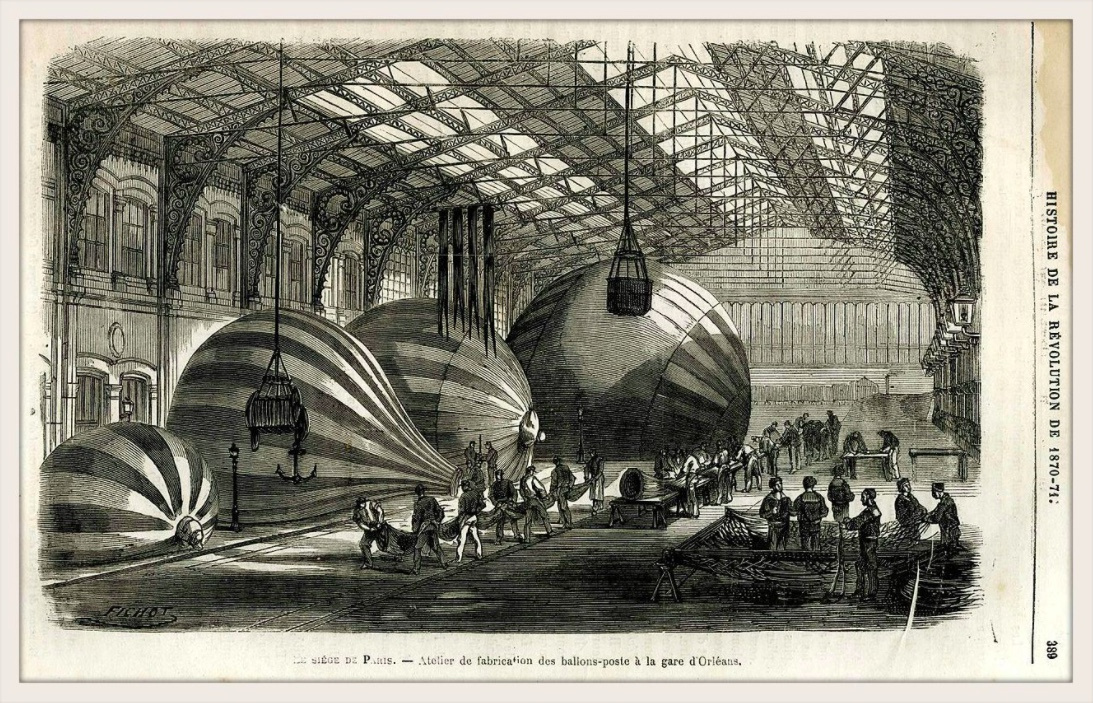
On September 19, 1870, Léon Gambetta, newly appointed Minister of the Interior, orders, by decree, the construction of three airships at the Austerlitz station and the Gare du Nord, requisitioned for the occasion, effectively signaling the dawn of the aviation industry. But for the first flight, authorities decide to use a balloon already in existence in Paris. The pick falls on the Neptune balloon by Nadar, which had already completed around ten observation flights in the preceding days.
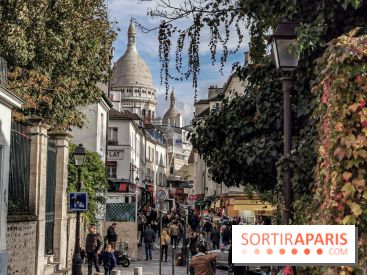
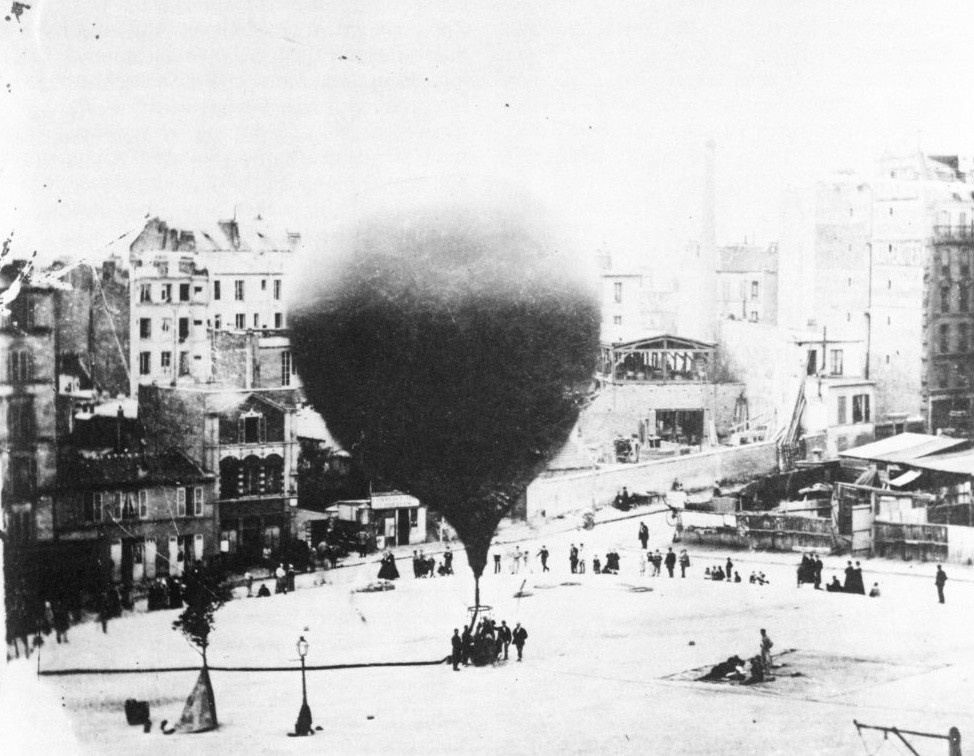
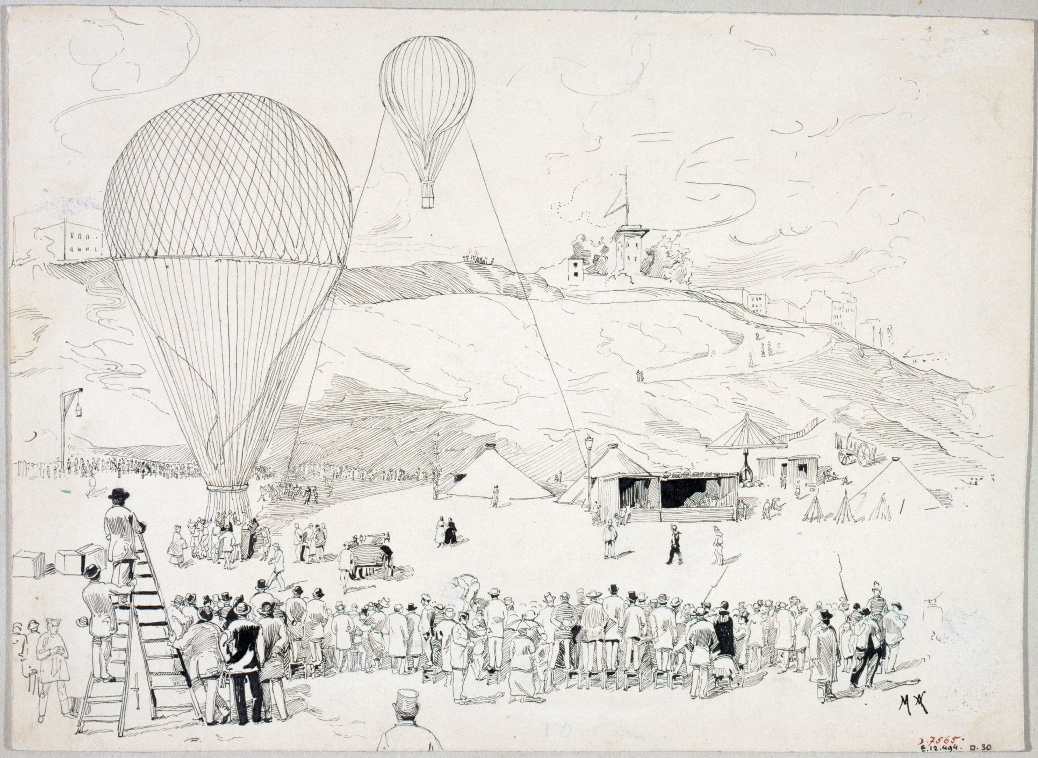
On Friday, September 23, 1870, at eight in the morning, Le Neptune, reinflated overnight from a gas line used to light the street lamps, lifts off from the Place Saint-Pierre before the eyes of the elected officials of the Government of National Defense and the crowd gathered at the foot of the Montmartre Hill, after Nadar cried "Lâchez tout !" to the soldiers holding the ropes. Carrying 125 kg of letters and dispatches destined for members of the government retreating to Tours, the balloon is piloted by Duruof, alone on board, who knows the craft well, having been its first owner.
The Neptune crossed enemy lines over Versailles and headed for Le Havre, with the German army not yet having reached Normandy. The aircraft completed a 104-kilometre flight without incident before landing after 3h15 spent in the air, in the park of Cracouville Castle, near Évreux in Normandy. This was the very first flight in the world’s history of airmail. Upon learning of this journey, Otto von Bismarck would have exclaimed "That is not loyal!"
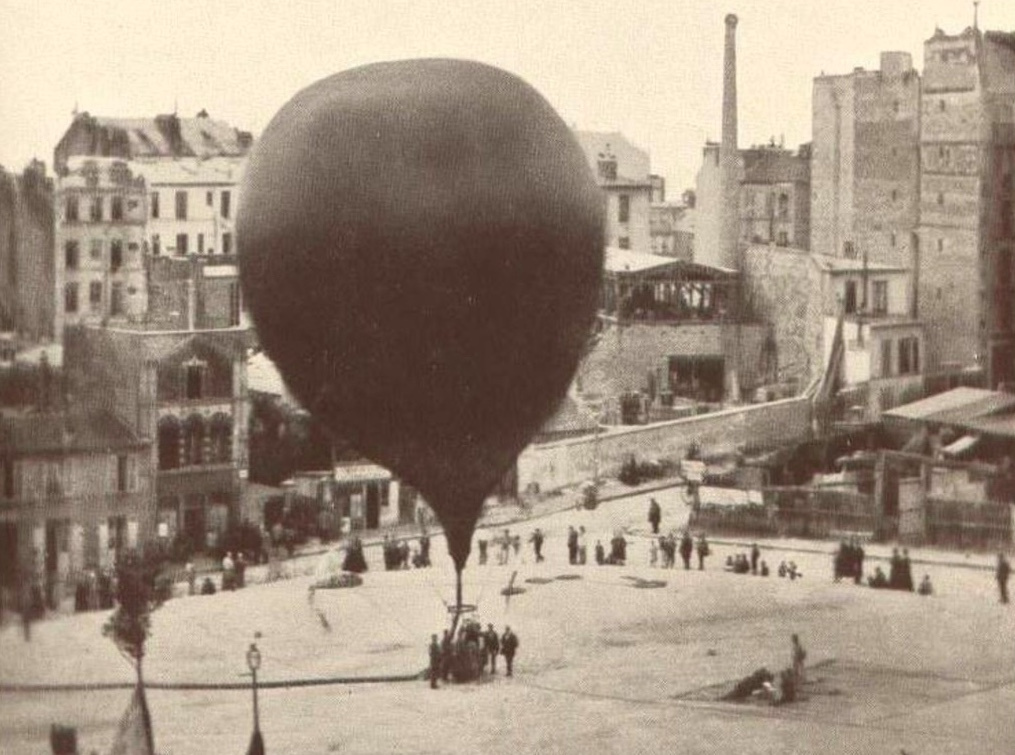
Subsequently, 65 balloons would depart from Paris, continuing until the end of the Siege of Paris and the signing of the armistice on January 28, 1871, carrying on board more than a hundred passengers and between 2.5 and 3 million official and private letters, as well as dispatches and other missives to various points beyond the Paris Basin, out of reach of Prussian cannons. Filled with highly flammable illuminating gas, the balloons indeed rose by day as well as by night, coming under fire from enemy troops.
To lead them, the government drew on gymnasts and volunteer sailors, since no aeronauts were available. Trained on the ground in the basics of ballooning, they take to the air in balloons with little experience. Gambetta himself lifts off aboard the Barbès balloon on October 7, 1870, to join the Provisional Government delegation in Tours to organize the nation's defense. Fortunately, over the months these balloons proved reliable, with only three failures in more than 60 flights.
That said, journeys aren’t easy, at the mercy of steering and the wind. Le Duquesne lands in an occupied zone, the Ville de Paris comes down in Germany, Le Jacquart sinks in the waters south of England, and Le Daguerre is strafed by the Prussians, its two passengers taken prisoner. But the record goes to the balloon Ville d'Orléans, which covers 1,246 kilometers before finally landing in Norway!
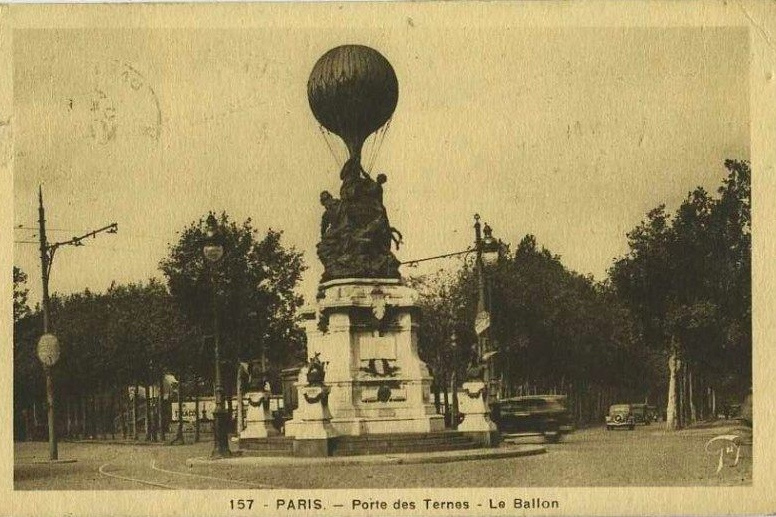
To commemorate these aerial feats, the Ballon des Ternes, the work of sculptor Frédéric-Auguste Bartholdi representing the City of Paris, with a child resting on its knees reaching out to a pigeon bearing news from home, and topped by an imposing copper balloon, was erected in 1906 at the Porte des Ternes, the starting point for many balloon ascents. But the monument was melted down by the Germans during the Second World War.
Further reading:
Things to do in the Montmartre neighborhood: Ideas for outings and great places to visit
Are you going to Montmartre and looking for a great place to visit? Here are some places in the 18th arrondissement that are sure to delight you! [Read more]
Flying over Paris in a balloon has been possible since 1999 on the lawn of the Parc André Citroën with the Ballon de Paris, now also known as the Ballon Generali. To take in the view, breathe in the air and amaze the kids, try out an original ride in the world's largest balloon. [Read more]
Dates and Opening Time
On September 23, 2026
Location
Place Saint-Pierre
Pl. Saint-Pierre
75018 Paris 18
Route planner
More information
Iconography: Departure of the balloon Le Neptune, place Saint-Pierre-de-Montmartre
















 Things to do in the Montmartre neighborhood: Ideas for outings and great places to visit
 Le Ballon de Paris Generali at Parc André Citroën