Paris was not only the birthplace of Georges Méliès, but also the setting for his first inventions, public illusions and setbacks. Born in the city, he bought the Robert-Houdin theater, experimented with cinema and ended his days in oblivion before his posthumous rebirth.
Enter the wonderful world of the man still known today as the "magician of cinema", by following in his footsteps in the City of Light.
A pioneer of cinema, Georges Méliès transformed still photography into an art of the imagination. Trained as an illusionist, he discovered the cinematograph in Paris and created over 500 films, including the famous Journey to the Moon. He later set up his studio in Montreuil, but his projections and inventions spread throughout Paris.
His early documentary films show views of Paris (the Champs-Élysées, the Champ de Mars, the Seine, the Invalides) as if he were composing animated postcards of the capital. Forgotten, ruined, then rediscovered, after his death he became a major figure in thehistory of the 7th art.

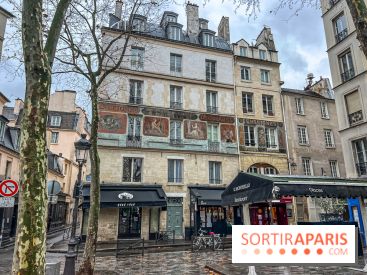
29 boulevard Saint-Martin (3ᵉ arr.). Georges Méliès was born here on December 8, 1861, as attested by a commemorative plaque affixed to the building.
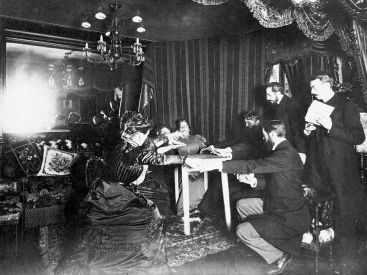
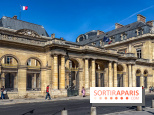
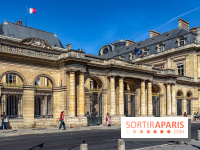
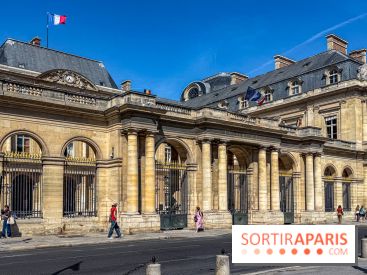
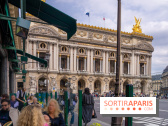
The Robert-Houdin theater (2ᵉ arr.). From an early age, he frequented Parisian theaters, notably the Robert-Houdin theater, which he acquired in 1888 with the idea of combining prestidigitation and projection. It was a turning point in his career: Méliès not only presented his illusions there, but also his first films, transforming magic shows into enchanted projections and blending living illusion with filmic illusion. It was here, too, that he first experimented with trick shots, overprints, camera stops, fades and changes of scale, inventing the techniques of spectacle cinema. The theater was demolished in 1924 when the last section of Boulevard Haussmann was built.
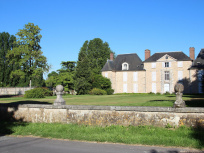
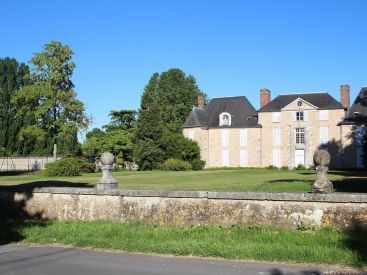
The Montreuil studios (Seine-Saint-Denis). To expand his shooting capacities, Méliès set up two glass studios in Montreuil, in the property he inherited from his father, at 3 rue François-Debergue. Here, he shot a number of "fairy tales" and fantasy scenes, with painted sets, miniatures and machinery. The studio was the first of its kind in France to combine an enclosed shooting area with a creative workshop. When the First World War broke out, financial difficulties led Méliès to sell his equipment, close his theater and abandon the studio.
Gare Montparnasse (14ᵉ arr.). After his successes, Méliès fell into oblivion. He turned modestly with his wife,actress Jehanne d'Alcy, who opened a toy store in the Gare Montparnasse to make a living. Méliès sold candy and sweets.
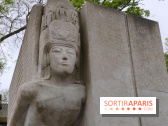
Père-Lachaise cemetery (20ᵉ arr.). Georges Méliès died at the Léopold-Bellan hospital in Paris in January 1938 and is buried at the Père-Lachaise cemetery, where a tomb welcomes visitors, surmounted by a bust representing him.
Square Georges-Méliès (12ᵉ arr.). Named in his honor since 1959, here you can stroll between flowerbeds and trees.
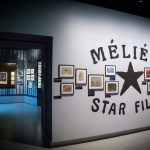
Musée Méliès (12ᵉ arr.). To keep his work alive, the Cinémathèque française is dedicating a Méliès Museum of over 800 m², featuring machines, costumes, posters, models and restored films. A space dedicated to his memory and the cinematic magic he invented.
The Musée Méliès, the Cinémathèque Française's film museum for fans of the 7th art
Get ready to discover the Musée Méliès, the Cinémathèque Française's new film museum, as soon as it opens. Bigger and better, the Musée Méliès unveils its new itinerary and many previously unpublished archives, by Georges Méliès of course, but also by more contemporary filmmakers. It's a dream come true for young and old, curious and passionate about the 7th art. [Read more]
The Père Lachaise Cemetery is Paris’s largest burial ground and one of the most visited sites in the world. Whether you’re drawn by its history, its famous residents, or its legends, this is an essential stop for anyone visiting the capital. [Read more]
This page may contain AI-assisted elements, more information here.
Location
Méliès Museum
51 Rue de Bercy
75012 Paris 12
Route planner
Access
Metro Bercy Lines: 6, 14 Bus: 24, 64, 87
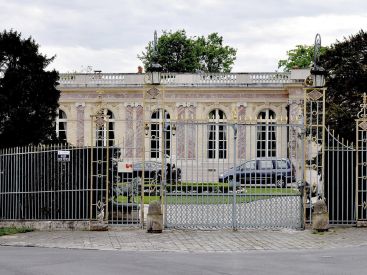



















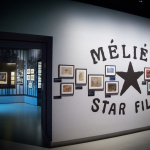
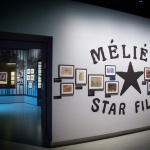
 The Musée Méliès, the Cinémathèque Française's film museum for fans of the 7th art
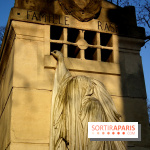
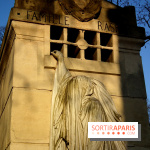
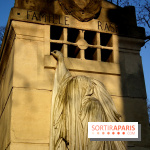
 Père Lachaise, Paris's most mythical cemetery and the graves of famous personalities