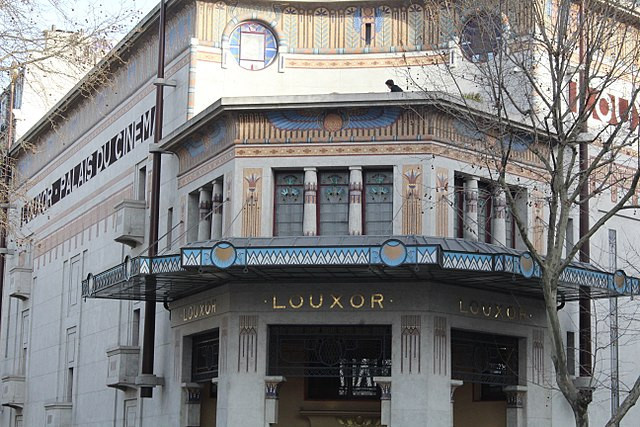
If you look up at the intersection of Boulevard de Magenta and La Chapelle, you'll find yourself face-to-face with statues of pharaohs, lotus flowers, and colorful hieroglyphs. This isn't a mirage caused by the nearby elevated metro; it's the façade of the Louxor, one of Paris's most iconic cinemas. But what secrets does this Egyptian-style building, marvelously crafted in Art Deco, hide? And why was such an exotic decor chosen right in the heart of Barbès? Join us as we uncover the story of this monument that takes us on a journey without leaving Paris.
Opened in 1921, the Louxor emerged during the height of "Egyptomania." At that time, France was captivated by archaeological discoveries in the Valley of the Kings. Architect Henri Zipcy devised an ambitious plan: to turn a cinema auditorium into a true ancient palace.
Every detail has been meticulously crafted: the façade mosaics, made with enamel and gold, draw inspiration from Napoleon's Egyptian expedition and the centenary of Champollion's decipherment of hieroglyphs. Inside, the grand hall—recently restored—immerses visitors in an atmosphere reminiscent of a royal tomb, with papyrus-shaped columns and winged motifs that evoke ancient grandeur.
But the Luxor almost vanished entirely. In the 1980s, it was transformed into a nightclub (famously known as Megatown), before falling into complete abandonment. For nearly 20 years, only birds and dust bore witness to this crumbling temple of the past.
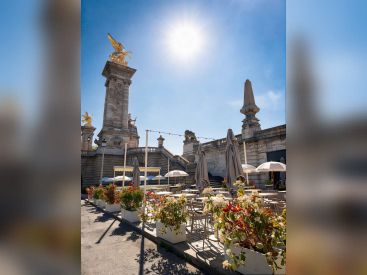
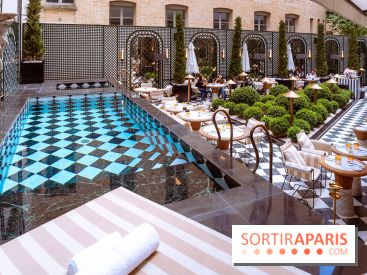
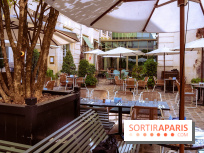
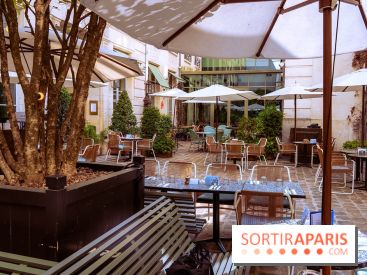
It will require a historic effort from local residents to persuade the city of Paris to acquire the building and restore it to its original state. Today, visitors come here to watch independent films, but most notably to enjoy its hidden rooftop bar on the second floor, which offers one of the most unique views of the Sacré-Cœur and the aerial metro.
This page may contain AI-assisted elements, more information here.
Location
Le Louxor
170 Boulevard de Magenta
75010 Paris 10
Route planner
Accessibility info
Access
Metro Barbès - Rochechouart
Official website
www.cinemalouxor.fr