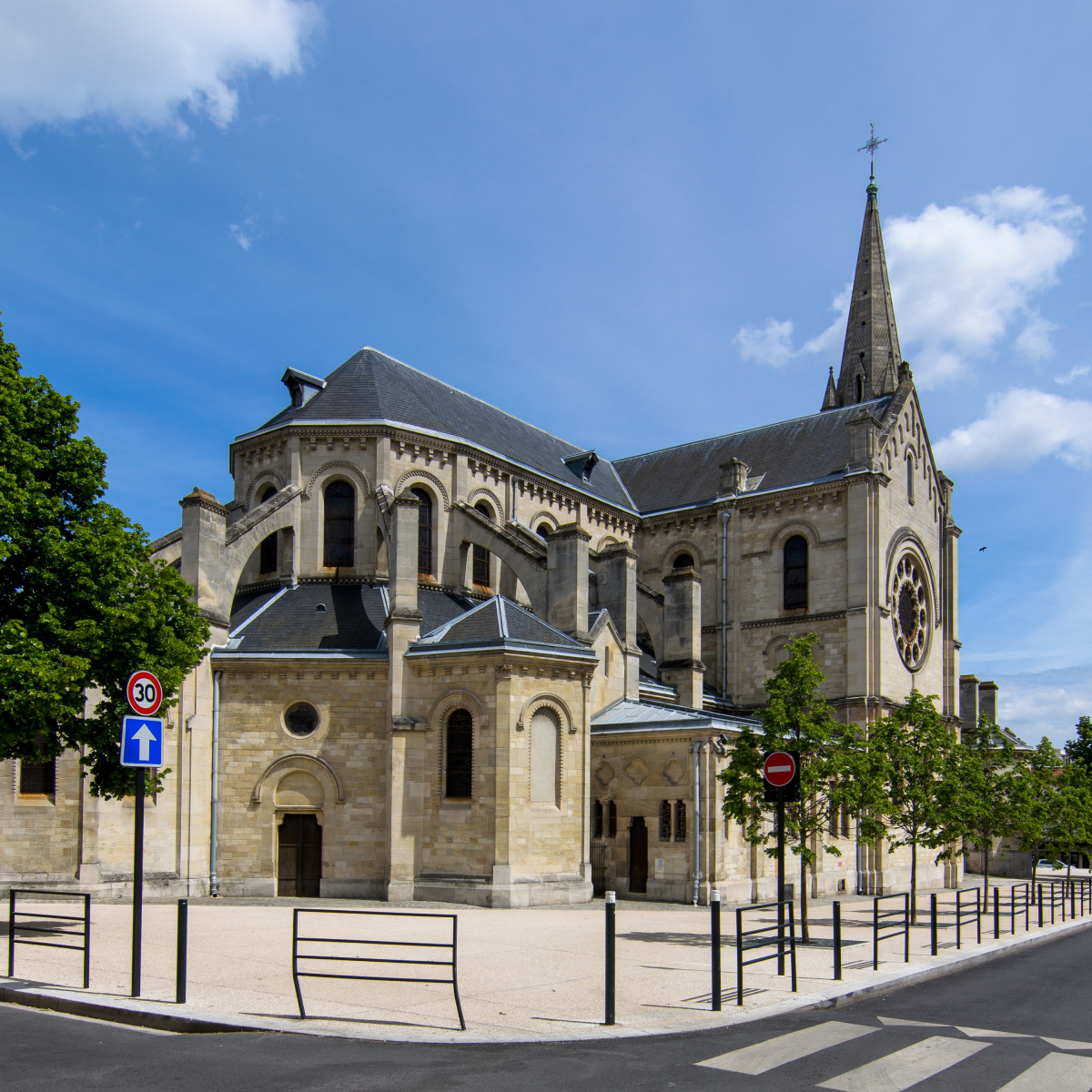
Long before its tower dominated the skyline, this place already drew pilgrims and the faithful who came to venerate an exceptional relic. The Saint-Denys Basilica of Argenteuil, in the Val-d'Oise, labeled as Regional Heritage of Interest, indeed preserves the Holy Tunic, which tradition identifies as the garment worn by Christ during the Passion. But the edifice itself is worth a detour, as much for its architecture as for the history it tells.
Although the basilica is named after Saint-Denis, the first bishop of Paris and a central figure in Christianity in Île-de-France, its history is also closely tied to the former Notre-Dame d'Argenteuil Abbey. According to tradition, Charlemagne is said to have laid the Holy Tunic there in 803. In the 19th century, with the old parish church having become too dilapidated, a new one was built between 1862 and 1865 on a neighboring site, under the direction of architect Theodore Ballu, who also designed the Church of the Trinity and oversaw the reconstruction of the Hôtel de Ville de Paris.
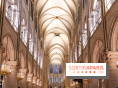
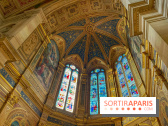
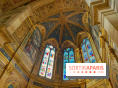
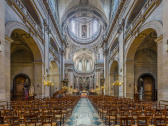
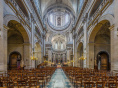
Hard to miss its imposing 57-meter tower, visible from afar, or its vast triple porch that marks the entrance. Inspired by neo-Romanesque architecture, the basilica is also notable for a rare feature: its pediment bears the motto "Liberté, Égalité, Fraternité", a relic of its public funding before the 1905 law separating church and state. Inside, the light from the stained glass fills a monumental nave in the Latin cross plan, while the chapel of the Sainte Tunique reminds visitors of the spiritual mission that has made the site famous.
Elevated to the rank of minor basilica in 1898, battered by the bombardments of World War II and subsequently restored, the church remains today a living place of worship and a major pilgrimage sanctuary. The great ostensions of the Holy Tunic continue to draw hundreds of thousands of visitors, while its Théodore Ballu–designed architecture makes it one of the most emblematic monuments of religious heritage in the Val-d'Oise.
This page may contain AI-assisted elements, more information here.