"Arise, children of the Fatherland…" thus ring the opening notes of the La Marseillaise. Sung at official ceremonies, sporting events, or national commemorations, it has accompanied the French for more than two centuries. Yet few know that this national anthem was born in a single night, in a wartime, revolutionary context, before embarking on a turbulent history of bans, rehabilitations and symbols.
The history of La Marseillaise begins in the night of April 25–26, 1792, in Strasbourg. A few days earlier, revolutionary France had declared war on Austria. The city's mayor, Baron Philippe-Frédéric de Dietrich, then asks an engineer officer, Claude Joseph Rouget de Lisle, to compose a song capable of galvanizing the troops.
Inspired by the patriotic mood of the moment, Rouget de Lisle wrote and composed the "War Song for the Army of the Rhine". The song quickly became a massive hit and spread across the country.
Contrary to what one might think, La Marseillaise was not written in Marseille.
A few months after its birth, volunteers from Marseille push north to Paris to defend the Revolution. Along the way, they sing this new anthem with gusto. Parisians quickly linked the song to these southern soldiers and began calling it "La Marseillaise".
The name will forever be linked to this revolutionary song.
The fate of La Marseillaise has been anything but smooth. In 1795, the Convention declares it the national anthem of the Republic. But under Napoleon I, it is gradually sidelined in favor of other songs more suited to the imperial regime. Under the Restoration, after the return of the kings Louis XVIII and then Charles X, it is even banned because it evokes revolutionary ideals too strongly.
It regains its popularity during the Revolution of 1830, notably thanks to the famous Eugène Delacroix painting Liberty Leading the People, which embodies this surge of patriotism. However, it is not until 1879, under the Third Republic, that La Marseillaise officially becomes France's national anthem once again. Since then, it has been enshrined in the French Constitution.
While most French people know the famous opening stanza and chorus, La Marseillaise actually has seven verses, to which a later-added “children’s verse” is attached. Here is the portion most often sung, comprising the first verse and the first chorus:
To arms, citizens (form)
your battalions
Let us march, let us march
Let impure blood
water our fields
What does this horde of slaves want,
Of traitors, of conjured kings?
For whom these vile fetters,
These irons long prepared? (Bis)
Frenchmen! For us, ah! What an outrage!
What transports should it stir in us;
It is we whom they dare to plot
To restore to ancient bondage!
REFRAIN
What! Foreign legions
Would rule in our homes!
What! Mercenary phalanxes
Would trample our brave warriors! (Bis)
God! Our hands would be chained!
Our foreheads would bow under the yoke!
vile despots would become
Masters of our destinies!
REFRAIN
Tremble, tyrants and you, treacherous ones,
The dishonor of all parties!
Tremble! Your parricidal schemes
Will finally pay the price. (Bis)
Every man is a soldier ready to fight you.
If they fall, our young heroes
Will raise up more from the soil
Prepared to battle you at every turn.
REFRAIN
Frenchmen, in magnanimous warfare
Let us hold or temper our blows!
Spare these sad victims,
For regret, arming against us! (Bis)
But this bloodthirsty despot!
But these Bouillé’s accomplices!
All these tigers who, without pity,
tear at the breast of their mother!
REFRAIN
Sacred love of the Fatherland
Lead, sustain our vengeful arms!
Liberty! Beloved Liberty,
Fight with your defenders! (Bis)
Under our banners, let Victory
Rush to your bold banners!
May your enemies, gasping
See your triumph and our glory!
REFRAIN
CHORUS OF THE CHILDREN
We will enter the career
When our elders are no more;
We will find their dust
And the trace of their virtues. (Bis)
Far less eager to outlive them
Than to share their coffin
We will take pride sublime
In avenging them or following them.
These words reflect the extremely tense climate of 1792, when the young Republic felt threatened by the European monarchies. Some expressions, such as the famous "impure blood," still spark debate today. Historians, for their part, remind us that they must be understood in their historical context: they refer to enemy armies fighting the Revolution, not to any notion of superiority among peoples.
Today, La Marseillaise is performed at numerous official ceremonies and remains one of the French Republic's key symbols.
It is notably sung:
It is also played during official visits by foreign heads of state, alongside the guest country’s national anthem.
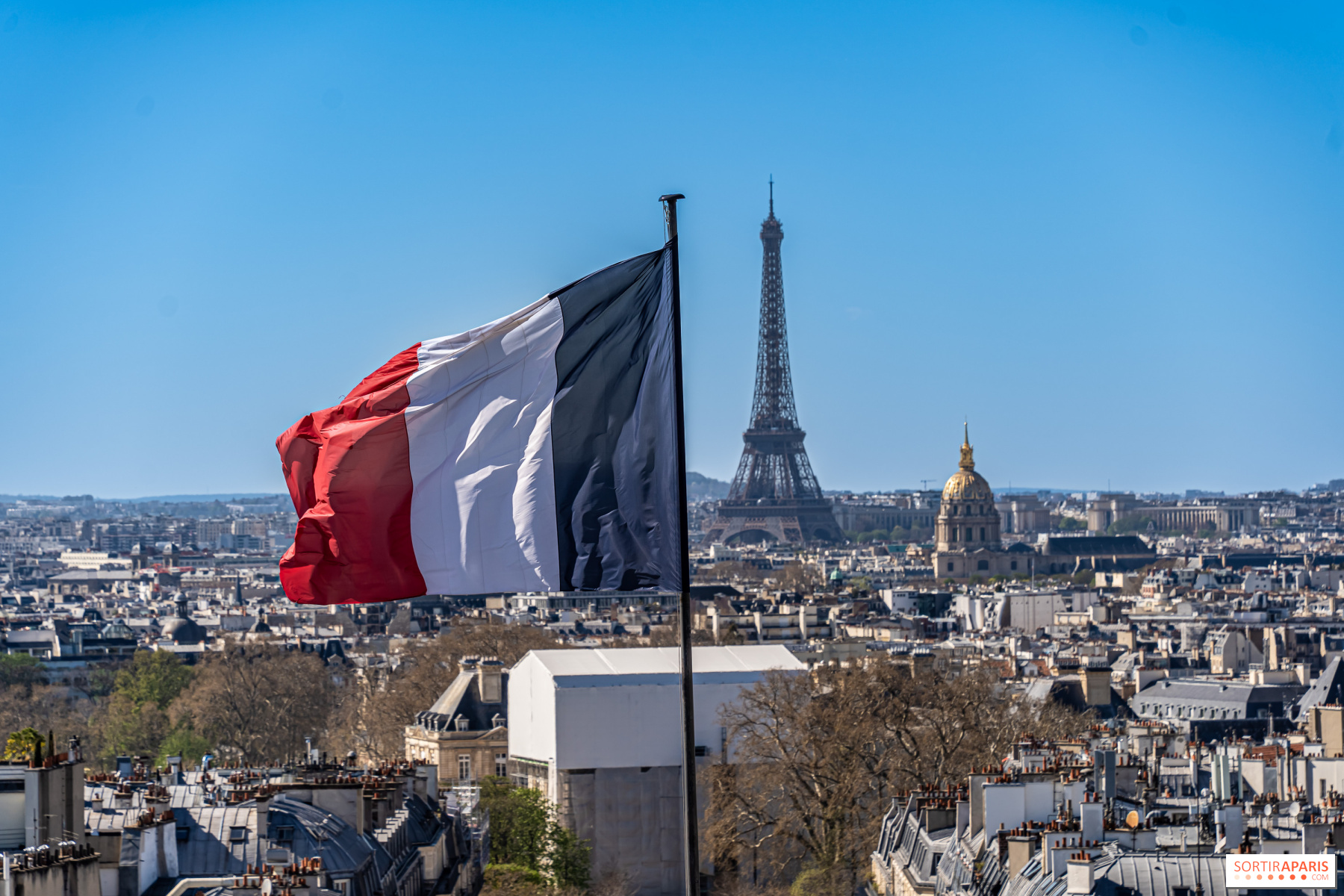
Over the centuries, La Marseillaise has shed its purely military roots to become one of the Republic's enduring symbols, on par with the tricolor flag or the motto "Liberty, Equality, Fraternity".
At major sporting events, it is often sung with fervor by thousands of fans. Following the 2015 attacks, it also rang out in numerous countries as a gesture of solidarity with France, proving that this anthem now transcends national borders.
More than two hundred years after its creation, La Marseillaise continues to embody the history, struggles, and values of the French Republic. Behind its sometimes martial words lies, above all, a testament to an era when the nation defended its very existence, making this anthem one of the most famous in the world.
This page may contain AI-assisted elements, more information here.