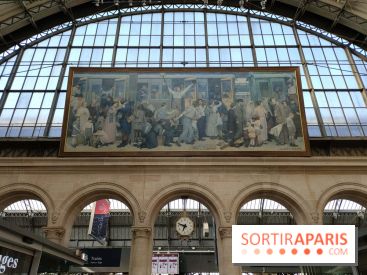
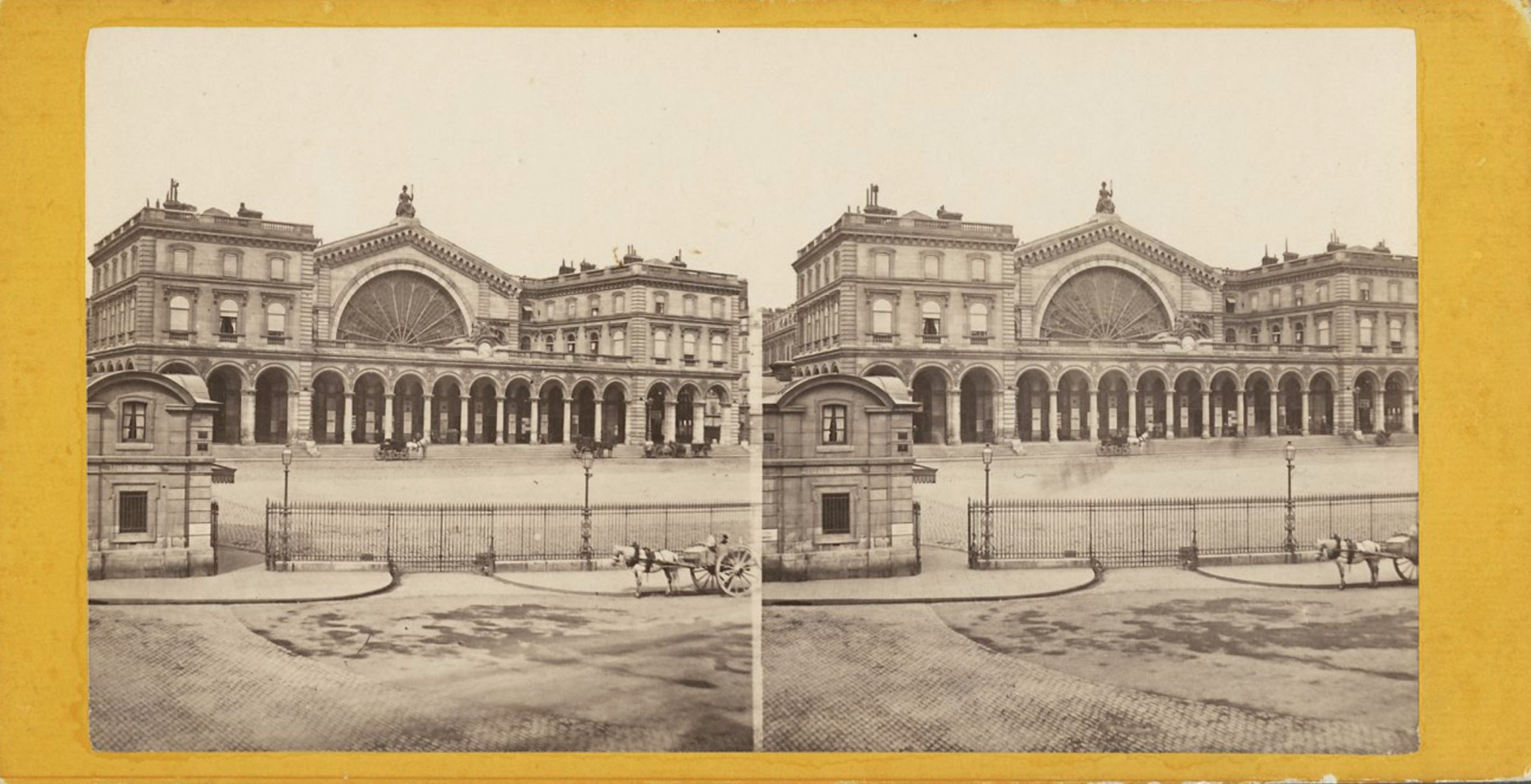
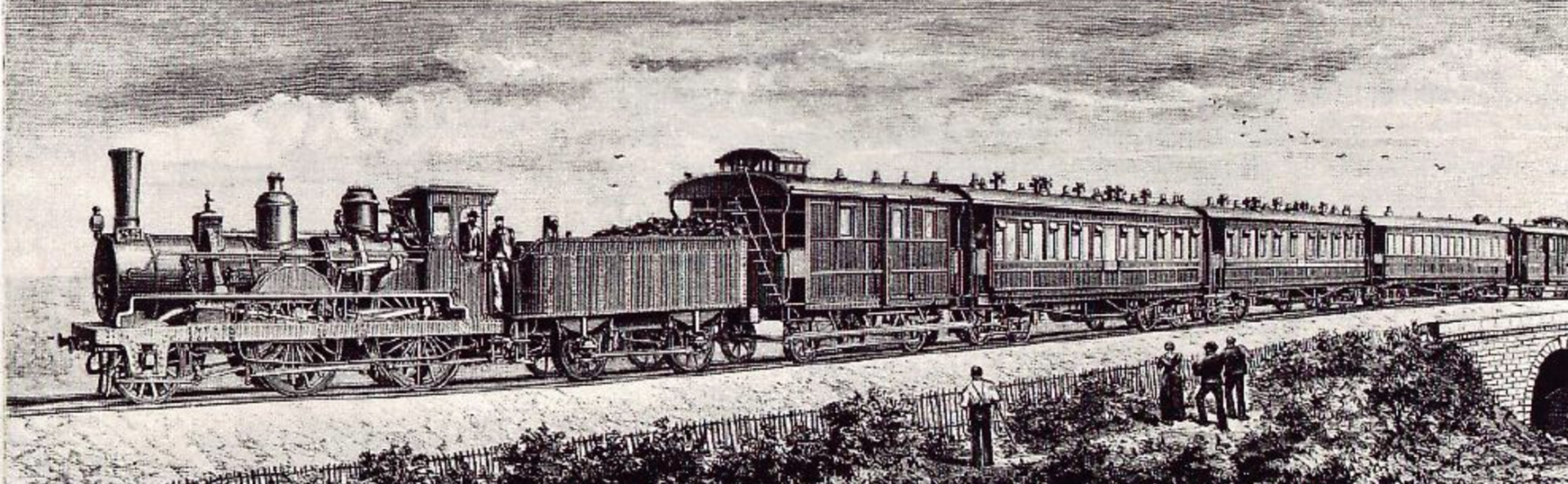
At 7:30 p.m., a special train pulls out of the Strasbourg station, the present-day gare de l’Est in Paris, on October 4, 1883. Aboard are journalists, railway officials and dignitaries heading to Constantinople for the official inaugural journey covering 3100km of the Express d’Orient, the one history will soon remember as the Orient-Express.
A clarification is in order, nonetheless: this October 4 is not the first commercial departure of the train (an initial Express d’Orient having already left Paris on June 5, 1883) but the official inaugural journey designed to show that one can now cross a large part of the continent quickly, without sacrificing comfort. The name "Orient-Express" will not come into use, for its part, until 1891.
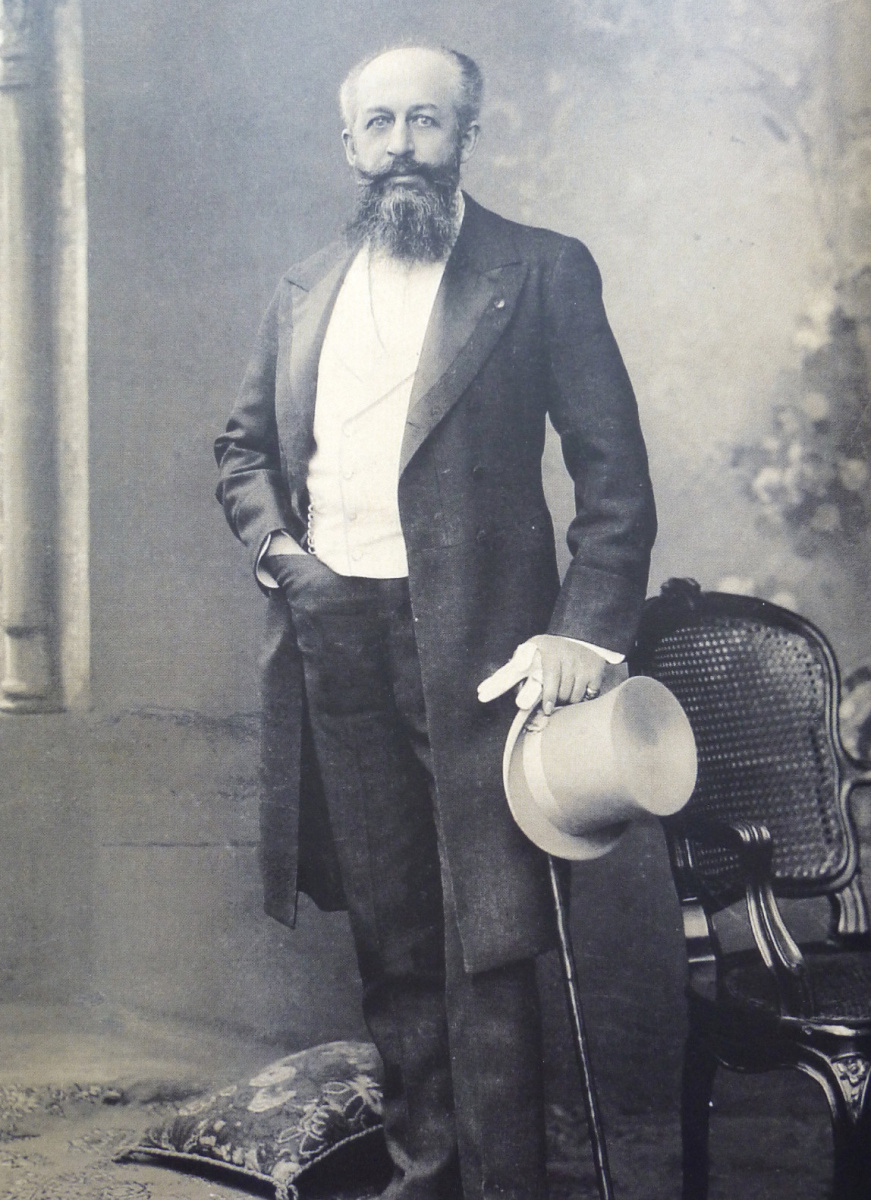
In the 1860s, the Belgian Georges Nagelmackers spots in the United States the sleeping cars used on long-distance routes and envisions adapting them to the European railway network. His ambition quickly goes beyond a mere couchette: he aims to create international trains offering lodging, dining, and onboard service, capable of crossing borders despite the fragmentation of national operators. In 1876, he thus founded in Brussels the International Sleeping-Car Company.
As early as 1873, Nagelmackers put sleeper cars into service on routes departing from the capital to Strasbourg and Frankfurt. In October 1882, his company also tested a full train de luxe between Paris and Vienna: four sleeping cars, a dining car, and two baggage vans connected the two cities in under 28 hours. The experiment convinced the Belgian that there was plenty more to come!
Efforts remain to run a single service across a fragmented Europe, spanning rail companies, administrations, and borders. A treaty signed in March 1883 finally establishes the "Train Express d’Orient" between Paris and Giurgevo, today Giurgiu, in Romania. The real achievement is diplomatic and logistical, as it requires coordinating railway networks across several countries.
On the evening of October 4, the inauguration drew a stylish crowd onto the Parisian quays. The SNCF archives list 24 guests, including two women, among them Nagelmackers, railway officials, civil servants and several French and foreign journalists.
Among them was the writer and journalist Edmond About, soon to become a member of the Académie française, Nagelmackers having fully understood the value of bringing aboard press men capable of telling the tale. Edmond About would draw on it for De Pontoise à Stamboul, published in 1884, while Times correspondent Henri Opper de Blowitz would also file his own account.
The 1883 journey differs markedly from the image we now have of the Orient Express. From Paris, the train goes on to Strasbourg, Munich, Vienna, Budapest and Bucharest, before reaching Giurgiu on the Danube. Passengers then cross the river by boat to reach Bulgaria, catch another train to Varna on the Black Sea, and finally board a steamer to Constantinople. The “Paris-Constantinople” is therefore really a coordinated sequence of trains and boats.
We had to wait until 1889 for the infrastructure to be completed, enabling the link to Constantinople to be traveled entirely by rail. The route would then pass through Belgrade and Sofia and could be completed in under 68 hours.
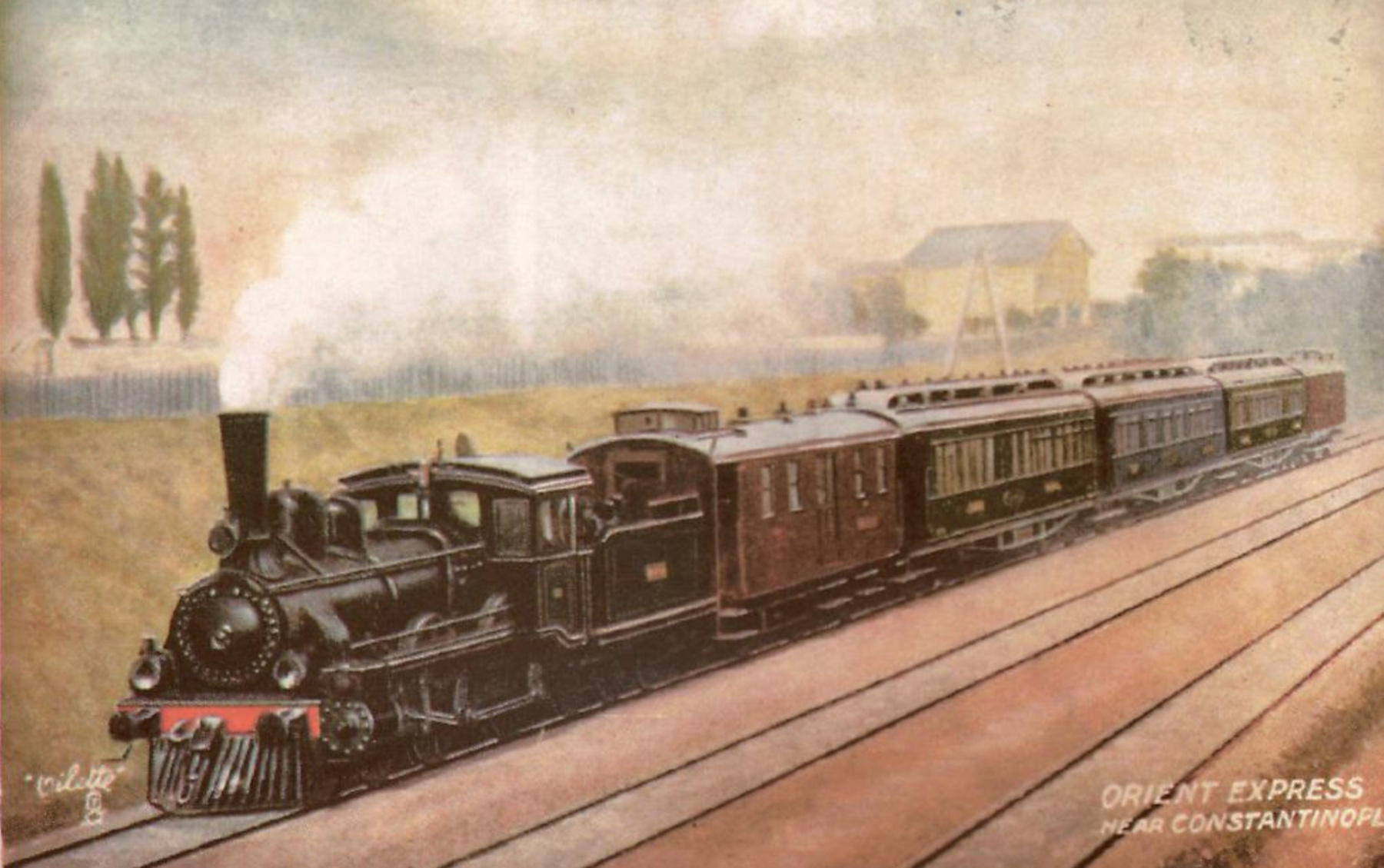
While long European journeys up to then involved uncomfortable nights and meals taken at stops, Nagelmackers turns travel itself into an experience: you sleep, you eat, and you cross several countries in an environment designed as a true rolling hotel. Not to mention that the inaugural voyage is deliberately sumptuous!
The journey features receptions and banquets, particularly in Romania. After arriving in Constantinople, the delegation stays there for several days before resuming the trip back to Paris. The train returns to the capital on October 16 at 6:00 a.m., less than two weeks after departure.
But the Orient-Express, which would later feed crime novels, spy stories and the imagery of Art déco, is still a long way off. The famous midnight-blue carriages, René Prou’s sets, and René Lalique’s glass panels will not arrive, in fact, until the 1920s!
To learn more:
Gare de l’Est, the story of the station that opened Paris to the East
At the gates of Alsace, Lorraine, Germany and Central Europe, the Gare de l'Est has sent millions of travelers on their way, as well as soldiers, during France’s darkest hours. [Read more]
This page may contain AI-assisted elements, more information here.
Dates and Opening Time
On October 4, 2026
Location
Gare de l'Est
Rue du 8 Mai 1945
75010 Paris 10
Route planner
Accessibility info



























 Gare de l’Est, the story of the station that opened Paris to the East